
Evolving A Unified, Post-Sectarian Muslim Leadership in India
By
New Age Islam Staff Writer
1 November
2023
The Question
Is Whether Evolving a Unified Muslim Leadership in India, Despite Theological
Differences Among Barelvis, Deobandis, Salafis, And Shias, Etc Is Possible. If Theological
Differences Are Set Aside, Their Unity Can Be Achieved At The National Level To
Address Growing Muslim Issues. For Instance, Since Muslims And Non-Muslims Worked
Together In Spite Of Religious Differences To Free India From British Enslavement,
Why Can't The Issues That The Muslim Community Faces Be Resolved By Forging
Unity Among All Muslim Sects Despite Theological Differences? Nonetheless, What to Recommend And How To
Make This Practical Have Been Covered In Dr. Khawaja Iftikhar's Weekly Column
In Largest Circulated Urdu Daily Inqilab.
Main
Points:
(1)
The Muslim community in India is experiencing a decline due to a lack of
strong leadership, which can be addressed to promote development.
(2)
Dr. Khawaja Iftikhar advocates for national unity by addressing shared
religious and political issues, despite the prevailing sectarian divide among
Muslims.
(3)
The guidelines propose a representative leadership system, a central
structure at district, state, and federal levels, and a national consultative
council for community representation.
(4)
Every theological group of Muslims should establish a rotating central
leadership structure, ensuring peaceful transitions and direct inclusion of
reliable units, with each unit receiving leadership transfers after a
predetermined time.
-----
Leadership
has always been appreciated in all cultures and eras, and its effectiveness is
primarily based on three factors: the consciousness of the followers, the
existence of a shared ideal, and the strengths of the leadership. The outcome
of conscious, committed, and disciplined followers is growth and advancement.
An analysis of the current situation surrounding the Muslim community in India,
which is in decline, is necessary for planning and comprehensive
transformation. The primary problem, as recognised by all Islamic theological
schools, is the absence of strong Muslim leadership. The Muslim community may
overcome its current condition of decline and progress towards development by
attending to these issues.
However,
the primary hindrance that appears to be impeding it is the separation of
Muslims along sectarian lines. Although it appears difficult for ideological
disagreements to unite people, national unity can be achieved by addressing
common religious and political issues. Recently, Dr. Khawaja Iftikhar provided
some suggestions on how to make it workable. The English translation of his
Urdu piece can be seen here.
-----
The
First Step for Muslim Leadership Is Correcting Your Ranks
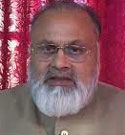
By
Dr. Khwaja Iftikhar Ahmed
27 October
2023
I have been
writing for the daily Urdu newspaper "Inquilab" for numerous months.
I have expressed my opinions in a variety of national and social situations
through my writings, and thousands of individuals who know me well agree with
me on these points as well as those who have a few traditional differences with
me that may be well-founded. Disagreement makes any democratic process stronger
overall. We all have the right to express our opinions to the public while
adhering to the Constitution. I consider myself to be a man of dialogue, and I
have no problem having a conversation. But there is no point in repeating
yourself!
I have
discussed my opinions on leadership on multiple occasions. First off,
everything that is genuinely in my intention is precious, cherished, and a
treasure. By writing this, I do not mean to criticise, denigrate, or place
blame on anyone.
Religious
Leadership
Ahlus
Sunnah Wal Jama'at, often known as Barelvi in the Indian subcontinent, makes up
the majority of the Muslim community. No one has become more well-known or
credible in all circles despite the large number of organisations and figures
present. Nonetheless, there is agreement that Imam Ahmad Raza Khan Faazile
Barelvi (may God bless him and grant him peace) is the imam, major figure, and
authentic source of interpreting and explaining Shariah, thank God. Although
Barelvi, Kichhawcha, Maarahra, Mubarakpur, and Calicut are regarded as major
hubs for Ahlus Sunnah, they lack a centralised structure and administration.
South India has a little better situation.
The second
major sect is known traditionally as Deobandi, although in practice it is also
Ahlus Sunnah Wal Jamaat. Although the leadership and institutions are rather
solid, centralization is regrettably fragmented in this place as well. There
are two sections of Jamiat-e-Ulama. Although Darul Uloom is split into two
sections as well, the group's greater adherents are theologically linked to
Darul Uloom and its teachings. Thank God, there is a nationwide network of
welfare organisations, madrassas, and mosques! Both Nadwatul Ulama Lucknow and
Farangi Mahal Lucknow are part of Sunnis. With Deoband, there isn't a
fundamental difference; nevertheless, there can be a preference difference,
which makes sense.
The Shiites
make up the third category, and their size is noteworthy on a national
scale. Here, the group's situation is
marginally better and there is not a deep split or dispute about who should be
in charge. Salafi and Ahl al-Hadith circles are similar in this regard. The group’s appearance is also very pleasing
there. Fourth, there are many different
types of Muslim monasteries, each with its own unique system and set of rules.
Jamaat-e-Islami
is a national party that is a highly organised movement within the Muslim
community, much like the Jamiat. This is
an intelligent community with a useful discussion forum. This group works on
topics that are both present and future, and their writing, compiling, and
lobbying all contribute to the advancement of religion. In comparison, the following are more
well-known: Ashrafia Mubarakpur, Jamaat-e-Islami, Darul Uloom Deoband, Markaz
Saqafatus Sunniyah Calicut, and Nadwatul Ulama.
In terms of
mosques, the centrality and credibility of the Shahi Imam of Jama Masjid in
Delhi has always been unmatched. In terms of accessibility and reach from the
general population to the elite in both formal and informal contexts, this
mosque continues to retain a unique position to this day. Mosque imams across
the country honour the late Maulana Jameel Ahmad Ilyasi's struggle for the
right of imams to be recognised.
The All-India
Muslim Personal Law Board is a voluntary Muslim organisation with its own
mandate and influence among other national organisations. All the theological
schools and denominations are represented. However, Nadwatul Ulama and its
leadership are at the core of everything. Although there are several names that
might be utilised, I don't see much unity here. It's interesting to note that
there are all-India groups on every street.
Great
personalities are working in the legal and educational fields nowadays, and
they are all esteemed and useful. It is important to remember that everyone
involved in an educational institution—from those who design and oversee it to
those who provide support, from instructors to students—are part of the
educational system. In this case, all Islamic madrasas, along with their
administrators, instructors, and students, are included. These are the training
facilities where the essential task of generational breeding is done.
We have a
wealth of political expertise at the state level. As an illustration of direct
involvement in power, consider the Indian Union Muslim League and the Indian
National League in Kerala. Nothing can be questioned about it. The exceptional
work in every industry in Kerala speaks for itself. However, intriguing names
like Ibrahim Sulaiman Seth and Ghulam Mahmood Banat Wala are no longer present.
The second
is Majlis Ittehad al-Muslimeen, which is headed by Asaduddin Owaisi, a scholar
with a broad perspective on both domestic and global concerns. He is adept at
defending his positions with conviction and reason, as well as in debating
trends and arguments. He is currently the sole Muslim politician in Telangana
state with sway over his own constituency. Additionally, he is making an effort
across the nation. This is an additional Kerala-like example.
Badruddin
Ajmal Sahib comes in third place with his All India United Democratic Front
regional political party in Assam, which has sway over a number of significant
Assamese constituencies. Many of its candidates are elected in the assembly,
but in terms of outcomes, it currently faces very challenging practical issues.
It is the third-biggest Muslim organisation. In Uttar Pradesh, the Peace Party
is making an attempt. Additionally, the Ittehad Millat Council and the Welfare
Party of India exist, but neither has played a significant part in the
election. Although there are many other sincere leaders in the Lok Sabha, their
track record in terms of debates and legislation is unsatisfactory. In this day
of wisdom and illumination, competence is more important than facial portrayal.
Recommendations
I think we
should start where there are possibilities and work our way up to outcomes.
(1) Every theological school [Maslak] ought
to set up a central leadership structure at their own level that is, in theory,
rotating and requires the preservation of the internal order of peaceful
transition following a predetermined amount of time. Every reliable unit that
now exists within the Maslak should be directly included in it, and it should
be made sure that each unit receives leadership transfers after a predetermined
amount of time. The establishment of central and state leadership in the village,
town, and district must be its logical result.
(2)
Following that, every significant social and national unit should come together
under the aforementioned guidelines and establish a representative leadership
system inside it. This will inevitably result in a representative central
leadership structure at the district, state, and federal levels.
(3) Apply
the same procedure to welfare, trade and industry, health, and legal
establishments as well as education.
(4) To
ensure that the entire community feels represented and participates in the
consultation process, recognises its obligations, and carries them out, the
three main Muslim political parties should form a national consultative council
with the aforementioned representatives.
The elite
and general public should not be included in the conspiracy hypothesis that
charges the parties and their leadership of being agents of either the A or B
party. Which circle is devoid of opportunism and conscience these days? The
nature of politics is taking what is offered. Prioritise the advantage of the
person you are speaking with over your own. Finding their place in the
advantages enjoyed by both the majority and the minority has taught everyone
this lesson. However, you are still creating and upholding animosities—and for
nothing!
Finally, it
should be noted that in politics, there are no enemies or friends. Tomorrow's
adversary is today's ally, and today's adversary is tomorrow's rival. This is
the political tenet. Engage in national politics and recognise your place in
it. If you follow these principles, you won't be harming yourself or dividing
yourself further.
------
Translated from Urdu Article: The
First Step for Muslim Leadership Is Correcting Your Ranks لائحہ عمل : پہلا
مرحلہ اپنی صفوں کی
درستگی
URl: https://newageislam.com/islam-sectarianism/unified-post-sectarian-muslim-leadership-india/d/131023
New Age Islam, Islam Online, Islamic Website, African Muslim News, Arab World News, South Asia News, Indian Muslim News, World Muslim News, Women in Islam, Islamic Feminism, Arab Women, Women In Arab, Islamophobia in America, Muslim Women in West, Islam Women and Feminism