
Reflections on The New Year and Global Affairs
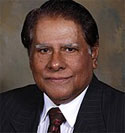
By M. Basheer Ahmed M. D., New Age Islam
17 January 2026
As the year 2025 came to an end, I shared a New Year’s message reflecting on the stark contrast between humanity’s professed ideals and the reality of the world we inhabit. Across continents, violence persists.
My message contemplated the significant gaps between the ideals humanity claims to uphold and the world as it truly exists. Despite our shared declarations of justice, peace, and compassion, violence continues unabated across nations and regions. This enduring discord serves as a powerful reminder of the challenges we face in bridging the divide between our aspirations and the persistent reality of conflict and human suffering.
Wars are waged not in the service of justice or peace, but in pursuit of dominance, power, and resources. While they are often justified as efforts to achieve justice or peace, the underlying reality frequently reveals different motivations.
Rather than being driven by noble ideals, conflicts are typically initiated to assert dominance, accumulate power, and gain control over valuable natural resources. The pursuit of these interests takes precedence over genuine humanitarian concerns, shaping the decisions and actions of nations on the global stage.
As another year begins, we must ask ourselves why a world that speaks so eloquently about human rights and compassion continues to tolerate such profound cruelty.
I wrote to emphasize our collective responsibility to preserve democracy and to build a more humane, rational, and just global order. This task demands hope, honesty, effort, and perseverance. Hope gives us purpose and direction; it allows us to face life’s harsh realities without surrendering to despair.
Each new year offers an opportunity for learning, renewal, and moral clarity. With that spirit, I wished that 2026 would enrich both our minds and our souls.
Disappointment in the New Year
Yet the first days of 2026 have already raised deep concerns. On January 3rd, the United States launched ‘Operation Absolute Resolve,’ a series of airstrikes across northern Venezuela, including Caracas, and captured President Nicolás Maduro and First Lady Cilia Flores. According to Article 2(4) of the United Nations Charter, the use of force against the territorial integrity or political independence of any state is strictly prohibited.

Congress did not authorize this war. Venezuela had not attacked the United States. No United Nations Security Council mandate exists. By these standards, the operation is illegal under international law and unconstitutional under U.S. law.
The Trump administration has attempted to justify its action by framing it as the execution of a criminal arrest warrant for “narcoterrorism.” Yet many world leaders—including those in Brazil, Iran, Mexico, China, Russia and Colombia— have condemned the strikes as violations of sovereignty and international law.
Inconsistencies and Contradictions
President Trump’s actions reveal troubling contradictions. He labeled Maduro a criminal, though evidence of Maduro’s direct involvement in drug trafficking targeting the U.S. remains disputed. Venezuela is not a meaningful producer of fentanyl or the other drugs that have dominated the recent epidemic of overdoses in the United States, Meanwhile, former Representative Marjorie Taylor Greene, once a Trump ally, stated “This is the same Washington playbook that serves the big corporations, the banks and the oil executives.” She questioned why Trump pardoned former Honduran President Juan Orlando Hernández, convicted of trafficking thousands of tons of cocaine, while failing to act against Mexican cartels. “I want to see domestic policy be the priority that helps Americans afford life after four disastrous years of the Biden administration,” said Greene.
Trump also welcomed Nayib Bukele, El Salvador’s self-described “dictator,” to the White House and funded his prison camps with millions in taxpayer dollars. At the same time, Israeli Prime Minister Benjamin Netanyahu—facing accusations of war crimes and genocide and subject to an ICC warrant—remains shielded from accountability. These double standards severely undermine U.S. credibility.
U.S. Intervention in Venezuela
Finally, Mr. Trump stated that Venezuela’s president needed to be ousted so that American oil companies could capture the country’s oil resources. “We’re going to have our very large United States oil companies, the biggest anywhere in the world, go in, spend billions of dollars, fix the oil infrastructure, he said. Trump has declared that the United States will “manage” Venezuela until a “safe, proper and judicious transition” occurs. Venezuela possesses the world’s largest proven oil fields, making clear the economic motives behind Trump’s intervention. Political analyst Dr. Christopher Sabatini warns that removing Maduro does not automatically empower Venezuela’s democratic opposition, as his inner circle remains intact.
The real story behind the invasion.
The backbone of the American financial system is the petrodollar. In 1974, Henry Kissinger struck a deal with Saudi Arabia mandating that all global oil sales be priced in US dollars, with America providing military protection in return. This arrangement created a worldwide demand for US dollars, allowing the United States to print money to fund its military and government services. The petrodollar system remains vital to the US government’s financial strength.
Consequences of Challenging US Dollar Monopoly
The world has seen this pattern before. In 1953 the CIA, in cooperation with British intelligence (MI6), overthrew the government of Iranian Prime Minister Mohammad Mossadegh. The action was motivated primarily by Mossadegh's nationalization of Iran's oil industry, which threatened Western oil interests. The CIA paid off Iranian military officials, bribed journalists, religious figures, and spread propaganda to destabilize Mossadegh's government.
In 2000, Saddam Hussein announced that Iraq would sell oil in euros rather than dollars. By 2003, the U.S. invasion of Iraq under President George W. Bush, began without United Nations authorization, under the pretense of searching for weapons of mass destruction which were never found.
Saddam Hussein was captured, the regime was replaced, and Iraq’s oil trade reverted to the dollar. Saddam was executed, and the justification for war proved unfounded. This has resulted in massive civilian casualties, regional instability, and long-lasting damage to Iraqi society. While estimates vary, there is no argument that hundreds of thousands of innocent lives were lost and millions of people displaced. Two decades later, Iraq continues to struggle with the consequences.
In 2009, Muammar Gaddafi proposed a gold-backed African currency—the "gold dinar” for oil trade. According to leaked emails from Hillary Clinton, this initiative was a primary reason for intervention. In 2011, under President Barack Obama, a NATO-led intervention in Libya led to the overthrow and death of Qaddafi.
The aftermath was not democracy, but fragmentation, militia rule, and persistent violence. Nearly fifteen years later, Libya remains unstable, and the international community bears responsibility for abandoning the country after military intervention.
Consequences and Global Implications
Maduro, whose country possesses five times more oil than Iraq and Libya combined, was selling oil in yuan and other currencies, developing payment systems beyond the control of the US, and petitioning to join BRICS.
Venezuela had partnered with China, Russia, and Iran, countries at the forefront of global de-dollarization. Maduro’s challenge to the petrodollar system placed him at risk of facing the same fate as Saddam Hussein and Muammar Gaddafi.
Historical Claims and Corporate Interests
America asserts that the expertise and hard work of Americans built Venezuela’s oil industry. US companies developed the industry more than a century ago and received huge compensation until the government of Venezuelan nationalized the oil sector.
What is Occurring at the Moment
Russia has been selling oil in rubles and yuan since the onset of the war with Ukraine. Iran has traded in non-dollar currencies for years. China developed the CIPS system, an alternative to SWIFT, connecting 4,800 banks in 185 countries. BRICS is building payment networks that bypass the dollar.
Venezuela’s 2018 move to abandon the dollar and its potential inclusion in BRICS, with its immense oil reserves, would greatly accelerate the process of de-dollarization.
Russia, China, and Iran have condemned the attack in Venezuela as "armed aggression." China, as Venezuela’s largest oil customer, is losing billions. BRICS nations are witnessing a country being invaded for trading outside the dollar, sending a clear message: those who challenge the dollar risk military intervention.
What the Future Holds
Venezuela is yet another country subjected to the US imperialism. US and American petrol companies will garner substantial profit selling oil. The citizens of that country will not accept American rule, and may face the same consequences as Iraq and Libya. People will kill each other, or killed by US forces to maintain peace. No doubt, there will be chaos for decades.
With a population approaching 28 million, political upheaval could intensify regional instability and worsen the refugee crisis throughout Latin America.
If China gains enough economic power to retaliate and BRICS controls 40% of global GDP, the global use of the dollar will be severely impaired. The recent invasion signals that the dollar cannot compete on its own merits; resorting to military action to support a currency suggests its decline.
Venezuela’s situation represents not a new beginning, but a desperate end to dollar hegemony, which will dampen US economy. There are serious concerns about what will happen when the US can no longer use military force to maintain dollar dominance. The Major concern I have “Is IRAN be the next casualty”
A Call for Reflection and Responsibility
I had hoped that the new year would bring renewed commitment to peace and diplomacy. That hope now feels fragile. Before asking for divine intervention, we must look inward and rely on the wisdom, courage, and moral clarity possessed by legions of thoughtful people in the United States who must demand restraint, accountability, and adherence to the rule of law. The future of the world we cherish hangs in the balance!
As the Qur’an reminds us:
“Indeed, Allah will not change the condition of a people until they change what is within themselves” (Qur’an 13:11).
Real change begins with self-reflection. Only by confronting our own contradictions and learning from history can we hope to create a more just and peaceful world.
….
M. Basheer Ahmed, M.D., is a physician, humanitarian, and advocate for interfaith understanding and global peace. He is a former professor of psychiatry at UT Southwestern Medical School in Dallas, TX. He has written extensively on Muslim unity, interfaith dialogue, and Middle East policy.
URL: https://newageislam.com/islam-west/reflections-global-affairs-new-year/d/138478
New Age Islam, Islam Online, Islamic Website, African Muslim News, Arab World News, South Asia News, Indian Muslim News, World Muslim News, Women in Islam, Islamic Feminism, Arab Women, Women In Arab, Islamophobia in America, Muslim Women in West, Islam Women and Feminism