
Lavish Weddings Return to Kabul, but Only Women Get To Enjoy the Party
New Age Islam News Bureau
23 December 2022
• Miss Universe Bahrain Evlin Khalifa: Changing
Perceptions of Arab Women through Pageants
• Syrian Sarah Mardini, Sister of Olympic Swimmer
Yusra Mardini, Among Dozens Facing Charges in Greece for Humanitarian Work
• UAE Billionaire Offers To Host 100 Afghan Female
Students, Help Them Complete Studies In Dubai
• Afghan Women Banned From University 'For Not
Following Dress Code': Taliban Education Minister
• UAE: 25,000 Emirati Women Own 50,000 Trade Licences
Valued At Dh60 Billion
Compiled by New Age Islam News Bureau
URL: https://newageislam.com/islam-women-feminism/lavish-weddings-kabul/d/128697
--------
Lavish Weddings Return to Kabul, but Only Women Get To
Enjoy the Party
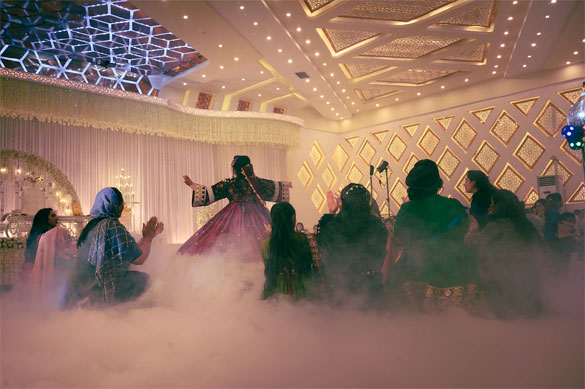
Sabrina, 19, dances in
front of clapping family members at her Dec. 15 wedding celebration. (Elise
Blanchard for The Washington Post)
------
By Pamela Constable
December 22, 2022
KABUL — The spacious ballroom glittered with lights.
Young women in chiffon and satin gowns sashayed among the tables or twirled
slowly on the dance floor to tapes of rhythmic music. Amid “oohs” and “aahs,”
the bride and groom were lowered from the ceiling in a golden cable car and
escorted to a lotus-shaped throne. Tiny drones whirred in the air, recording every
moment.
Outside the high-tech fairy-tale setting, the Afghan
capital remained firmly in the grip of a strict religious regime that has
barred teenage girls from school, prohibited women from traveling without a
male guardian, required them to wear shapeless Islamic robes in public and most
recently banned them from all universities.
But on this chilly December evening, in the ladies’
hall of the newly opened White Palace wedding hotel, several hundred
Cinderellas were free to pirouette, compare hairdos and briefly leave behind
the restrictions of Taliban rule that had disrupted their plans for college or
careers, and left them brooding at home.
“Outside everything is terrible for us. We cannot
imagine the future,” said Halima, 20, who finished high school early last year
but has been idle since. Clad in a bouffant pink gown, she greeted other guests
and giggled with friends. “Here it’s like a sanctuary where we feel safe,” she
said. “We can forget our worries and enjoy ourselves for one night.”
But in a separate, smaller room, where the male
wedding guests had been relegated, the mood was one of sullen gloom. A few
older men chatted quietly, but most younger ones stared at their smartphones,
killing time until they could eat, rejoin their female relatives and head home.
It was not mixed company they missed, because wedding
parties have long been segregated by gender in this traditional Muslim society.
It was live music, which had become the essential, earsplitting ingredient of
Afghan weddings — especially on the male side of partitioned salons — during
two decades of democratic rule and exposure to Western culture.
When the Taliban movement returned to power 16 months
ago, it set out to re-Islamize society by encouraging piety and condemning
vulgar behavior. Over time, rules have hardened. While the regime’s most
controversial measures have been directed against women, others have been
implemented more severely against men. The crackdown on wedding music is a
prime example.
“In Islam, it is very clear. All music and instruments
are forbidden except the daira,” a traditional leather tambourine, said Atiq
Mojahir, spokesman for the Taliban Ministry for the Promotion of Virtue and the
Prevention of Vice, speaking in an interview this month. “We do not want people
to be disturbed by wedding music, but in the case of women, we are being a bit
flexible.” As long as they keep the music soft, he added, “that is okay.”
As for male guests, Mohajir said, “they can do other
things — read poetry, preach, have comedies. They can enjoy the occasion any
way they want, except with music.” In recent years, he said, male wedding
parties had gone too far, with wild dancing and drug use. “Some families were
bothered,” he said.
That argument has done little to appease either
customers or proprietors in the capital’s wedding business, a once-thriving
industry of some 150 halls that supports scores of beauty parlors, flower
importers, caterers, dressmakers, video and camera crews, car rental agencies,
waiters, disc jockeys and singers. Afghan weddings, a staple of social life,
often have 1,000 guests or more.
But in recent months, with the economy in dire straits
after months of international sanctions and skyrocketing inflation, weddings
have shrunk in size and profit — as well as excitement. Families haggle over
the price of dinner menus; beauticians offer 70 percent discounts. Grooms buy
plastic flowers instead of fresh ones to decorate the white cars that convey
each new couple to the wedding hall, a ceremonial duty once performed by white
carriage horses.
“I used to get roses from Pakistan for $3 a bunch and
sell them for $4. Now I am making only 25 cents, and a lot of them just wilt,”
said Sharif Wali, a florist in the middle-class Khair Khana district.
Nearby, a row of beauty parlors close to several
wedding halls has been struggling to survive. Storefront images of coiffured
brides had been erased, and most salons were dark or empty. In one, two
hairdressers waited in vain for customers.
“I am working here because I have nothing else to do,”
said Malika, 21, who was a senior in high school when the Taliban returned. “I
wanted to go to college and study political science, but my dream is gone. My
only choice now is to stay sitting at home, or get married.”
Even more than cost, a sense of fear and uncertainty
is dampening wedding spirits and attendance. With the regime’s total ban on
live music, many popular wedding singers have left the country. In the men’s
sections, groups of Taliban fighters sometimes appear without notice, scanning
the room while conversations die and a resentful chill lingers. Several former
guests said they had seen hotel employees and even bridegrooms hustled off to a
police station when inspectors heard the forbidden sound of music.
In female sections, the festivities are more lively
and the guests relaxed. Mothers bring their children, costumed for the
occasion.
The only males allowed are a few close relatives of
the bride and groom, plus photographers and DJs who spin recordings of
carefully chosen music, such as lilting ballads from Iran and traditional
Afghan melodies that are peppy enough to dance to but not loud enough to carry.
Still, there is a nervous cat-and-mouse vibe in the
female sections, too. Hotel managers keep a close eye on things, and guards at
the front gates stand ready to alert them of unexpected visitors.
“It’s a bit tricky,” the manager of a low-cost hall
said one recent evening, as arriving guests dutifully filed into two separate
entrances. “We are happy that the new government has brought peace and
security, but their ban on all music makes things difficult. People know it is
forbidden by law, but it is an old tradition and it is still in their hearts.”
Two floors above, the ladies’ hall filled rapidly.
Women mingled and whispered, waiting for the bride and groom to appear. Word
spread that a group of Taliban fighters had entered downstairs, but a while
later, the all-clear signal came. The DJ put on a popular Afghan song, with a
soft but thumping beat. Outside the door, the sound was muffled; two flights
down, it was inaudible. The evening was safe.
Despite financial hardships, weddings have resumed at
a steady pace after many halls shut down during the early months of Taliban
rule. In modest neighborhoods, halls with worn carpets and soda stands are
booked on many evenings. Along a wide boulevard leading to the international
airport, an array of luxurious halls, some refurbished and others brand-new,
light up the night sky.
The White Palace, which cost $7 million to build and
opened last month, features gold-painted pillars, a soaring central dome and
grand ballroom staircases. Its energetic co-owner, Fazel Sultani, is both a
strong supporter of business development under the new government and a
frustrated critic of its crackdown on wedding music for men.
“A party without music is like a dead flower. We want
our guests to be happy, but what can we do?” Sultani said, shaking his head.
Source: Washington Post
https://www.washingtonpost.com/world/2022/12/22/afghanistan-kabul-weddings-taliban/
--------
Miss Universe Bahrain Evlin Khalifa: Changing
Perceptions of Arab Women through Pageants
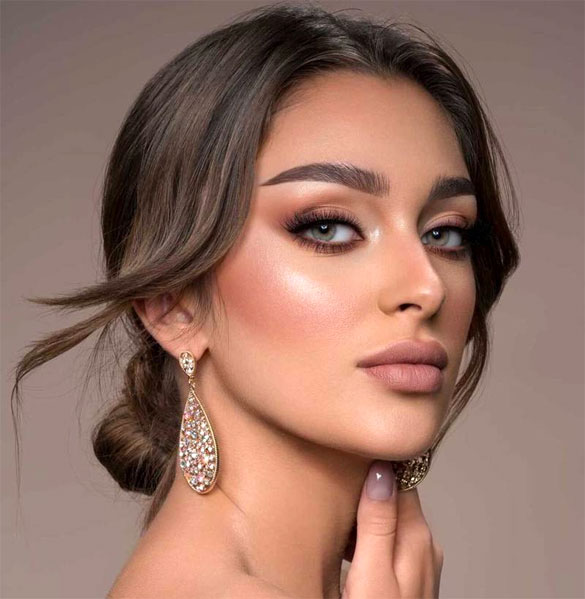
Evlin Khalifa is crowned
Miss Universe Bahrain. All photos: Miss Universe Bahrain
-----
Sarah Maisey
Dec 22, 2022
Evlin Khalifa is a busy woman. Since being crowned
Miss Bahrain in September, she has been on a whirlwind round of interviews,
photo shoots and preparations for the coming Miss Universe beauty pageant in January.
She was in Dubai briefly this week, putting the
finishing touches to the looks she will wear for the event and admits the past
few months have been amazing, but tiring. “Everything is getting crazy, but
thanks to my team, they are making preparations a bit easier, so I can focus on
my questions and answers, my catwalk, and just representing my country. Now I
am in Dubai, finalising my clothes and my evening gown. We have a lot of things
to do still, but most of it is prepared."
For a Miss Universe competition clothes are not just a
matter of popping into a store and grabbing a dress off the rails, rather,
Khalifa is expected to arrive with custom-made dresses and outfits. Each one
will have required a lengthy design process and several fittings to ensure
every detail is perfect.
“The competition is going on for 10 days, so for each
day I need different looks, so we need at least 10, plus extras,” she says.
For this, the team around her is invaluable.
"They help me to decide what suits me. We always discuss what is best for
me — for clothes in daywear and evening gowns. Even for make-up. I am Arab, so
I like heavy evening make-up, but they advise me to do it in a pageantry way,
so I am learning from zero.”
To help ensure Khalifa always looks immaculate, she
has enlisted Vimi Joshi as her head of make-up. “She helped me today with a
make-up tutorial, so I am studying what works best for me when I am on stage,”
says Khalifa.
While there are several rounds to the coming pageant,
the most anticipated is the evening wear segments, when the contestants step
out in sumptuous gowns. One such round is dedicated to national dress, for
which Khalifa has revealed she will be wearing an all-gold ensemble by Dubai
label Amato.
Taking the theme of gold as inspiration, the result is
a fitted metallic gown, covered with a trailing cape in gold lamé, and matched
with a headdress spun from gold-plated coins and safety pins.
"The dress is made exactly from my ideas,"
she says. "I wanted to show a little bit of our culture through the gown,
and I think we did that. I chose the colour and the style, and the designer did
it in the best possible way. It's been a crazy amount of work, but I just hope
to impress you all.”
Of the final result, she is clearly delighted. "I
am so honoured to be able to be dressed in a real gold-plated dress by Amato. I
believe that Bahrain is like gold, it shines at any given time but more
importantly, like gold, it’s a story of hope, hard work and
transformation."
Another element of the pageant is the swimwear round,
and Khalifa’s predecessor, Miss Bahrain Manar Nadeem Deyani made history when
she took to the stage during the 2021 Miss Universe pageant wearing a modest
activewear look instead of a bikini. For her own showing, Khalifa will also be
modestly dressed and, crucially, her decision is fully supported by the
pageant.
“Fortunately, the Miss Universe organisation respects
our tradition and our culture, so of course, they allow us to be covered or not
covered, which is what I really respect about this organisation. So, I will be
in a Burkini. I respect all the girls who wear the bikini, but I want to show
the world that a woman who is covered can also be beautiful.”
Although the final design for her Burkini has not been
completed, Khalifa explains she wants “something special and beautiful”.
Speaking with Khalifa, it becomes clear how much work
is involved in preparing for a competition of this scale, with little let-up
for her or her team for the past three months. Despite being in pageants
before, she admits she wasn’t prepared for how different getting ready for Miss
Universe would be.
“I did not realise how much goes on behind the
scenes,” she explains. “My team told me of course, be ready, be prepared, but
the work we have done I can hardly believe. Since September, I have been
travelling, training every day, studying and I have learnt a lot of new things
about the beauty pageant, but also about social issues.
“I think that I have changed as well. I used to be an
introvert, but now I am becoming a bit of an extrovert. I like to communicate
with people more and more. Interviews were challenging for me when I started,
but now, with practice, I am getting used to it.”
With all of the long days and demands to be constantly
on for the cameras, Khalifa has had to learn to manage her stress. “At one
point, I was really nervous,” she says. “I was excited and stressed all at the
same time, but I didn’t want to let that stop my regime, my schedule. Every one
of us needs 'me time', so I spend it with my family. This is my number one way
to relax, refresh and recharge.
“My family gives me power, energy and confidence, as
well as my hobbies such as playing the piano, where I can express my feelings.
I like to draw and also I like to write, I like to do this to bring my thoughts
out on to paper. That’s my therapy, and I would advise others to try it as
that’s how I relax and keep myself calm.”
Another aspect of her preparation is ensuring she gets
sufficient rest. “I need sleep, which for me is 12 hours in a perfect world. I
have gotten used to getting less, but I always go to bed at the same time. I
need a routine. I drink a lot of water to hydrate my skin and my food is always
healthy. And I clean my face every day — if I am wearing make-up or not, I make
sure I clean my face properly before I sleep.”
If there is a lingering stereotype about beauty
pageants, it is of the contestants trying to undermine one another and constant
in-fighting. The reality, Khalifa explains, is the total opposite. “We all have
a group chat on WhatsApp where we can talk. All the girls are supportive, kind
and careful with each other. We talk about life, about mental health issues,
and everyone is polite, gentle and gives time for everyone to talk. No one
interrupts, no one is fighting or competing."
With such a strong support network among the women,
Khalifa is looking forward to the event. "I think it's going to be a very
friendly and family atmosphere," she explains.
Despite being only the second Bahraini woman to take
part in Miss Universe, Khalifa hopes to use it as a platform to shift
perceptions on how Arab women are viewed. “This is my main purpose for
competing in this competition," she explains. " I think it's time to
bring the crown a Gulf country, to show the world how beautiful, smart and
intelligent Middle Eastern women are.
"Bringing our culture to this competition is
something new of course, but I am sure we will be supported by pageant fans. As
Bahrainis, we honour our traditions and culture, and that is amazing in the
modern world. That we can mix and combine modern values with old traditions, I
think that’s the Arab modern woman, and that’s what I want to show.”
Source: The National News
--------
Syrian Sarah Mardini, Sister of Olympic Swimmer Yusra
Mardini, Among Dozens Facing Charges in Greece for Humanitarian Work
December 22, 2022
LONDON: Sarah Mardini, the sister of Olympic swimmer
Yusra Mardini, is among two dozen humanitarian workers facing charges in Greece
for their humanitarian work on the island of Lesbos, Human Rights Watch says.
A European Parliament report identified it as “the
largest case of criminalization of solidarity in Europe.”
The 24
defendants from the Emergency Response Centre International will stand on trial
Jan. 10 in Mytilene on Lesbos, on misdemeanor charges related to their search-and-rescue efforts at sea helping
asylum-seekers.
The registered non-governmental organization regularly
cooperated with Greek authorities on missions in Greek waters and on Lesbos
from 2016 to 2018.
Mardini and the other defendants face up to eight
years in prison if convicted of the charges, which include espionage and
forgery.
HRW said on Thursday that Greek prosecutors should
request the acquittal of humanitarians on trial for search-and-rescue efforts
that are protected under international human rights law.
“This case is really an indictment of the Greek
authorities, who are going after people for saving lives the authorities didn’t
want them to save,” HRW Children’s Rights Associate Director Bill Van Esveld
said.
“Meanwhile the Greek government continues to restrict
humanitarian rescue while also illegally pushing back refugees and migrants,
forcing them into the deadly situations that humanitarians tried to alleviate,”
Esveld added.
According to the rights group, the charges are based
on a Greek police report that contains obvious factual errors, such as claims
that some of the accused participated in rescue missions on multiple dates when
they were not in Greece.
Mardini, who lives in Germany, was previously barred
from entering Greece to attend her own trial, which is a violation of the right
to be present at one’s own trial enshrined in international, European, and
Greek law.
Her lawyers have stated that it is unclear whether she
will be allowed to enter the country for the trial in January.
“The Swimmers,” a Netflix film based on Mardini and
her sister’s story, was recently released. In 2015, the two traveled by boat
from Turkey to Greece as Syrian asylum-seekers. When the engine failed, they
aided other passengers by swimming and keeping the boat afloat.
Mardini later returned to Lesbos as a
search-and-rescue volunteer. She was arrested on Aug. 21, 2018 and held for 106
days.
Source: Arab News
https://www.arabnews.com/node/2220471/world
--------
UAE billionaire offers to host 100 Afghan female
students, help them complete studies in Dubai
by Waheed Abbas
23 Dec 2022
Dubai billionaire Khalaf Al Habtoor, founder and
chairman of the well-diversified conglomerate Al Habtoor Group, has offered to
provide support to 100 female Afghan students in Dubai.
The announcement comes after the Taliban-run
government in Kabul said that female students would not be allowed to study at
universities in Afghanistan until further notice.
Taliban’s decision to ban female students has been
condemned globally, including the UAE.
Ambassador Lana Nusseibeh, Assistant Minister for
Political Affairs and Permanent Representative to the United Nations of the
UAE, reiterated the UAE’s strong condemnation of the Taliban’s decision by the
Taliban to ban Afghan women and girls from accessing higher education.
The Muslim Council of Elders under the chairmanship of
the Grand Imam of Al-Azhar Dr Ahmed Al-Tayeb also showed its concern over the
Taliban’s ban on women from attending universities in Afghanistan.
Khalaf Al Habtoor said the Taliban’s decision is
unfortunate and he is willing to host female Afghan students in cooperation
with relevant authorities.
“Depriving Afghan female students of university
education is unfortunate and sad. Therefore, far from any political stance, I
am ready, in cooperation with the relevant official authorities, to host 100
female students and give them the opportunity to complete their studies in
Dubai universities,” said Al Habtoor in a tweet.
Khalaf Al Habtoor is a well-known global
philanthropist who believes that philanthropy should be independent of race,
religion and geography. He has generously contributed towards institutions that
result in human advancement, including a Simulation Centre at the Dubai Harvard
Foundation for Medical Research and a Leadership Centre at Illinois College,
USA.
Source: Khaleej Times
--------
Afghan Women Banned From University 'For Not Following
Dress Code': Taliban Education Minister
Dec 23, 2022
KABUL: Afghan universities were declared off limits to
women because female students were not following instructions including a
proper dress code, the Taliban's minister for higher education said Thursday.
The ban announced earlier this week is the latest
restriction on women's rights in Afghanistan ordered by the Taliban since their
return to power in August last year.
It has drawn global outrage, including from Muslim
nations who deemed it against Islam, and from the Group of Seven industrialized
democracies who said the prohibition may amount to "a crime against
humanity".
But Neda Mohammad Nadeem, the minister for higher
education in the Taliban government, insisted Thursday that women students had
ignored Islamic instructions -- including on what to wear or being accompanied
by a male relative when travelling.
"Unfortunately after the passing of 14 months,
the instructions of the Ministry of Higher Education of the Islamic Emirate
regarding the education of women were not implemented," Nadeem said in an
interview on state television.
"They were dressing like they were going to a wedding.
Those girls who were coming to universities from home were also not following
instructions on hijab."
Nadeem also said some science subjects were not
suitable for women. "Engineering, agriculture and some other courses do
not match the dignity and honour of female students and also Afghan
culture," he said.
The authorities had also decided to shut those
madrassas that were teaching only women students but were housed inside
mosques, Nadeem said.
The ban on university education came less than three months
after thousands of women students were allowed to sit university entrance
exams, many aspiring for teaching and medicine as future careers.
Secondary schools for girls have been closed across
most of the country for over a year -- also temporarily, according to the
Taliban, although they have offered a litany of excuses for why they haven't
re-opened.
Women have slowly been squeezed out of public life
since the Taliban's return, pushed out of many government jobs or paid a
fraction of their former salary to stay at home.
They are also barred from travelling without a male
relative and must cover up in public, and are prohibited from going to parks,
fairs, gyms and public baths.
The Taliban's treatment of women including its latest
move to restrict university access for them drew fierce reaction from the G7,
whose ministers demanded the ban be reversed.
"Gender persecution may amount to a crime against
humanity under the Rome Statute, to which Afghanistan is a state party,"
the ministers said in a statement, referring to the International Criminal
Court in The Hague.
"Taliban policies designed to erase women from
public life will have consequences for how our countries engage with the
Taliban."
The international community has made the right to
education for all women a sticking point in negotiations over aid and
recognition of the Taliban regime.
Saudi Arabia too expressed "astonishment and
regret" at the ban, urging the Taliban to reverse it.
But Nadeem hit back at the international community,
saying it should "not interfere in Afghanistan's internal affairs".
Earlier Thursday a group of Afghan women staged a
street protest in Kabul against the ban.
"They expelled women from universities. Oh, the
respected people, support, support. Rights for everyone or no one!"
chanted the protesters as they rallied in a Kabul neighbourhood, footage
obtained by AFP showed.
A protester at the rally told AFP "some of the
girls" had been arrested by women police officers. Two were later released
and two remained in custody, she added, speaking on condition of anonymity.
Women-led protests have become increasingly rare in
Afghanistan since the Taliban took over the country in August 2021,
particularly after the detention of core activists at the start of this year.
Participants risk arrest, violence and stigma from
their families for taking part.
Despite promising a softer rule when they seized
power, the Taliban have ratcheted up restrictions on all aspects of women's
lives.
After their takeover, universities were forced to
implement new rules including gender-segregated classrooms and entrances, while
women were only permitted to be taught by professors of the same sex, or old
men.
The Taliban adhere to an austere version of Islam,
with the movement's supreme leader Hibatullah Akhundzada and his inner circle
of clerics against modern education, especially for girls and women, some
Taliban officials say.
In the 20 years between the Taliban's two reigns,
girls were allowed to go to school and women were able to seek employment in
all sectors, though the country remained socially conservative.
The authorities have also returned to public floggings
of men and women in recent weeks, as they implement an extreme interpretation
of Islamic sharia law.
Source: Times Of India
--------
UAE: 25,000 Emirati women own 50,000 trade licences
valued at Dh60 billion
22 Dec 2022
An astounding 77.6 per cent of women-owned businesses
n the UAE are led by those under the age of 40, recent data showed.
The data was revealed during a survey conducted by
NAMA Women Advancement, in partnership with UN Women. Of the 1,000 female
business owners who took part in the survey, 48.8 per cent are CEOs and 61.4
per cent are sole proprietors, a clear indicator that Emirati entrepreneurs,
particularly young women, are making significant contributions to the GDP in
emerging economic sectors.
This survey was a part of the report "Women-Owned
Businesses in the United Arab Emirates: A Golden Opportunity", published
by NAMA Women Advancement in partnership with The Economic Empowerment Section
of the UN Women, which addressed the realities and prospects of Emirati women's
contributions to the UAE's comprehensive development, enhancing the
sustainability of economic sectors and diversifying sources of national income.
The report lauded the UAE's sustainable and resilient
entrepreneurial ecosystem, pointing out the massive strides the UAE has
undertaken to ensure gender parity through a series of legal, policy and institutional
measures over the past decade, including the simplification of access to
finance.
The UAE was ranked top in the world in the 2021-2022
Global Entrepreneurship Mentorship (GEM) report in terms of countries that
allow for better ease of doing business.The report indicated that Sharjah
aspires to build a sustainable economy by fostering youth entrepreneurship and
emerging tech-led industries, enhancing competitiveness and improving business
opportunities for MSMEs. Hence, a steady increase in newly registered
businesses has been reported.
The number of female entrepreneurs is rising
significantly, with 25,000 Emirati women entrepreneurs owning 50,000 trade
licences valued at Dh60 billion in 2021 compared to 23,000 Emirati women
running businesses worth Dh50 billion in 2019 and 11,000 Emirati businesswomen
running businesses worth Dh12 billion in 2010.
Respondents stated they were confident in their
business growth plans and expressed the importance of securing financing
sources. They stressed the importance of engaging women in organisations that
provide comprehensive support for entrepreneurs through networking, training
and advisory services.
Respondents also expressed a need for training and
capacity-building in business skills including commerce and digital marketing
skills, financial accounting and management tools, as well as acquiring
knowledge on making proposals in response to bids and tenders. Meanwhile, the
report also stated that 13 per cent are co-owners with more than 51 per cent of
shares, and 25 per cent are business leaders with less than 51 per cent of
shares, while 72 per cent of businesses owned by women comprise
micro-enterprises, 24 per cent are small enterprises and 3 per cent are medium
enterprises.
The report also provides a comprehensive overview of
the realities of small and medium businesses owned by women, and the
possibilities of securing financing, in addition to suggestions and
recommendations on ways to achieve them and advance businesses, pointing out
the massive strides the UAE has undertaken to ensure gender parity through a
series of legal, policy and institutional measures over the past decade, in
both public and private sectors.
The report showed that businesswomen councils in the
country were the main drivers for national business legislation encouraging
women's participation in entrepreneurship through micro businesses. Hence,
Emirati and non-Emirati women were encouraged to thrive and to start their
entrepreneurial journey with minimal set-up requirements.
It also stressed that significant women-focused
initiatives for SMEs and home-based activities gave access to thousands of
women entrepreneurs to set up their businesses, including the launch of Badiri
Education and Development Academy and Irthi Contemporary Crafts Council by NAMA
in Sharjah,'Sougha' and'Mubdi'ah' by the Abu Dhabi Businesswomen Council,
and'Intilaq' by the Dubai Chamber of Commerce.
A UN Women–NAMA research titled "Women-Owned
Businesses in the UAE: Opportunities, Challenges and Needs" indicated that
41.2 per cent of female business leaders stated that the main challenge they
face in the UAE is the lack of access to markets; 38.8 per cent noted access to
finance, while 33.5 per cent noted high market competition.
Reem BinKaram, Director of NAMA, said: "This
report represents an unquestionable proof of women's role as a major component
of development in the UAE. We are working to form a comprehensive ecosystem
that nurtures women's great results that contribute to the national economy,
which is a pillar on which institutions under NAMA were established under the
directive of the wife of the Ruler of Sharjah, Sheikha Jawaher bint Mohammed Al
Qasimi, and Chairperson of the SCFA. We seek to create an environment that
cares for women, and provides them with opportunities to engage in
comprehensive development, whether she is an at-home mother or grandmother
taking care of her children, or an entrepreneur or a business owner that
provides opportunities for advancing the local economy, and strengthen women's
status as a key player in bolstering the UAE's standing."
Dr. Moza Al Khayal, Director of the UN Women-UAE
Liaison Office for the GCC, stated, "Despite the challenges facing women
entrepreneurs, the continuous governmental support has provided opportunities
to gain extensive expertise through training initiatives organised around the
country that helped establish a comprehensive ecosystem that guides women
towards a bright future and accomplishments that the report has
highlighted."
Source: Khaleej Times
https://www.khaleejtimes.com/business/women-blaze-a-trail-in-uae-entrepreneurial-scene
--------
URL: https://newageislam.com/islam-women-feminism/lavish-weddings-kabul/d/128697
New Age Islam, Islam Online, Islamic Website, African Muslim News, Arab World News, South Asia News, Indian Muslim News, World Muslim News, Women in Islam, Islamic Feminism, Arab Women, Women In Arab, Islamophobia in America, Muslim Women in West, Islam Women and Feminism