
Muslim World's Famous Women Reformers: They Can Be Role Models For South Asian Women

By
Grace Mubashir, New Age Islam
29 April
2024
We Know The Brilliant Women In Modern Islamic History Who
Have Re-Read The Dangerous Depths Of This Systematic Misogynist Construct.
These Women Are Role Models For The South Asian Community To Initiate Much
Delayed Feminist Reading Of Islam.
Main Points
1.
In the second half
of the 19th century and the beginning of the 20th century, Muslim women opened
the front of struggle in different countries
2.
Had they been able
to continue to develop the way of their investigations and struggles, it would
have been possible to transform and introduce Islam to the level of the
liberating vision of modern societies instead of being labelled as a
'6th-century tribal religion'!
3.
At various points in
modern Islamic history, there have been brilliant women who have recognized the
dangerous depth of this systematic anti-feminist construction and re-read it.
The first wave of it was the Egyptian women's rights struggles of the last
century
4.
Indian Muslim women
can learn from these reformers the importance of resilience, solidarity, and
active engagement in efforts to promote gender equality and social justice.
They can draw strength from their legacy and work towards creating a more
inclusive and equitable society for themselves and future generations.
-----
Attitudes towards women within the Muslim world have become
the greatest example of the grave degradation that has taken place in the
Muslim community. The Muslim woman and her headscarf are being discussed again
in the world through the women of Iran. Its ripples are rising in India too. It
has been a long time since the conservative clergy and their minions started
throwing 'fatwa baits' at her, but now that the girls have gained the insight
to recognize such baits, the religious authorities who claim to have the right
to subvert the Muslims are in a state of complete disarray. There is no point
in blaspheming against these people who do not turn their attention to the
words they utter, even if they reach the result of lying down and spitting.
However, the bright chapters of the past need to be placed against the
background of the current female awakenings in the Muslim world. It would be an
injustice to those individuals and to history not to dwell on some of those
struggles that are not so far behind.
In the second half of the 19th century and the beginning of
the 20th century, Muslim women opened the front of struggle in different
countries. Religious leaders and political power centres joined hands to
liberate the victimized women and girls from the society of that time. Some
women fought along the lines of women's liberation in the West, while others
saw liberation from within their own existence. Accordingly, they forcefully
and persistently questioned the male narratives of Islamic precepts through
historical re-reading and logic. They found gender equality, equality and
justice, which they interpret as modern values, from these same creeds. At the
same time, 'Islam', which deviated from these same values, was constantly
ridiculed and scorned by the world.
Peace was alien to these fighters in the ways of justice and
rights that Islam had opened before them. Because of the internal and external
agitations, rejections, jails and beatings were sought. But the reality is that
the governments of many countries had to kneel before them in the last century.
Laws were rewritten to accommodate women in education, suffrage, family and
social positions. They have made unprecedented progress in many areas.
All of them were qualified and capable enough to compete
with or stand ahead of the male world of that time in terms of spiritual and
material education. Had they been able to continue to develop the way of their
investigations and struggles, it would have been possible to transform and
introduce Islam to the level of the liberating vision of modern societies instead
of being labelled as a '6th century tribal religion'! However, later, attempts
were made to make these women's struggles invisible in the dustbin of history
by the authoritarian rule in Muslim countries.
In the second half of the 20th century, there was another
reason for the decline of those advances. One of them is the West's 'war on
terror'. When the neo-colonial invasions that started from Iraq and spread all
over the West Asia destroyed the Muslim countries, the women's lives in those
countries were also fragmented. The combination of war and flight made it
hellish. On one side, the black hands of the priesthood, on the other, the
imperialist foreigners who pretended to be the saviors of Muslim countries.
Between the devil and the sea, the female awakenings that had occurred earlier
in the Muslim world had weakened roots.
Islam has been relegated to the past by those who have no
capacity to guide the Muslims of the modern age, either spiritually or
intellectually. Theirs was an approach and intervention that poured oil into
the post-September 11 state of affairs in the Muslim world. The attempt was to
defend all external attacks on it as a religious community by cloaking it in
strict orthodoxy. The body of a Muslim woman was a rusted sheet of it. They
have convinced the world within their sphere of influence that its internal and
external challenges can only be covered up. Male and female slaves were created
accordingly. Arab nationalism was co-opted to label neo-conservatism as Islam.
Modern technology has also been used to spread misinterpreted creeds around the
world. The result was that misogyny, a vestige of pre-Islamic Arabian tribal
life, was exported to various parts in the name of Islam. Its apparent spread
was through the black long dress.
The propagandists of neo-liberalism along with the Muslim
man come in as the real beneficiaries of the obfuscation of this past in the
new circumstances where all democratic interventions towards the problems of
the Muslim woman are overturned and hidden on a piece of cloth. Muslim women
have begun to rise up in many countries with the support of the new social
media while this invasion is intensifying by suppressing the local diversity
and rights struggles of Islam. It was a succession of early and later interrupted
awakenings. That is what is unfolding in Iran now. Its waves spread to many
lands.
While the Muslim community around the world is going through
turbulent times under the sharp claws of imperialism and fascism, the power
priesthood is busy blocking the outside light and wind with the easily
acceptable shield of 'Islamic doctrine', attacking the faith and confidence of
women. Unfortunately, in Kerala, which boasts of being a very fertile ground
for Muslim 'renaissance', such reform efforts can be seen being trampled with
utter disdain. Its stench is emitted by the words of the Maulavis.
At various points in modern Islamic history there have been
brilliant women who have recognized the dangerous depth of this systematic
anti-feminist construction and re-read it. The first wave of it was the
Egyptian women's rights struggles of the last century. Through this, famous
fighters who were not brought close to reading areas, including those of India,
are being introduced. In the language of the mullahs here, the 'libertines' who
challenged the religion.
Huda Sharavi: The Woman Who Pulled Off Her Headscarf In
The Face Of The Priesthood
Huda Shaarawi was born in 1879 to Egypt's extreme orthodoxy.
Huda Sharawi is the first name on the list of women who changed Egypt. She is
also considered to be the pioneer of the women's movement in that country. She
was born into the 'harem' system where men and women were separated. Her father
was Muhammad Sultan Pasha, who was active in Egyptian national politics.
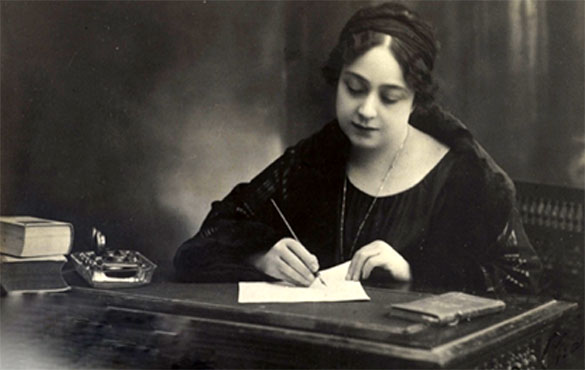
Huda Sha'arawi - Wikipedia
------
Despite being born into an elite family, they too were
destined to grow up in oblivion. In those days girls were denied schooling.
Women huddled indoors in secluded rooms and wore face veils when going out.
Huda Sharawi's situation was no different. She was deeply disappointed that she
was denied the same schooling as her brother. She was deeply saddened by the
family's neglect of her studies and their secondary attitude towards her as a
girl. Huda realized that being a woman stood between her and her freedom.
The Egyptian Feminist Union was founded in 1923 by Huda
Shaarawi, president of the Women's Central Committee of the national political
party 'Wafd' in 1920. In March of the same year, she removed her headscarf and
face covering from a train at the Cairo railway station. He jumped out of the
train with his head open. Other women were invited to join this movement
At the age of 13, she was forced to marry her cousin, Ali
Shaarawi, who was 40 years older than her. She had no choice but to give in to
save her family's honor. But Huda decided to speak out about his pain and start
the revolution himself. So as a child she started speaking to people against
this injustice. As a result, many women came out of hiding for the first time
in their lives. In 1908, under the leadership of Huda, the first secular
charity organization run by Egyptian women was formed. It was for service
activities for underprivileged women and children.
Huda and her husband Ali were strong supporters of Egyptian
independence from Great Britain. In 1920, Huda became the president of the
Women's Central Committee of a national political party called 'WAFD'. The open
participation of women in the national movement marked a turning point in
Egyptian society. Never before had so many women been openly involved in
political activities. After her husband's death, Huda Sherawi shifted her focus
from the nationalist movement to efforts towards women's equality. In 1923, she
founded the Egyptian Feminist Union. It spurred women's suffrage, personal law
reforms, and educational opportunities for girls and women.
In March of the same year, an incident that shook the
country took place. It was when Huda Shaarawi was returning home after
attending the International Women's Conference in Rome. She removed her
headscarf with face covering from the train at the Cairo railway station. He
jumped out of the train with his head open. Other women were invited to join
this movement. This was the first anti-headscarf protest in Egypt. It became a
strong blow on the face of the religious priesthood. Many women came out from
inside as part of the protest. Huda then ventured into the practical ways of
women's education. Schools were started for girls. An organization called the
Egyptian Feminist Union was also formed. Their fight to raise the marriageable
age of girls to 16 was successful. Huda Shaarawi remained president of the
Egyptian Feminist Union for the rest of her life and became the founding
president of the Arab Feminist Union in 1945. She left this world in 1947 after
constant struggle for the liberation and rights of women and children.
Doria Shafiq: The Daughter Of The Storm-Turned-Nile
Doria Shefiq, a poet and editor, was one of the prominent
leaders of the women's liberation movement in Egypt in the mid-1940s. As a
result of their struggle, Egyptian women won the right to vote.
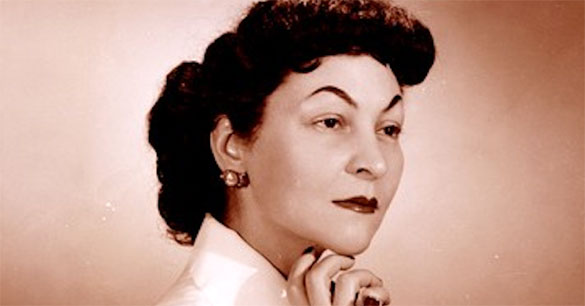
Doria
Shefiq, a poet and editor
------
Doria was one of the first Egyptian girls to graduate from
secondary school with a baccalaureate degree at the age of 18. The Egyptian
Ministry of Education awarded her a scholarship to study at the Sorbonne
University in Paris. He received his PhD in Philosophy. She wrote a thesis on
equal rights for women. When she returned to Egypt from France in 1940 after
her studies, she wanted to contribute to the education of her country's youth
through teaching, but was denied a teaching position by the Dean of the Faculty
of Literature at Cairo University on the grounds of being 'liberal'.
The event that caused a storm in the Egyptian Parliament
took place in February 1951. Doria Shefiq secretly brought 1500 women to the
parliament through Bint Al Nil and the Egyptian Feminist Union. She stalled
Parliament for hours with several demands related to women's socio-economic rights.
This created a huge uproar in the country
He then became the editor-in-chief of La Femme Nouvelle, a
French cultural and literary magazine. It was decided to publish an Arabic
magazine called Bint Al Nil (Daughter of the Nile) aimed at educating Egyptian
women and helping them play the most effective role in the family and society.
The first edition sold out immediately after its release in November 1945.
Two years later Doria formed the 'Bint Al Nil' Union to
address the primary social issues of women and ensure their inclusion in the
country's policies. Efforts were made to eradicate illiteracy by setting up
centres for the purpose across the country and setting up employment offices
and cafeterias for employed women.
The event that caused a storm in the Egyptian Parliament
took place in February 1951. Through Bint Al Nil and the Egyptian Feminist
Union, Doria secretly brought 1500 women to the parliament. She stalled
Parliament for hours with several demands related to women's socio-economic
rights. This created a huge uproar in the country. In the same year, Doria
formed a uniformed paramilitary unit. She led a senior brigade to surround and
shut down a bank in the country. Police arrested them during the demonstration.
After the Egyptian revolution of 1952, the government
invited Bint al-Nil to recognize it as a political party. Doria Shafiq herself
became its president. In March 1954, she went on an eight-day hunger strike in
protest against the formation of the Constitution Committee without women. They
ended their strike after receiving written assurances from President Najib that
he would commit to a constitution that respects women's rights. As a result of
the interest sparked by the hunger strike, Doria was invited to lecture on
Egyptian women in Asia, Europe and America. She travelled to Italy, England,
France, the United States, Japan, India, Sri Lanka and Pakistan. As a result of
Doria's tireless efforts, women got the right to vote under the 1956
Constitution.
Doria went on a second hunger strike at the Indian Embassy
to protest the dictatorial rule of President Jamal Abdul Nasser. Nasser put
them under house arrest. Their names were banned from the newspapers and their
magazines from circulation. They waged an unrelenting and continuous struggle
against the priesthood and the state. In addition to print media, she has
written a novel, 'El Eslave de Sultan' (The King's Slave) and several poems
about the slavery of women to men.
Nawal El Saadawi: Owner of Bright Liberation Politics
It seems that there is no other women's liberator in the
world who has fought and struggled with the authoritarian system within
religion and within capitalism like Nawal El Saadawi. Nawal Saadawi is the
second wave in the fight for women's rights in Egypt. That life was a vast sea
of experiences that at once baffled and thrilled those who sought to know them.
A brilliant personality who shined in diverse fields like writer, activist,
physician, mental health expert, teacher and organizer.
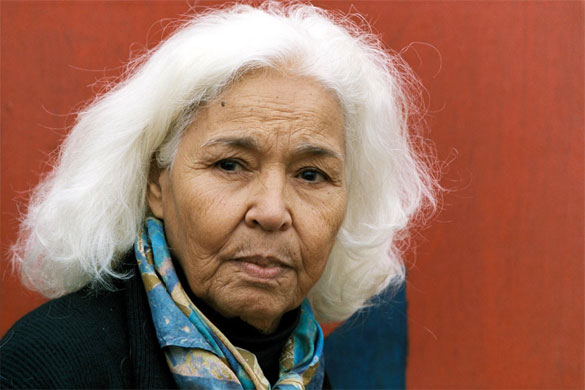
Nawal El Saadawi: Egyptian author and activist
-----
Till she left this world on March 21, 2021 at the age of 89,
she continued to radiate the fresh energy of unique thought and bravery. For
decades, she has shared her story and perspectives with the world through
novels, essays, autobiographies, and lively conversations. Their brutal honesty
and unwavering dedication to advancing women's political and sexual rights
struck a chord enough to inspire generations.
Nawal El Saadawi made the most accurate political
observation that 'oppression of women has its roots in the global capitalist
system, supported by religious fundamentalism'.
Saadawi’s works have been translated from Arabic into more
than thirty languages. She was a strong critic of capitalism as well as
religions. She made the most accurate political observation that 'the
oppression of women is rooted in the global capitalist system, supported by
religious fundamentalism'.
Born the second of nine children in a village on the
outskirts of Cairo in 1931, Saadawi’s life was surprisingly eventful. Saadawi’s
father was an official in the Egyptian Ministry of Education. During the
Egyptian Revolution of 1919, he was exiled to a small town on the banks of the
Nile as a result of campaigning against British occupation. Being relatively
progressive, he taught his daughter to grow up with self-respect. Those parents
encouraged their children's education. Even so, Saadawi was subjected to female
genital mutilation (FGM) at the age of six according to the local custom. In
her book 'The Hidden Face of Eve', she describes the painful brutality on the
bathroom floor. She campaigned against this practice throughout her life. It
was argued that it was meant to oppress women. Egypt banned FGM in 2008. Yet
Saadawi continued to fight against it.
There was an attempt to get her married at the age of 10,
but her mother objected. Sadavi learned at an early age that daughters are
valued less than sons in that society. When her grandmother once said, 'A boy
is worth at least 15 girls,' she cried out against it. Saadawi wrote his first
novel at the age of 13! The early demise of her parents put the burden of
taking care of the large family on her shoulders, but she did not get
discouraged. He graduated in medicine from Cairo University in 1955, worked as
a doctor, including in villages, and eventually specialized in psychiatry. He
joined the Egyptian government as director of public health.
Ever since she dared to speak out dangerously, Saadawi has
faced death threats and imprisonment. They never retreated in fear. 'I am
telling the truth. "Truth is cruel and dangerous," they once said. A
friend called her 'born with a fighting spirit'. About Omnia Amin Saadawi. She
got a fighting spirit and self-esteem from her father. She proudly described herself
as a dark-skinned Egyptian woman from a young age. Fearlessly looking the
priesthood and its political forms in the face, they exposed the truth. At one
point, Egyptian President Anwar Sadat put them behind bars.
In 1972, while director of public health, she was fired
after publishing a non-fiction book, Women and Sex, which criticized FGM and
the sexual harassment of women. The magazine 'Health' founded by Saadawi was
closed down. Yet speaking and writing did not stop. In 1975, the novel 'Woman
at Point Zero' was published. The novel was based on the real-life account of a
woman on death row.
In 1977, she wrote 'Hidden Face of Eve', which chronicled
her experiences as a village doctor witnessing sexual harassment, murders and
prostitution. This created a great stir. Critics have accused it of subverting
the role models of Arab women. In September 1981, under the regime of President
Anwar Sadat, Saadawi was arrested and imprisoned for several months. She
scribbled notes on dirty toilet paper using an eyebrow pencil from her sex
worker in prison.
After Anwar Sadat's assassination, Saadawi was released from
prison. But their work was censored and their books banned. In the years that
followed, death threats came from fundamentalists. The courts went up.
Eventually he became an expatriate in the US. She has accepted offers to teach
in the Department of Asian and African Languages at Duke University in North
Carolina and at the University of Washington. From there the attacks on
religion, colonialism and Western hypocrisy continued.
He later held positions at several prestigious colleges and
universities, including Cairo University, Harvard, Yale, Columbia, Sorbonne,
Georgetown, Florida State University, University of California, and Berkeley.
She received honorary degrees from three continents. But their only dream or
hope was recognition from Egypt. She said that she has received honours all
over the world but none from her own country. Saadawi returned to his beloved
Egypt in 1996. In the 2004 election, he tried to run for the presidency. In
2011, he was in Cairo's Tahrir Square to protest against President Hosni
Mubarak. He spent his last years in Cairo with his son and daughter.
Leila Ahmed: Enemy of Arab Nationalism
Later, there were attempts to interpret from the foundations
of the religion that much of the emancipation of women was embedded in the
history, ideas, and practices of Islam itself, rejecting the ideas of Western
feminism that were tied only to upper-class women's rights consciousness. The
most notable in this stream was Dr. Laila Ahmed. She was a professor at Ansar
University in Cairo. Leila Ahmed‘s interventions were not like those of
her predecessors Huda Shaarawi, Doria Shefiq or Nawal Saadawi.
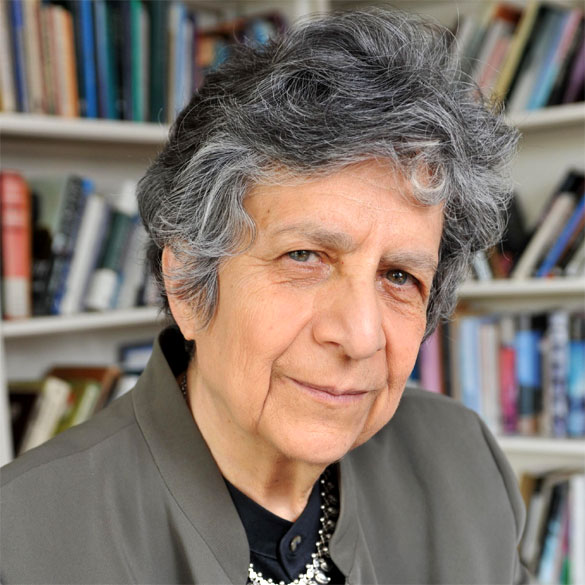
Leila Ahmed
---
They made attempts to interpret feminism in Islam on the
basis of the Qur'an. In her 1992 book 'Women and Gender in Islam', she
argued that it was the patriarchal interpretations of Islam that pushed women
to such a subordinate position. Islam came into the hands of the Mullahs and
their rule came over the religion. Leila observes that if it had remained in
the hands of the Maulvis, the possibilities would have been very transformative
in the Islamic world.
Leila Ahmed said that Islam will automatically develop and
evolve only if it becomes a jurisprudence that is both spiritually and morally
appropriate for human society.
Much before the modern world, Islam gave women a place in
the mainstream in marriage, divorce, family life, business and other socio-political
spheres like property rights. However, she emphatically stated that the real
women's emancipatory potential within Islam was being undermined where the
existing conservative clergy and administrations were not ready to interpret it
in a modern way.
Leila took a strong stance against Egyptian Arab
nationalism. They argued that Arab nationalism was a form of cultural
imperialism. They warned that it would erode not only the Arabic-speaking
population but also the cultural diversity and diversity of non-Muslims. Leila
Ahmed said that Islam will automatically develop and evolve only if it
becomes a jurisprudence that is both spiritual and moral. From Egypt's cultural
diversity, she wrote 'A Border Passage' in 1999, which is very relevant in the
new global political situation.
Fatima Mernissi: The Dangerous Muslim Scholar
Beyond the two absolute concepts of men and women, the
regress made by a faithful Muslim woman to history by removing the hundreds of
vestiges of the priesthood, which later came as a subversion on the content of
gender equality and justice in Islam, is surprising. When Fatima Mernissi, a
Moroccan woman, travelled through those paths that were not followed by many,
some harsh truths that had not been revealed to the world until then were revealed.
Mernice wrote that he knew that traveling back in time would be dangerous.
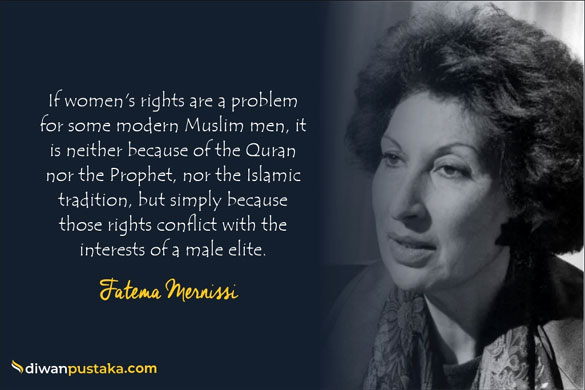
Mernissi made the crucial findings that the hijab in Islam
is not a woman's head covering, but rather the idea of separating the inner
world of the home from the outer public space in the Qur'an. The Qur'anic word
on hijab, which was revealed to teach the Arab people proper manners at that
time, was later subjected to a massive subversion and turned into a piece of
cloth covering a woman.
She was not denying the misogynistic hadiths (prophetic
teachings) currently celebrated in the Muslim world by turning a blind eye to
being a woman by its very nature. Rather, it led a careful investigation into
the origin of alleged misogyny attributed to the Prophet Muhammad. Mernissi's writings,
which are based on the knowledge that is the foundation of patriarchy, are too
dangerous for the Muslim male supremacists who celebrate Islam as their own
'religion'.
Examining the linguistic, social, and historical aspects of
the hijab, Mernissi explores the linguistic, social, and historical aspects of
the hijab, revealing that the veil that came down from 'heaven' was used to
cover women, separate them from men, and separate them from God.
They made the crucial findings that the hijab in Islam is
not a woman's head covering, but rather the idea of separating the inner world
of the home from the outer public space that the Qur'an proposed. The Qur'anic
word of hijab, which was revealed to teach the Arab people of that time proper
manners, was later subjected to a massive subversion and turned into a piece of
cloth to cover a woman.
Prophet Muhammad's residence was always accessible to his
followers at any time. Moreover, there was no division between his private and
public life. The said word of God was born when the people visited him without
any formality. The verse teaching that you should not enter his house without
permission later evolved into a division based on gender. Examining the
linguistic, social, and historical aspects of the hijab, Mernissi reveals that
the veil that came down from 'heaven' was used to cover women, separate them
from men, and separate them from God.
Another serious fact is that they discovered that the
internal disintegration of the Muslim world took place immediately after the
death of the Prophet Muhammad, after a careful and long search into the hidden
paths of history. The unusual and surprising investigations and readings by a
Muslim scholar were, however, ignored in the Arab masculinity milieu.
According to Mernissi, the famous hadith compiler al-Bukhari
found that 5,96,725 fake hadiths were in circulation two centuries after the
death of the Prophet Muhammad. Some spread false sayings which they claimed to
be from the Prophet for their gain. They were twisting the contents of the
hadith and making changes in the series of persons who transmitted it!
The Muslim man argues that any Muslim woman who stands for
dignity and citizenship rights is out of place in this society. They are easily
accused of being brainwashed by the West because they do not understand their
own religious tradition and cultural identity. Mernissi unequivocally reminds
us that our quest for pride, democracy, human rights and equal participation in
the political and social affairs of our country originates from authentic
Muslim traditions and not from imported Western values, and therefore, this
knowledge empowers us as Muslim women to walk proudly before the world.
Mernissi's authoritative finding was that hundreds of years
before the Prophet was alive, lively debates about women's emancipation and
various approaches to it were being discussed in the streets of Medina, through
which women had grasped multifaceted rights. Mernice's was a leap into the
truths that our history has deliberately hidden about these women.
"Thousands of women flocked to the Prophet's city of
Medina in the seventh century from the aristocratic patriarchate of Mecca
because Islam promised dignity and equality to men and women, master and
servant alike." Many young tribal women and slaves alike were attracted to
the new religion. The prophet of this religion spoke out for human dignity and
equal rights while raising serious challenges to the establishment and became a
nightmare for the authorities in Mecca. But Mernice says the greatest conundrum
of our time is that his message of universal equality is viewed as an import
from the outside world.
Those who argue that gender equality is a foreign matter
should be aware of the stark reality that the narrow streets of Medina were
already riddled with gender equality disputes 15 centuries ago. She points out
in her book 'Weil and the Male Elite' that while it took the West many
centuries to digest the ideas of democracy and gender equality, Muslims had to
respond within a few decades of the establishment of Islam.
Mernici's 'Beyond the Veil', published in 1975, has become
the most widely read classic in English. Through this book, she examines the
Arab world and Muslim women's lives from the levels of anthropology and
sociology.
Amina Wadood: A Woman Who Challenged By Deeds
Amina Wadud was the Mary Tesla of an Afro-American family
until she recognized and embraced the liberating possibilities within Islam
through research and study. In 1994, she delivered a Jummah (Friday prayer)
sermon at a mosque in Cape Town, South Africa, unlike other prominent female
figures in the Muslim world. It was read as a powerful blow to the head of the
priestly aristocracy. Ten years after that happened, in 2005, she led Friday
prayer itself.
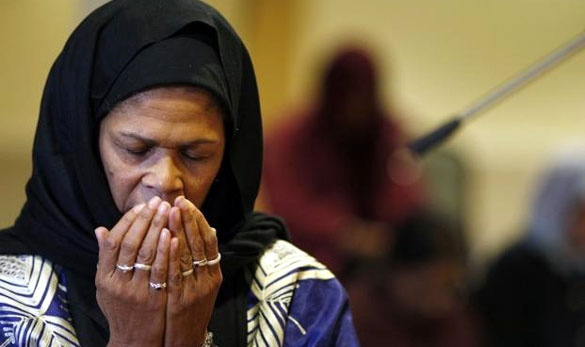
Amina Wadood
------
Both men and women rallied behind the woman without
distinction. With this, they have become extremely dangerous women who should
not be approached in the traditional Muslim world including Kerala. However,
regardless of such insults and threats, today he is busy spreading his research
and readings in different parts of the world like the US, South Asia, Africa
and Europe.
Amina Wadood joined Virginia Commonwealth University as a
professor in the Department of Religion and Philosophy in 1999 and retired from
there in 2008. The book 'Qur'an and Women' is enough to understand the depth of
their knowledge and inquisitiveness.
Asma Barlas: The Spark of Feminist Readings of Islam
Another woman at the forefront of feminist readings of Islam
is Professor Asma Barlas, author of 'Believing Women in Islam', which
examines patriarchal interpretations of the Qur'an historically. Asma, a
Pakistani-American writer and academic, has an independent and strong
personality.
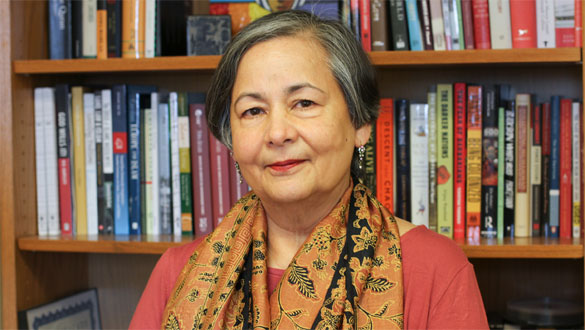
Asma Barlas
------
Asma Barlas has stated that she rejects 'Islamic feminism'
unless it can be defined as a discourse of gender equality and social justice.
Born in Lahore, Pakistan in 1950, her education extended to the
US. Asma Barlas deconstructs the notions of women and gender entirely from
within the Qur'an and not through Muslim cultural practices or Western media
stereotypes. The book 'Believing Women in Islam: Unreading Patriarchal
Interpretations of the Qur'an is a great contribution to those who want to
study Islam in that sense.
Their writings pose a serious challenge to the ego of the
religious authorities and the conventional Muslim world, who seek justification
from the Qur'an for sexual oppression, inequality, and patriarchy. Asma Barlas
has stated that she rejects 'Islamic feminism' unless it can be defined as a
discourse of gender equality and social justice. Through their studies, they
found that the Qur'an enjoins justice for all human beings across the
public-private continuum over their existence.
Asma, who holds an MA in English Literature and Philosophy,
an MA in Journalism from Punjab University and a PhD in International Studies
from the University of Denver, was one of the first Pakistani women to enter
the Foreign Service in 1976. After six years they were disbanded on the orders
of General Ziaul Haq. In 1991, he joined the Department of Political Studies at
Ithaca College. For 12 years she was the founding director of the Centre for
the Study of Culture, Race, and Ethnicity. In 2008, he also served in the
Department of Philosophy at the University of Amsterdam.
Conclusion
So many brilliant women in the modern world have breathed
life into the rebirth of the dead research of ijtihad, which has led the Muslim
world to decline in every sense. There is no doubt that if the world of deep
investigations and ideas raised by such personalities is opened up through
debates, then this nation will escape from the current poverty of thought and
uncertainty.
Indian Muslim women can learn a great deal from Muslim women
reformers like Begum Rokeya Sakhawat Hossain and Asma Jahangir. Firstly, they
can draw inspiration from their courage and determination in challenging
societal norms and advocating for women's rights. These reformers demonstrated
that change is possible through education, activism, and a steadfast commitment
to justice.
From Begum Rokeya, Indian Muslim women can learn the
importance of education as a tool for empowerment. Rokeya's establishment of schools
for Muslim girls emphasized the transformative power of education in breaking
down barriers and enabling women to assert their rights and independence. Her
message underscores the significance of seeking knowledge and self-improvement
as pathways to personal and societal advancement.
Similarly, Asma Jahangir's advocacy for human rights and
gender equality provides valuable lessons for Indian Muslim women. Jahangir's
fearless pursuit of justice and her unwavering dedication to challenging
discrimination serve as a beacon for those fighting against oppression. Her
emphasis on the principles of equality and dignity within Islam resonates with
Indian Muslim women, encouraging them to assert their rights within the
framework of their faith.
Overall, Indian Muslim women can learn from these reformers
the importance of resilience, solidarity, and active engagement in efforts to
promote gender equality and social justice. They can draw strength from their
legacy and work towards creating a more inclusive and equitable society for
themselves and future generations.
-----
A regular columnist for NewAgeIslam.com, Mubashir
V.P is a PhD scholar in Islamic Studies at Jamia Millia Islamia and freelance
journalist.
URL: https://newageislam.com/islam-women-feminism/muslim-world-reformers-south-asian-role-models/d/132225
New Age Islam, Islam Online, Islamic Website, African Muslim News, Arab World News, South Asia News, Indian Muslim News, World Muslim News, Women in Islam, Islamic Feminism, Arab Women, Women In Arab, Islamophobia in America, Muslim Women in West, Islam Women and Feminism