
Taliban Told the 14-Year-Old That She Was “Too Old” To Study, Expelled Hundreds of Female Students
New
Age Islam News Bureau
07
October 2022
•
Female Arab Influencers, Amy Roko, Hadeel Marei and Maha Jaafar, Star In New
Reality Show from Warner Bros. Discovery and Intigral
•
Swedish Member of the European Parliament, Abir Al-Sahlani, Cuts Hair during
Speech in Solidarity with Iranian Women
•
Free Bus Service Launched For Women in Northern Pakistan
•
Turkish Women Back To School with Project Led By First Lady
Compiled
by New Age Islam News Bureau
URL: https://newageislam.com/islam-women-feminism/taliban-female-student-afghan-sharia-/d/128126
--------
Taliban
Told the 14-Year-Old That She Was “Too Old” To Study, Expelled Hundreds of
Female Students
The
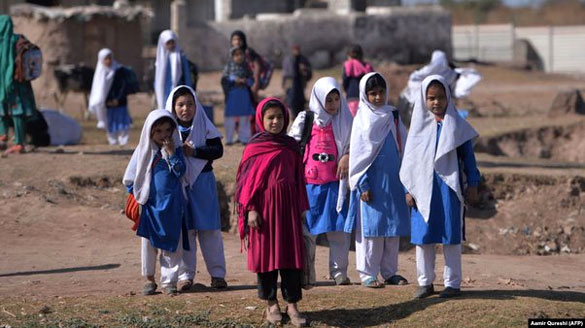
Taliban has expelled hundreds of pubescent girls from primary schools in the
southern Afghan province of Kandahar within the framework of a controversial
ban on attending classes for girls who have reached puberty. (file photo)
-----
October
06, 2022
Razia
was expelled from her school in the southern Afghan province of Kandahar last
month. The Taliban told the 14-year-old that she was “told old” to study.
“I’m
not alone,” she told RFE/RL’s Radio Azadi. “Many girls my age have been forced
out of school.”
In recent
weeks, the Taliban has carried out inspections of girls' schools in the
province and expelled hundreds of pubescent female students. They have joined
the estimated 3 million girls in Afghanistan who are being deprived of an
education.
Since
seizing power last year, the militant group has barred girls who are 13 or
older or above the sixth grade from attending school.
The
expulsions in Kandahar are part of the Taliban’s enforcement of its deeply
controversial ban, which has fueled protests inside the country and attracted
international condemnation.
According
to the Taliban’s extremist view of Islamic Shari’a law, girls who have reached
puberty must be segregated from male students and teachers. The militants have
claimed that, due to a shortage of female teachers, they cannot permit
pubescent girls to attend school. Before the Taliban takeover, many girls’
schools were already segregated.
The
Taliban has not given exceptions to girls who started school late, had to
repeat school, or have learning disabilities.
Fawzia,
a 15-year-old who was in the fifth grade, was expelled from her school in
Kandahar’s Daman district last month. She said the Taliban kicked out more than
100 girls from her school alone after carrying out an inspection.
“We
want the [Taliban] to open our schools so we can build a prosperous future,”
said Fawzia. “I want to be a doctor so I can serve my country.”
"I
felt terrible when we were ordered to leave our classes and told not to come
back," said Gulalai, another 15-year-old girl in the fifth grade from
Daman district. "We are now in a very tough situation."
Mawlawi
Fakhruddin Naqshbandi, the provincial head of the Taliban’s Education Ministry
in Kandahar, confirmed the expulsions. He said girls who were 13 or older or
had reached puberty were being expelled.
Rare
Display Of Defiance
Afghan
women and girls have taken to the streets to protest the Taliban’s ban and
demand their basic rights since the militant group seized power in August 2021.
Last
month, schoolgirls, women, and even Afghan elders openly demonstrated their
support for girls' education in social media posts and street protests across
the country, in a rare display of defiance under the Taliban.
The
protests came after recently opened girls' schools in the southeastern province
of Paktia were suddenly closed again, and a top Taliban official stated that
Afghans do not back education for girls.
More
recently, a deadly suicide bombing on September 30 that killed dozens of girls
and women in Kabul triggered some of the largest and most sustained protests
against Taliban rule.
Defying
the Taliban’s ban on unsanctioned rallies, women held rallies in the cities of
Kabul, Herat, Mazar-e Sharif, and Ghazni and the provinces of Bamiyan and
Kapisa. The demonstrators rallied against the Taliban government’s restrictions
on women and its inability to protect ethnic and religious minorities.
Activists
say the Taliban’s ban has been unpopular in Kandahar, part of the conservative
Pashtun heartland where the Taliban first emerged in the 1990s.
“All
Afghans support education,” Ahmad Shah Spar, a local activist, told Radio
Azadi. “This has been proved by the protests and the campaigning of thousands
of women and men.”
Since
returning to power, the Taliban has imposed a raft of restrictions on women and
girls, including on their appearance, access to work and education, and freedom
of movement. The rules are reminiscent of the Taliban’s first stint in power
from 1996 to 2001, when the group deprived women of their most basic rights.
The
Taliban initially promised to respect women's rights within the framework of
Islam.
But
in an October 5 report, global human rights watchdog Amnesty International said
the Taliban's systematic attacks on the rights of women and girls were aimed at
“completely erasing" them from public life.
“The
ban on secondary education for girls, in particular, threatens to do
generational damage to girls and women of the country,” the report said.
Source:
Gandhara
--------
Female
Arab Influencers, Amy Roko, Hadeel Marei And Maha Jaafar, Star In New Reality
Show From Warner Bros. Discovery And Intigral
The
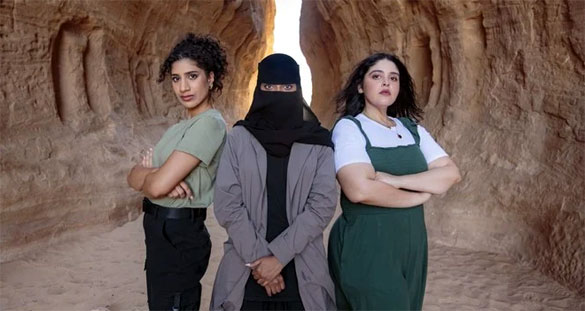
six-episode series will follow the three friends as they embark on a journey
across Saudi Arabia, the UAE and Egypt. (Supplied)
-----
October
06, 2022
DUBAI:
Warner Bros. Discovery has partnered with the Saudi Telecommunication Company’s
TV service Intigral to launch a new reality show, “Dare to take Risks,”
starring Arab influencers Amy Roko, Hadeel Marei and Maha Jaafar.
The
six-episode series will follow the three friends as they embark on a journey
across Saudi Arabia, the UAE and Egypt, participating along the way in
activities such as mountain climbing and diving.
“This
unique project is a landmark moment within our long-standing partnership with
Intigral,” said Francesco Perta, vice-president of business development and
distribution for MENA and Turkey at Warner Bros. Discovery.
“We
are excited for viewers to be inspired by this new generation of Arab women,
with their extraordinary creativity, zest and humor.”
The
show was filmed in some of the region’s most historic and distinctive
locations, including the UNESCO World Heritage sites of Hegra in Saudi and
Aswan in Egypt, as well as at the Burj Khalifa, the world’s tallest building,
in Dubai.
Peter
Mrkic, Intigral’s chief commercial officer, said the partnership “marks a new
milestone for digital entertainment in the region as it engages a group of
talents from the Kingdom and the region, and the best production and broadcast
technologies.
“It
will also enhance the Kingdom’s position as a production powerhouse and a hub
for the latest digital entertainment productions.”
The
first episode of “Dare to take Risks” will be available to stream on Jawwy TV
on Oct. 17, with new episodes released each week.
Source:
Arab News
https://www.arabnews.com/node/2176611/media
--------
Swedish
Member of the European Parliament, Abir Al-Sahlani, Cuts Hair during Speech in
Solidarity with Iranian Women
October
05, 2022
BRUSSELS:
A Swedish member of the European Parliament lopped off her hair during a speech
in the EU assembly in solidarity with anti-government demonstrations in Iran
ignited by the death in morality police custody of 22-year-old Mahsa Amini.
“Until
Iran is free, our fury will be bigger than the oppressors. Until the women of
Iran are free we are going to stand with you,” Iraqi-born Abir Al-Sahlani said
in the parliament in Strasbourg, France, on Tuesday evening.
Then,
taking a pair of scissors, she said “Jin, Jiyan, Azadi” — Kurdish for “Woman,
Life, Freedom” — as she snipped off her ponytail.
Leading
French actresses including Juliette Binoche and Isabelle Huppert have also cut
locks of hair in protest over Amini’s death after she was arrested in Tehran on
Sept. 13 for “inappropriate attire.”
Iran’s
clerical rulers have been grappling with the biggest nationwide unrest in years
since her death and protests have spread abroad including London, Paris, Rome
and Madrid in solidarity with Iranian demonstrators.
Source:
Arab News
https://www.arabnews.com/node/2175791/middle-east
--------
Free
bus service launched for women in northern Pakistan
October
06, 2022
Sana
Jamal
Islamabad:
A free-of-cost bus service exclusively for women has been launched in
Pakistan’s northern Gilgit-Baltistan (GB) region to improve women’s mobility
and safety.
GB
Chief Minister Khalid Khursheed officially launched the ‘Pink Bus Service’ this
week to increase the usability of public transport for women.
“For
the first time in Pakistan’s history, free buses for women have been launched.
Three buses each have been made operational in Gilgit and Skardu city, with the
government planning to expand it to further areas of the province,” said GB
Chief Secretary Mohyuddin Ahmad Wani.
“Female
students, doctors, teachers, lawyers and other professionals will benefit from
the women-only bus service.”
The
transport project has been initiated with three buses and the local government
plans to procure more buses to expand the service to more regional areas. The
buses will cover four key routes in the Gilgit and Skardu regions between 6am
to 9am and 1pm to 3pm.
Addressing
safety concerns in public transport
The
GB chief secretary said that the authorities are addressing mobility challenges
that are critical to enhancing female workforce participation and boosting
economic growth. “We want to improve the accessibility of our female citizens
by providing free of cost and safe public transport. Now they can travel alone
to their educational institutes, workplaces and markets without any hassle.”
Locals
welcome the free bus service
Local
people have welcomed the initiative of a free bus service for women who used to
travel via expensive and often unsafe modes of transport for schools, jobs and
other outdoor activities.
“Safety
is the key element. Women in this region were less likely to travel alone
because sometimes we feel unsafe travelling, especially after dusk” says Sarah
Ahmed, a resident of Gilgit city. “But now we can have a safe and comfortable
ride for free.”
Suraiya
Shah, a college student in Gilgit, appreciated the move but asked the
government to extend the timings to facilitate more students. “More buses and
extended timings would encourage more women to pursue education or jobs,” she
said.
Safe
public transport networks are considered essential to improving women’s safety,
movement and access to career and other social opportunities. Limited access to
and safety of transportation is estimated to be the b obstacle to women’s
participation in the workforce in developing countries, according to
International Labor Organization (ILO).
Source:
Gulf News
--------
Turkish
women back to school with project led by first lady
OCT
07, 2022
Thousands
of women forced to drop out of school early in their lives have a second chance
for resuming their education thanks to a project spearheaded by first lady
Emine Erdoğan and the ruling Justice and Development Party (AK Party).
The
“Where Did We Leave Off” project launched last year helped 21,176 women who
dropped out after graduating from middle school to go back to high school. In
the new school year, women can sign up for admission to schools until Oct. 14.
Speaking
about the project at a press conference on Thursday in the capital Ankara, Ayşe
Keşir, head of the AK Party’s Women’s Branch, said it was an opportunity for
all female dropouts and said women had a great interest in the project so far.
“It focuses on women seeking high school education but women who had to drop
out of middle school can apply as well,” she said. Keşir stated that women can
apply online or by visiting the nearest local Directorate of National
Education.
She
said education was the most important instrument for equal opportunities and
the rate of girls in university programs rose to nearly 50% from 13.5% when the
AK Party won its first electoral victory back in 2002. “Women do their best
once they are given equal opportunities. Moreover, it contributes to positive
changes in decision-making mechanisms and employment. Women are an inseparable
part of development,” she said.
In
a social media post, Erdoğan invited women to join the program. “We took the
first step last year with excitement for 'Where Did We Leave Off,' a new
mobilization drive for education. I made a call to our women dreaming of having
a diploma. I congratulate thousands of sisters who heeded the call and signed
up. I call you again to join this initiative. You are not late to achieve your
dreams. Just believe in yourself, in your resolve to resume your education,”
she wrote.
The
project allows women to sign up for high schools offering distance learning
opportunities. The high schools allow participants to graduate at the end of
eight semesters. Members of the AK Party’s women’s branches in 81 provinces
offer guidance, consultation for women seeking to sign up for the project and
help them access educational materials.
The
first lady was also behind a literacy campaign for women she launched with
President Recep Tayyip Erdoğan in 2018, reaching out to more than 1 million
people. Literacy classes provide a chance for women of all ages to return to
school and draw people from all walks of life. Public schools and lifelong learning
centers still help women who want to attend literacy courses. In Türkiye,
literacy among people aged 15 and over is 95.9%, according to 2019 figures.
Although access to education has increased, girls in rural areas, where every
family member works to earn a living for the family at an early age, are often
forced by their parents to give up their education. Coupled with an
ultraconservative patriarchal mindset, girls are often convinced or forced to
drop out of school after completing mandatory primary education.
Source:
Daily Sabah
--------
URL: https://newageislam.com/islam-women-feminism/taliban-female-student-afghan-sharia-/d/128126
New Age Islam, Islam Online, Islamic Website, African Muslim News, Arab World News, South Asia News, Indian Muslim News, World Muslim News, Women in Islam, Islamic Feminism, Arab Women, Women In Arab, Islamophobia in America, Muslim Women in West, Islam Women and Feminism