
Tunisian Girl, Sara Rahuma’s Love for Turkish Language Makes Her Country's First Host of Radio Show in Turkish
New
Age Islam News Bureau
20
January 2023
• Female
Arab Directors Haifaa Al Mansour and Kaouther Ben Hania Win Saudi Film Grants
• Mannequins
with Covered Faces Reveal ‘How Much Worse Life Is Going To Become For Afghan
Women’
• Orlando
Muslim Women Create Culturally Competent Resources for Survivors Of Domestic
Abuse
• Meet
the Athletes Promoting Islam, Creating a Positive Image of Muslim Women
• Saudi
Women Join Security Forces to Manage Hajj, Umrah Pilgrims
Compiled
by New Age Islam News Bureau
URL: https://newageislam.com/islam-women-feminism/tunisian-sara-rahuma-turkish-language/d/128924
--------
Tunisian
Girl, Sara Rahuma’s Love for Turkish Language Makes Her Country's First Host of
Radio Show in Turkish
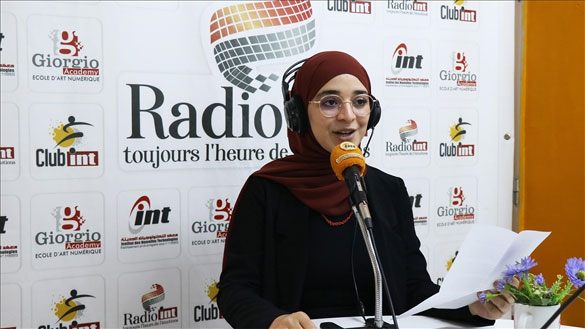
Sara
Rahuma
-----
Mehmet
Akif Turan
20.01.2023
TUNIS,
Tunisia
A
young Tunisian woman's love for the Turkish language made her the country's
first host of a radio program in Turkish.
Sara
Rahuma began to learn Turkish off her own bat when she was 11-12 years old
because of her love for Turkish. However, she began to have proper Turkish
lessons in high school as she took them as an elective course.
After
completing her master's degree in Hygiene and Environmental Safety, she --
having her bachelor's degrees in biotechnology and multimedia -- continued her
education in the field of media at the Institute of New Technologies.
There,
Rahuma joined the institute's multimedia club and began preparing radio
programs in Turkish.
Rahuma
-- now hosting her radio show "Türkce Konusalım" (Let's Talk in
Turkish) -- told Anadolu about her adventure with the Turkish language.
"When
I first discovered Turkish, I was in primary school. I began to learn Turkish
on my own. How to pronounce Turkish words? How is the alphabet? I slowly
started to learn all this," she said.
'Turkish
is a part of my life'
Rahuma
had difficulty learning the Turkish language on her own, particularly the
Turkish language pronunciation.
She
says: "At first, while learning Turkish, I couldn't practice even if I
understood it. As far as I remember, no one around me knew or learning Turkish
back then. So I used to feel special."
The
young girl had no idea of how to improve her Turkish after high school, she
said, adding it was a turning point in her life when she learned that Turkish
lessons are given at the April 9 University during her university education.
"I
attended the lectures of Musa Kaya, who teaches at the university, and I took
Turkish lessons with the students I could practice with for four years."
She
noted, "I can say that I really learned Turkish. After learning it,
Turkish became a part of my life."
-Turkish
radio program, a first for Tunisia
Rahuma
is proud of achieving a first in Tunisia and she is pleased to realize her
dream of making a radio program in Turkish during her education.
After
joining her institute's multimedia club with a friend, she got the opportunity
to fulfill her dream of having her own radio show, she said.
"However,
I thought I wouldn't be accepted because I was too shy. When our trial radio
program was approved by the club president, we had the opportunity to start it
right away."
As
she made her radio program in Arabic for two years, Rahuma said, "We wanted
to do something more special and new."
"In
consultation with my Turkish teachers, I prepared a good radio show. I wanted
my work to leave a mark and be very special," she said.
Addressing
her audience in Turkish, she also gives information about Turkish culture and
plays Turkish songs.
Rahuma
said that her radio program that began last November is well received and that
the Tunisian audience, as well as the representatives of Turkish institutions
in Tunisia, support her radio show.
Thanking
those who support her, Rahuma said, "My dear Turkish teachers who
established Turkish Clubs at school and Turkish institutions in Tunisia have
always supported me."
She
also attended the Turkish Summer Course of Yunus Emre Institute in 2018 and did
an internship at Anadolu Agency's office in Tunisia while studying multimedia.
With
her Turkish teacher Musa Kaya, she also published a magazine named 'Ayyildiz'
(StarCrescent).
Her
efforts to improve her Turkish still continue by watching Turkish movies and
reading books of poems, she said.
She
underlined: "I want to call out to everyone here, if you have something
you believe in, a dream or a goal, go after it and never let go. Learning
Turkish has changed my life."
"It
was a very difficult process. I was trying to learn Turkish in an environment
where no one knew Turkish, but I did not give up and finally realized my
dream."
Source:
Anadolu Agency
--------
Female
Arab Directors Haifaa Al Mansour And Kaouther Ben Hania Win Saudi Film Grants
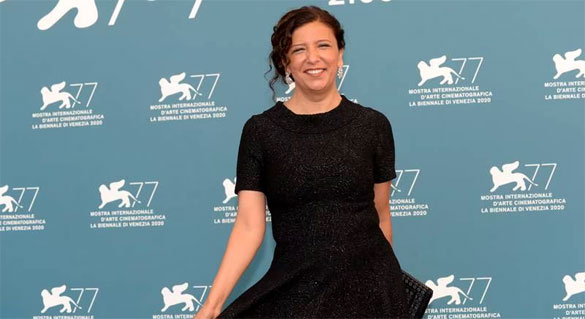
Director
Kaouther Ben Hania, pictured at La Biennale di Venezia 2020, will receive a
grant from the Red Sea Fund. Photo: La Biennale di Venezia
------
Razmig
Bedirian
Jan
19, 2023
Films
by Kaouther Ben Hania and Haifaa Al Mansour are among the 36 projects from
across the Arab world and Africa that will receive grants from the Red Sea
International Film Festival.
Mime,
a new feature fiction by Ben Hania, whose previous film The Man Who Sold His
Skin was nominated for a 2021 Oscar, will be receiving the grant. Additionally,
Miss Camel, a feature by Al Mansour that tells the story of a Saudi teenager
who strives to escape an arranged marriage and attend an art school outside the
country, will also be awarded.
Two
of the films selected for the grant had previously been supported at the
development stage by the Red Sea Fund, including Captain Mbaye, directed by
Rwanda's Joel Karekezi, and Aicha, directed by Mehdi M Barsaoui from Tunisia.
Ameer
Fakher Eldin’s Yunan was also selected for the grant. Eldin, who was born in
Ukraine to Syrian parents, now lives in Hamburg. The film participated in the
Red Sea International Film Festival Project Market, which took place on the
sidelines of the festival. The aim of the event is to connect producers of new
film projects with international financiers in the industry.
All
That’s Left of You by Palestinian-American writer, director and actress Cherien
Dabis, and All Before You by Palestinian filmmaker Annemarie Jacir were also
selected.
The
grant, organisers said, underpins the Red Sea Film Festival’s mission to
advocate for female filmmakers from the region, whether established or emerging
names. This also includes Saudi filmmaker Sara Mesfer, who will receive funding
for her debut feature.
The
fund is awarding 25 films in pre-production, including fiction, documentaries,
animations, series, shorts and immersive projects. Grants are also being given
to 11 films that are in post-production.
“We
have been impressed by the quality of submissions received this year which
subsequently made it a challenge to narrow the selection down to 25,” said
Mohammed Al Turki, chief executive of the Red Sea International Film Festival
Foundation.
"We
are confident the Red Sea Funds will support the winners through the creative
process to help share these important stories and showcase a raft of exciting
new and established Saudi, Arab and African talent."
The
11 films that received post-production grants include Norah, a Saudi film shot
in AlUla, directed by Tawfik Alzaidi and produced by Paul Miller; Blacklight,
directed by Karim Bensalah and produced by Oualid Baha, which won the Final Cut
Prize at Venice Film Festival; and Thiiird, directed by Lebanese filmmaker
Karim Kassem.
“The
11 selected films show enormous potential as groundbreaking stories that will
capture the imagination of global audiences and will benefit most from a final
boost of funding to allow these films to reach their full potential,” Al Turki
added.
Source:
The National News
--------
Mannequins
with covered faces reveal ‘how much worse life is going to become for Afghan
women’
January
19, 2023
After
seizing power in Afghanistan in August 2021, the Taliban have imposed draconian
laws on the citizens of the war-ravaged nation and barred women from attending
university and high school. It is now being reported that they have even
ordered textile shops to cover the faces of mannequins depicting women’s
clothing.
Photos
shared on Twitter show the grim reality as mannequins dressed in trendy gowns
stand with the whole of their faces covered by masks. A woman named Sara Wahedi
shared the photos and wrote, “The Taliban’s hatred of women extends beyond the
living. It is now mandatory for store owners to cover the faces of mannequins.
These dystopian images are a sign of how much worse life is going to become for
Afghan women if the world doesn’t stand with them.”
A
man named Faisal Azizi replied that he owned a store and that almost all his
employees were women in the 18-50 age group. Sharing images of mannequins
wearing traditional dresses with their faces covered, he wrote that they were
working in unfavourable and stressful conditions.
“But
the bare arms and necks are OK, are they? How incongruous!” a user asked.
Replying to him, Wahedi said, “Shopkeepers pleaded to the Taliban to let them
display products, otherwise it would destroy their businesses (shopkeepers are
all men, by the way). This was the Taliban’s solution for appeasing the
businesses, but to hide the mannequin’s faces.”
“The
best message for Afghanis is to leave any way they can. There is sadly no help
coming,” wrote another. “The men in the country need to stand up to the Taliban
instead of relying on other countries to do everything,” posted another
netizen.
Source:
Indian Express
--------
Orlando
Muslim women create culturally competent resources for survivors of domestic
abuse
By
Danielle Prieur
January
19, 2023
Muslim
women in the Central Florida area are meeting this weekend to design resources
for survivors of intimate partner violence in their community.
The
Muslim Women’s Organization in Orlando’s two-day summit will not only educate
women about how to spot signs of domestic abuse.
But
it will bring together women from the faith community, along with local
nonprofits and other community partners to brainstorm what resources and tools
survivors need.
Fatima
Sadaf Saied who runs the Muslim Women’s Organization said so often, Muslim
women come to them after they’ve gone to a women’s shelter, but find it wasn’t
a good fit for their family.
“That’s
like, the vision for the whole weekend is just us coming together because we
know what we need more than, say, somebody who's not Muslim or who's not a
woman, and we want to just really center that and center the voices of survivors,
and try to create something that's by us and for us.”
Sadaf
Saied envisioned a model of care that would address barriers to accessing it.
“But
these women, they can't afford childcare, you know, with Muslim women, a lot of
times you have language barriers and immigration issues," said Sadaf
Saied. "So, we're trying to think of what is a model that may be different
for our community that meets its needs.”
Sadaf
Saied says these resources must address specific cultural and religious needs,
along with needs that are common to every survivor including housing assistance
and emotional and spiritual counseling. To attend, register here.
If
you or someone you love is experiencing abuse, call or text the National
Domestic Violence Hotline at 1-800-799-SAFE (7233).
Source:
WMFE
--------
Meet
the athletes promoting Islam, creating a positive image of Muslim women
by
Leslie Wilson Jr
20
Jan 2023
Tunisia’s
Ons Jabeur made history last year when she became the first Arab player to
reach a Grand Slam final. Jabeur reached back-to-back Slam finals at Wimbledon
and the US Open.
But
more importantly, Jabeur is at the forefront of many successful Muslim
achievers who are excelling in their chosen sport in their Islamic environment.
A
winner of the 2019 Arab Woman of the Year Award, Jabeur has campaigned
tirelessly to protect Muslim women and Islam in a positive light, through
sport.
But
she is not doing this alone.
There
is a clutch of highly-motivated women athletes including Pakistani-American
weightlifter Kulsoom Abdullah, Egyptian beach volleyball star Doaa Elghobashy
and her compatriot Aya Medany, a pentathlete and Olympic fencer Ibtihaj
Muhammad whose mission is to empower women and girls through sports,
irrespective of their religion, values, and choice of clothing.
Here
are the four athletes making the difference.
Ons
Jabeur
The
out-spoken Tunisian who has steadily risen up the women’s ranks. In what was a
breakthrough year when she became the first North African, Arab, and Tunisian
woman to reach a Grand Slam final, Jabeur was also invited by the legendary
Serena Williams to partner her in the women’s doubles at a WTA event in
Eastbourne.
Speaking
about the challenges she had to confront en route to her present position,
Jabeur told media at the US Open: “I feel like you should always have
difficulties to be stronger, to be here one day and face the best tennis
players in the world.
“I
hope I can send a powerful message that if I have made it here, everybody can
make it here. Especially women from the Middle East, from the Arab world.”
Kulsoom
Abdullah
A
Pakistani-American weightlifter, Abdullah is the first female weightlifter to
represent Pakistan at an international event when she competed at the 2011
World Championships. The same year she made even more history when she
participated in the American Open Weightlifting Championship wearing a hijab
(head scarf) and with covered arms and legs.
Abdullah,
who would become a voice for Muslim women in sports. She once said in a blog
published by Elegant Times: "I only started having goals when I started
competing and started improving. I never thought about Hijab.
“Whatever
you do, people can criticize you, so just go for it. If I were going to
hesitate I never would’ve walked into a gym for weightlifting, whether I’m a
Hijabi, whether I’m a Muslim woman, even just a woman who dresses like the
average person dresses.”
Doaa
Elghobashy
Elghobashy
has been training to make Egypt’s Olympic beach volleyball team after she and
her teammate became the first Egyptian women to compete in Beach volleyball at
the Olympics in 2016.
She
made her Olympic debut in 2016 in Rio De Janeiro where she was permitted to
wear a hijab and become the first hijabi athlete to do so.
“I
have the right to play sports in whatever I feel comfortable in,” she told CNN
Sports.
“The
hijab is part of me. At the end of the day, it’s a sport, and I'm not a model.
I'm an athlete and people should focus more on my athleticism than my choice of
clothes.”
Ibtihaj
Muhammad
Three-time
NCAA All-American and Olympic bronze medallist in fencing, Muhammad originally
faced discrimination because of her conservative choice of sportswear in
athletics or tennis.
But
when her mother found that it was easier to design fencing outfits for her
daughter that would conform to Muslim values, Muhammad grabbed the chance to
pursue a career as a fencer.
“She
(her mother) saw this unique opportunity for me to participate in a sport as a
Muslim kid without having to run to Modell’s or Dicks Sporting Goods to add
something to the uniform like I did in track and field or in tennis,” she
recalled.
Muhammad,
who was once ranked as high as No 2 in the United Stakes and No 7 in the world,
famously promotes the Nike Pro Hijab.
Source:
Khaleej Times
--------
Saudi
women join security forces to manage Hajj, Umrah pilgrims
20
Jan 2023
A
total of 255 women in Saudi Arabia recently graduated from the Women’s Training
Institute of the Armed Forces after receiving training in Special Security
Forces, reported Saudi Gazette.
Hundreds
of women who graduated from the institute were declared to have specialized in
diplomatic security and security for the Hajj and Umrah pilgrimages.
As
reported by Saudi Gazette, they are the fourth batch of females graduates to
complete training at the institute. It is known that they have received
training in information technology and applications, as well as theoretical and
practical lessons in the skills required to carry out security tasks.
They
have also received training on security work systems and procedures, in addition
to preparing them for the specific responsibilities they must carry out in line
with the nature of their work.
The
graduation ceremony was held under the patronage of the Saudi Interior Minister
Prince Abdulaziz bin Saud bin Naif. It was attended by the Director of Public
Security, Lieutenant General Muhammad bin Abdullah Al Bassami.
Saudi
Arabia started recruiting women to join various branches of the Armed Forces in
2019.
Both
men and women in Saudi Arabia can apply for positions in the military through
the Ministry of Defense’s unified registration portal.
Women
in Saudi Arabia can apply to join the Saudi Arabian Army, Royal Saudi Air
Defence, Navy, Strategic Missile Forces, Armed Forces Medical Services, and
diplomatic and special security forces for Hajj and Umrah.
According
to the Ministry of Defense, women in that country can also hold positions as
army corporal, corporal, sergeant, to staff sergeant.
In
recent years, the Saudi Kingdom has undergone far-reaching reforms overseen by
its de-facto ruler, the Saudi Crown Prince, Prince Mohammed bin Salman (MBS),
whose Vision 2030 aims to transform Saudi society and the economy.
The
reforms included a number of changes that reimagined the daily lives of Saudi
women. One of them is lifting the obligation to wear the hijab in public
places.
In
addition, Saudi women are no longer barred from attending concerts and sporting
events; since 2018, women have earned the right to drive themselves.
The
kingdom also has relaxed guardianship rules, meaning women can now get
passports and go abroad without the permission of a male relative.
Last
year, Saudi firearms regulations were also relaxed for women, meaning Saudi
women are now allowed to own firearms legally. This policy encourages more and
more women to learn how to shoot.
But
on the other hand, such reforms have been marred by harsh crackdowns on women’s
rights activists – a broad section against dissidents in Saudi Arabia, reads
the report.
Source:
The Kashmir Walla
https://thekashmirwalla.com/saudi-women-join-security-forces-to-manage-hajj-umrah-pilgrims/
--------
URL: https://newageislam.com/islam-women-feminism/tunisian-sara-rahuma-turkish-language/d/128924
New Age Islam, Islam Online, Islamic Website, African Muslim News, Arab World News, South Asia News, Indian Muslim News, World Muslim News, Women in Islam, Islamic Feminism, Arab Women, Women In Arab, Islamophobia in America, Muslim Women in West, Islam Women and Feminism