
Malaysian Muftis Offer Balanced Guidance on Non-Muslims Using Islamic Terms

By Ghulam Ghaus Siddiqi, New Age Islam
7 February 2026
Main Points:
· After a parliamentary debate in Malaysia about non-Muslims using Islamic expressions, the Federal Territories Mufti Department issued formal guidance.
· The scholars clarified that non-Muslims may use phrases such as Alhamdulillah, Inshaa Allah, and Maasha Allah when used respectfully and in an appropriate context.
· From an Islamic perspective, these expressions represent the universal message of monotheism and are not limited to any single community.
· However, using them for mockery, ridicule, or disrespect is unacceptable, while respectful usage can promote interfaith harmony.
…
In recent days, an important question has sparked discussion in Malaysia. This discussion touches religion, culture, and interfaith harmony. The question was: Can non-Muslims use Islamic expressions such as “Alhamdulillah,” “Inshaa Allah,” and “Mashaa Allah” in everyday conversation?
A careful and responsible answer was issued on 6 February 2026 by the Federal Territories Mufti Department of Malaysia and published by the well-known Malaysian news website TheSun.my. The statement not only addressed a sensitive issue on scholarly grounds, but also beautifully highlighted Islam’s breadth, balance, and cultural openness.
The debate intensified when PAS (Parti Islam Se-Malaysia) Member of Parliament Datuk Siti Zailah Mohd Yusoff raised an objection in the Malaysian Parliament to a speech by the Minister of Housing and Local Government, Nga Kor Ming. The minister had repeatedly used the phrase Alhamdulillah in his speech. The MP questioned whether a non-Muslim using Islamic expressions might affect religious sensitivities. In her view, such usage could risk diminishing the sanctity of Islamic terms or create unnecessary ambiguity in religious matters.
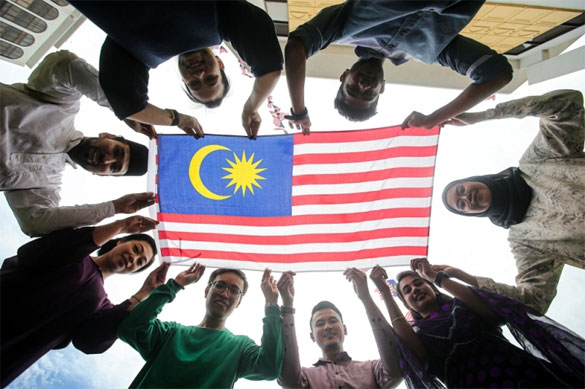
Minister Nga Kor Ming responded in a calm and conciliatory tone. He explained that these are common Arabic expressions and that he had used them simply to express gratitude. He emphasized that followers of different religions should respect each other’s religious sentiments and that unnecessarily inflaming such matters could harm national harmony. As the discussion grew in public discourse, the Federal Territories Mufti Department issued clear religious guidance on the matter.
In its statement, the Mufti Department clarified that, in principle, it is permissible for non-Muslims to use Islamic expressions in everyday speech, provided they are spoken respectfully, in an appropriate context, and without any intention of mockery or disrespect toward Islam. In a multi-religious society like Malaysia, it added, the adoption of one another’s cultural and linguistic expressions is a natural social interaction and a sign of social harmony.
From an Islamic perspective, this position aligns fully with the spirit of the Qur’an and the Prophetic tradition. Islamic expressions are not the exclusive property of any race or ethnic group; rather, they represent the universal message of monotheism. Phrases such as Alhamdulillah, Inshaa Allah, and Mashaa Allah proclaim that the Creator and Sustainer of the universe is Allah, the Lord of all humanity, not of Muslims alone. The Qur’an declares: “All praise is for Allah, the Lord of all worlds.”
The word “worlds” itself reflects the universality of praising God; it is not restricted to any single community.
The Qur’an also notes that even non-Muslims historically acknowledged God’s existence:
“If you ask them who created them, they will surely say: Allah.” (Az-Zukhruf 43:87)
This verse shows that invoking God’s name is not confined to a specific religious identity. Islam did not reject this acknowledgement; instead, it treated it as a starting point for inviting people toward the Oneness of God. Therefore, when a non-Muslim respectfully uses Islamic expressions, it is not an insult to Islam; it can be seen as a reflection of the spread of the message of monotheism.
The history of Islamic civilization reflects this same openness. In Madinah, people of different faiths lived together and interacted respectfully at cultural and linguistic levels. Islam never treated religious words as the exclusive property of a particular group; rather, it encouraged noble character and kind speech.
The Qur’an commands: “Speak kindly to people.” (Al-Baqarah 2:83)
Using Islamic expressions respectfully falls within this broader ethic of gracious communication.
However, the Mufti Department emphasized an important condition: if such expressions are used in mockery, contempt, or disrespect, then they are not acceptable. This principle aligns with the Islamic legal concept of Sadd al-Dhara’i i.e. blocking the means that could lead to disrespect or harm. In this way, Islam presents a balanced approach: where there is respect, there is openness; where there is disrespect, there is prohibition.
In a multi-religious society like Malaysia, this guidance becomes even more significant. When people of different faiths respectfully adopt each other’s expressions, social harmony, mutual trust, and peaceful coexistence are strengthened. The core message of Islam also emphasizes that there is no compulsion in religion and that human relationships should be built on good character, respect, and justice.
Ultimately, this episode reminds us of the true spirit of Islam, a spirit that calls not to narrowness but to openness, not to hatred but to mercy, and not to confrontation but to dialogue. If a non-Muslim says “Alhamdulillah,” it is not a sign of Islam’s weakness; it is a sign of its universality. Islam is not a religion of fear, but of invitation, wisdom, and moral excellence.
—
Ghulam Ghaus Siddiqi is an Islamic scholar specializing in religious and literary sciences, and a regular multilingual columnist and translator for New Age Islam.
New Age Islam, Islam Online, Islamic Website, African Muslim News, Arab World News, South Asia News, Indian Muslim News, World Muslim News, Women in Islam, Islamic Feminism, Arab Women, Women In Arab, Islamophobia in America, Muslim Women in West, Islam Women and Feminism