
More Than a Shrine: Architecture, Devotion and Ganga-Jamuni Harmony at Kothiya's Boat-Shaped Mazaar in Bihar

By Syed Amjad Hussain, New Age Islam
26 February 2026
In rural Bihar, a remarkable boat-shaped shrine draws lakhs of pilgrims annually, blending faith, folklore and architecture while reflecting flood land history, shared traditions and enduring harmony between neighbouring communities together.
Main Points:
· The unique boat-shaped mazar reflects the flood-prone history of Kothiya village.
· Annual Urs attracts lakhs of pilgrims without organised publicity.
· Religious rituals blend devotion with cultural gatherings.
· Hindu and Muslim communities jointly organise preparations.
· The shrine symbolises faith, harmony and shared rural heritage.
Introduction
In the rural stretches of Muzaffarpur, Bihar where narrow village roads cut through farmland and stories are often preserved through memory rather than written records, stands a shrine that quietly defies convention. In Kothiya village of the Kanti area lies the mazar of the Sufi saint Hazrat Ismail Shah Warsi alias Shah Ismail Pak, a spiritual space known far beyond its modest surroundings for a reason that immediately captures attention. The shrine is shaped like a boat.
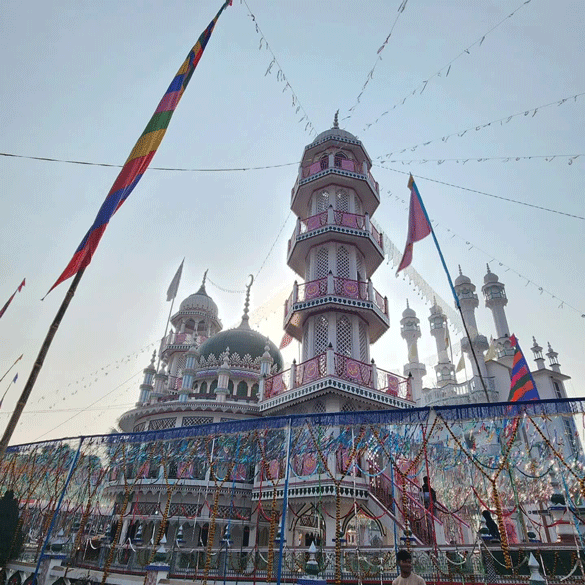
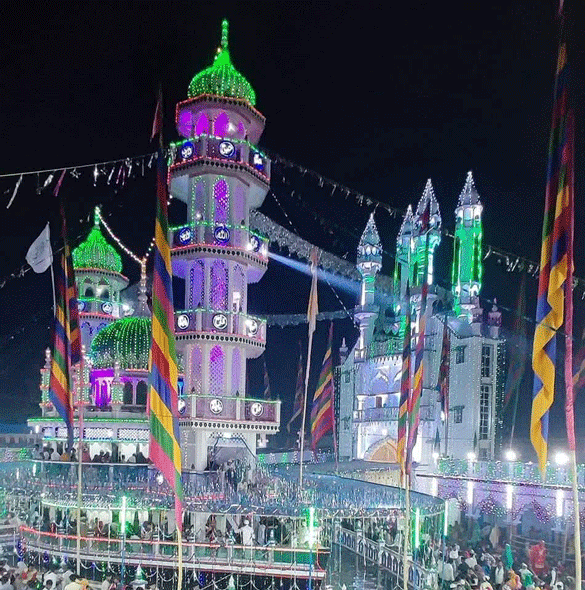
Locally called Kothiya Mazaar or simply the “Nau Par Mazaar”, the structure has grown into one of Bihar’s most remarkable centres of devotion. Each year, during the annual Urs observed after Shab-e-Barat, the village witnesses an extraordinary transformation. Quiet fields give way to moving crowds, prayer gatherings and a fair that stretches across days and nights. This year alone, organisers expect between three and four lakh visitors, many travelling long distances without formal invitation or publicity.
The story of this mazar is not only about faith. It is equally about landscape, memory, architecture and a shared cultural life that continues to bind people together.
Geography That Became Architecture
Older residents describe a time when Kothiya was surrounded by water for much of the year. Seasonal flooding turned the settlement into what villagers remember as a small island. Reaching neighbouring areas required travelling by boat, and everyday life revolved around waterways rather than roads.
The mazar’s unusual design emerged from this reality.
Rather than constructing a conventional dome-based shrine, the caretakers chose a form that reflected the lived history of the place. The boat shape honours both the environmental conditions that shaped village life and the memory of the saint himself, who is remembered for travelling by boat to meet disciples in nearby settlements.
Today the three-storeyed structure stretches nearly 300 feet in length and about 200 feet across. Marble surfaces and carefully laid tiles lend the building dignity without overwhelming its rural surroundings. Shallow water continues to remain along portions of the entrance, allowing visitors’ feet to be washed naturally as they walk inside. Many devotees regard this as symbolic purification before prayer, though locals also see it as a continuation of the area’s historical relationship with water.
A Doctor’s Devotion Turned into Design
The shrine’s present form owes much to the vision of Dr Mohammad Ataullah, a practising doctor who also served as mutawalli of the mazar.
Family members recall that despite his demanding medical responsibilities, he devoted remarkable attention to planning the structure. He spent hours sketching layouts, considering proportions and imagining how the shrine should represent both faith and memory.
When relatives questioned how a doctor had developed such architectural thinking, he reportedly answered with quiet conviction that spiritual guidance had shown him the path.
Over the years, repairs and improvements have been undertaken as visitor numbers increased, yet the original boat-shaped identity has been preserved carefully. For many devotees, altering that form would mean losing a part of the shrine’s soul.
Urs: When Devotion Fills the Village
The annual Urs commemorates the passing of the saint and is observed six days after Shab-e-Barat according to the Islamic calendar. Preparations begin nearly a month in advance.
According to caretaker Ghulam Jilani Warsi, this year (2026) will mark the fifty-eighth Urs since the saint’s passing in 1968. Volunteers arrange lighting, repair pathways and prepare accommodation areas for pilgrims who often stay overnight.
The religious programmes begin with Milad Sharif gatherings attended by visiting scholars and poets. Qur’an recitations follow, leading into the chadarposhi ceremony, during which devotees offer ceremonial cloth coverings at the saint’s resting place.
Evenings are marked by Samaa Mehfil assemblies where sermons, devotional poetry and spiritual discourse continue late into the night. Outside the shrine complex, a three-day fair emerges almost organically. Food stalls, toy sellers and small traders set up temporary shops, turning the Urs into both a spiritual and social occasion.
Families arrive together, often returning year after year. Some carry photographs, others memories of earlier visits when they came seeking relief during difficult moments in life.
Pilgrimage Without Publicity
Perhaps the most striking aspect of Kothiya mazar is that its reputation has travelled largely through word of mouth.
Devotees come from across Bihar and distant parts of the country including Assam, West Bengal, Odisha, and Uttar Pradesh. Visitors also travel from neighbouring Nepal, while some families living abroad plan visits around the Urs whenever possible.
Many pilgrims return after believing their prayers were answered. Some offer chadars after recovery from illness, others after securing employment or resolving family difficulties. Gratitude, rather than obligation, often brings them back.
Stories That Sustain Faith
Like many Sufi shrines, the mazar is surrounded by stories passed through generations. Local belief holds that during earlier floods the saint protected the settlement by containing surrounding waters through divine grace.
Whether understood as miracle or metaphor, these narratives continue to shape devotional imagination.
Descendant Syed Wasim Warsi explains that devotees frequently return to offer thanks after their wishes are fulfilled. For many families, visiting the shrine becomes part of personal history rather than a single act of pilgrimage.
Shopkeepers also describe the Urs as a period when livelihoods improve alongside spiritual activity. Temporary markets create opportunities for villagers who depend on the annual gathering for income.
Shared Participation Across Communities
One of the most significant aspects of the Urs is the manner in which it brings together people across religious identities.
Local residents emphasise that preparations are rarely confined to a single community. Hindu and Muslim families work together to arrange stalls, guide visitors and manage logistical needs. The cooperation is practical and familiar rather than ceremonial.
In everyday terms, the Urs becomes a reminder of shared living traditions often described as the Ganga-Jamuni culture of northern India, where religious expression and cultural exchange coexist naturally.
Managing Lakhs with Care
Hosting several lakh visitors in a rural setting requires considerable planning. District authorities coordinate traffic management, medical assistance and security arrangements to ensure safe movement during peak days.
Temporary facilities effectively turn the village into a functioning township. Yet despite the scale, organisers say the essence of the gathering remains unchanged. Visitors still sit together on the ground, share meals and wait patiently for their turn to pray.
More Than a Shrine
Today, the Kothiya mazar represents more than architecture or ritual practice. It carries memories of a flood-bound landscape, the devotion of a doctor who transformed vision into structure and the continuing faith of people who travel long distances without invitation.
The boat-shaped shrine does not sail anywhere, yet every year it carries thousands through journeys of hope, remembrance and gratitude. In doing so, it quietly reminds visitors that faith is often less about destination and more about travelling together.
--
Syed Amjad Hussain is an author and independent research scholar on Sufism and Islam. He is the author of 'Bihar Aur Sufivad', a bestselling research book based on the history of Sufism in Bihar.
New Age Islam, Islam Online, Islamic Website, African Muslim News, Arab World News, South Asia News, Indian Muslim News, World Muslim News, Women in Islam, Islamic Feminism, Arab Women, Women In Arab, Islamophobia in America, Muslim Women in West, Islam Women and Feminism