
Understanding Maulana Azad’s Idea of Theological Pluralism in Indian Islam and his Concept of ‘Unity of Religion’ (Wahdat-e-Deen)!
 By
Ghulam Rasool Dehlvi, New Age Islam
By
Ghulam Rasool Dehlvi, New Age Islam
Main
Points:
1. Azad formed
the bedrock of Islamic pluralism in context of a multicultural, multilingual,
and multi-religious India.
2. Not many
know Maulana Abul Kalam Azad as a ‘pluralist theologian’ and as an inclusivist
exegete of the Qur’an.
3. Azad’s
epistemology of Usu’l al-Deen (genealogies of the religion) and his engagement
with the Qur’anic hermeneutics have been disregarded by most of the
traditionalist Ulema.
4. Azad’s idea
of theological pluralism focuses on Wahdat-e-Deen (Unity of the Religion)
without rejecting the essential messages and universal values of the
non-Semitic, Semitic and Christo-Judaic faith traditions.
5. In colonial
India which was rocked by communal violence and in that background Azad’s
concept of Wahdat-e-Deen was greatly helpful.
6. The two most
important results of Azad’s pluralist theological underpinnings were (1) his
vehement opposition to the two-nation theory, and (2) his avid advocacy for
national integration and unity among Muslims and non-Muslims in post-partition
India
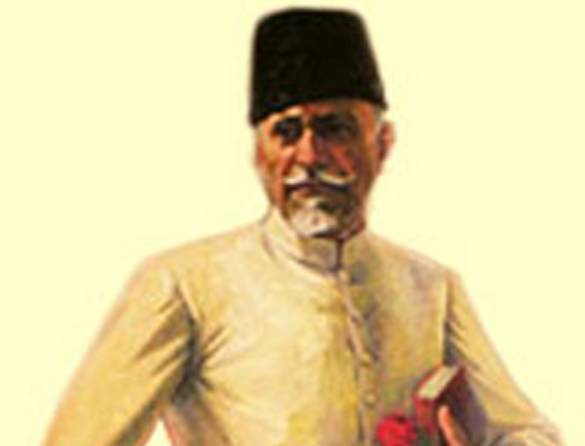 Maulana
Azad
Maulana
Azad
-------
From his
early writings in Nairang-i-e- Ālam (Deception of the World) and
thereafter in his own paper Lisān-us-Ṣidq (The
Speech of Truth), and his publications of al-Hilāl and al-Balaagh,
to his autobiography titled as Ghubār-iKhāṭir (The
Accumulated Dust of the Conscience), and his exegesis of the
Qur’an—Tarjuman-ul-Qur'an, Maulana Abul Kalam Azad formed the bedrock of
theological pluralism in Indian Islamic tradition in the early 20th century in
context of a multicultural, multilingual, and multi-religious India.
Not many
know Maulana Abul Kalam Azad as a ‘pluralist theologian’ and as an inclusivist
commentator or exegete of the Qur’an. He is popularly known to us merely as a
Muslim freedom fighter and the first education minister of India. But a few
Islamic scholars like Asghar Ali Engineer sought to explore Azad’s theological
work. When Engineer closely studied Azad’s marvellous commentary on the Qur’an
titled as Tarjuman-ul-Qur’an (interpreter of the Qur’an), he called him a ‘socio-theologian’
because of Maulana’s deep insights into socio-cultural complexities of the
country. However, Azad’s strong epistemology of Usu’l al-Deen (genealogies of
the religion) and his deep engagement with the Qur’anic hermeneutics have been
largely ignored. Most of the traditionalist Ulema, inadvertently or knowingly,
overlooked his insightful commentary on the Qur’an. They barely touched upon
Azad’s creative theological and hermeneutical underpinnings.
Before we
proceed to the main discussion, let’s keep in view that Azad was a fervent
nationalist and an ardent follower of Islam at the same time. He took great
pride in both of his assets; his firm faith in Islam as the ultimate religion
and his unshakable loyalty to India as his Motherland. In his 1940 Presidential Address to the
plenary session of the Indian National Congress, he made it patently clear:
“I am a
Muslim and profoundly conscious of the fact that I have inherited Islam’s
glorious traditions of the last 13 hundred years. I am not prepared to lose
even a small part of that legacy…I am equally proud of the fact that I am an
Indian, an essential part of the invisible unity of Indian nationhood, a vital
factor in its total make-up without which its noble edifice will remain
incomplete. I can never give up this sincere claim. It was India’s historic
destiny that its soil should become the destination of many different caravans
of races, cultures and religions. Even before the dawn of history’s morning,
they started their trek into India and since then, the process has continued.”
Now the
reason why I look up to Maulana Azad as a ‘pluralist theologian’ is his great
emphasis on the concept of Wahdat-e-Deen (unity of religion). This has
been given paramount importance in his theological epistemology and Qur’anic
hermeneutics. All religions, according to Azad, are spiritual paths to eternal
salvation, and are pervaded by the same spirit of truth, while the differences
and apparent dichotomies in their theological realms do not influence the
essentials of religion. The outward way (shari'a or minhaj) differ, depending
on the historical and territorial circumstances. Therefore, Azad’s idea of
pluralism focuses on Wahdat-e-Deen without rejecting the essential messages and
universal values of world religions—including the Semitic religions and
Christo-Judaic traditions as well as the non-Semitic religions such as
Hinduism, Buddhism and Jainism. Although this is debatable whether Azad’s
proposition of Wahdat-e-Deen can be conflated with Wahdat-e-Adyan (unity
of all religions) or not, his intent behind this scholarly adventure was
crystal clear. He sought to reduce communal conflicts between the adherents of
two diametrically different religions in India—Islam and Hinduism.
Thus, Azad
emerged as the major proponent of pluralism among the Indian Ulema, who were
vehemently opposed to the idea of theological pluralism in Islam. However,
Azad’s pluralist tendencies and inclusivist thought and practice are lesser
known to the public. It should have been well preserved at least in the
intellectual memory.
Born to a
Qadri-Naqshbandi Sufi scholar, Maulana Khairuddin Dehlvi, Abul Kalam Azad was
imbued with a mystically inclined Islamic tradition at a very early age.
Therefore, he began to think and contemplate over the essential truths of all
religions. His mystical pluralistic inclinations stemmed from a broader notion
of Wahdat-e-Deen (Unity of the Faith) well-embedded in the Islamic tradition.
In fact, his deep faith in the religious pluralism and oneness of mankind was based
on the popular Sufi doctrine of Wahdatul Wujud(Unity of the Existence).
This is further reinforced by Azad’s idea of God, as "cherisher" and
"nourisher" of all worlds (Rabb Al-'Alameen) as enunciated in
the first chapter of the Qur’an, Surah Al-Fatiha. This concept of divinity
transcends all fragmentations and divides among God’s best creation—mankind—in
terms of race, colour, and creed and ethnicity, according to the findings and
writings of Azad.
Asghar Ali
Engineer gives us a very convincing and candid explanation of the background in
which Maulana Azad forms the concept of Wahdat-e-Din. He notes:
“Not that
this was unknown before [Azad] as Shah Waliyullah too refers to the concept of
unity of religion in his Hujjat-u-Allah al-Balighah. Many Sufi saints like
Hazrat Nizamuddin Awliya and Mazhar Jan-i-Janan also refer to truth of other
religions like Hinduism, particularly in Indian context. However, Maulana’s
work on this is much more significant for number of reasons. His arguments are
based not only on the verses of the Qur’an but also on his extensive knowledge
of other religions like Hinduism, Judaism, Christianity, Buddhism, Jainism and
even Zoroastrianism. He very systematically argues both from Qur’anic
perspective as well as on the basis of teachings of these religions and tries
to validate the concept of Wahdat-i-din”. He further says: “Azad was writing in
colonial India which was rocked by communal violence and in that background
Maulana’s concept of Wahdat-e-Deen became much more important. Those talking of
two nations both from amongst Hindus as well as Muslims were emphasizing
irreconcilability of two religions i.e., Hinduism and Islam. And Maulana refers
to basic teachings of Islam and Hinduism and contradicts the approach of those
who found two religions non-reconcilable. It was really great contribution for
the cause of unity of Hindus and Muslims and common nationhood”.
Thus, it
should now become a common knowledge that Maulana Azad’s focus on Wahdat-e-Deen(unity
of religion) was primarily aimed at highlighting the essential and egalitarian
messages of all religions as a uniting factor for Muslims and non-Muslims
living in the colonial India. However, his theological position on Wahdat-e-Deen
(unity of religion) was based on solid foundations and hence he was
uncompromising on the basic Islamic postulates, as he categorically and
unequivocally states in his famous commentary, Tarjuman-al-Quran. He writes:
“Wahdat-e-Deen
is the central idea, but this does not mean that all historical religions as
they exist today are true or that there is truth in every religion. Rather, the
case is that all religions as originally delivered are true”.
But at the
same time, in his endeavours to ideate and establish his concept of Wahdat-e-Deen,
Azad has brainstormed novel ideas which were not familiar in his times in the
Indian Islamic scholarship. As a well-established classical Islamic thinker,
Azad emerged as the first and foremost pluralist theologian in India who
propounded a unique synthesis of Islamic humanism and universal humanity based
on his concepts of Wahdat-e-Deen(unity of religion), Wahdat-e-Khudawandi(unity
of God) and Ukhuwat-E-Insani(brotherhood of mankind). His commentary on
the first chapter of the Qur’an, Surah Al-Fatihah very particularly promotes
theological pluralism and scriptural dialogue, an idea which can be deduced
from his broader notion of Wahdat-e-Deen, which not only implies the unity of
God and unity of religion, but actually religious unity per se. He writes in
Tarjumān Al-Qur’ān:
“Although
religions walk and talk separately, their destination is one. The unity of
[humankind] is the primary aim of religion. The message which every prophet
delivered was that [humankind] were in reality one people and the one community,
and there was but one God for all of them, and on that account, they should
serve [God] together and live as members of but one family. Such was the
message which every religion delivered”.
This is
further reinforced by Azad’s idea of Allah as "cherisher" and
"nourisher" of all worlds (rabb al-'alameen) as enunciated in Surah
Al-Fatiha. This concept of divinity transcends all fragmentations and divides
among God’s best creation—mankind—in terms of race, colour, and creed and
ethnicity, according to the findings and writings of Azad.
According
to Azad, all religions in terms of Deen are pervaded by the same spirit of
truth, while the differences and apparent dichotomies in their theological
realms do not influence the essentials of religion. The outward way (Shari’a
or Minhaj) differs depending on the historical and territorial
circumstances. Thus, Azad’s idea of pluralism focused on Wahdat-e-Deen doesn’t
do away with the essential messages and universal values of world
religions—including the Semitic and Christo-Judaic traditions as well as the
non-Semitic religions and Aryan traditions such as Hinduism, Buddhism and
Jainism.
In fact,
Maulana’s deep faith in religious pluralism and oneness of mankind was also
inspired by the popular Sufi doctrine of Wahdatul Wujud(Unity of the
Existence). The proponent of Wahdatul Wajud, Sheikh Mohiuddin Ibn
al-Arabi has lucidly explained the idea of religious pluralism in his
celebrated poetic work in Arabic, Tarjuman al-Ashwaq (translator of the
desires). Ibn al-Arabi opens the doors for salvation and divine mercy for not
just Muslims but also believers of God in various other ways. In a theological
synergy with Ibn al-Arabi’s Tarjuman al-Ashwaq, Maulana Azad’s Tarjuman
al-Qur’an, a celebrated exegetic work that he left incomplete, exhibits beautifully novel ideas on salvation. For
instance, Maulana Azad writes in his explanation of the famous Qur’anic verses
45:27-29:
“Despite
the theological positions diametrically different from Islam, the Qur’an does
suggest that there is hope for the salvation of Jews and Christians on the Last
Day. Distinct communities will be judged according to “their own book” [Qur’an
45:27-29] and: “Those who believe [in the Qur’an], and those who follow the
Jewish, and the Christians, and the Sabians, any who believe in God and the
Last Day, and work righteousness, shall have their reward with their Lord, on
them shall be no fear, nor shall they grieve” (Qur’an 2:62).
But despite
a flowing literary style in Urdu language, Azad’s Qur’anic exegeses could not
win the hearts of many Muslim clergymen of his times, even of those who
otherwise greatly liked him or his other masterpieces. For, Maulana, in his
explanations of several Qur’anic verses, attempted to find common grounds
between Islam and other religions. This was something that a great number of
Muslim clergy could not put up with.
Prominent
scholar of Islam and comparative religion, Professor Imadul Hasan Azad Faruqi
(former director, Centre for the Study of Comparative Religions and Civilizations,
Jamia Millia Islamia) did a critical analysis of Maulana Azad’s approach to the
understanding of the holy Qur’an. He says that Maulana’s pluralistic and
inclusive interpretation of the above Qur’anic verses could not appeal to a
large number of Muslim Ulema in India, whose minds are well-permeated with
exclusivist and supremacist religious indoctrination. But Azad was a
critical-traditionalist. While he was loyal to the intellectual Muslim
tradition, he was at the same time, reluctant to be a blind follower and thus
he shunned Taqleed-e-Jamid (uncreative adherence to the Islamic tradition).
He rather
carried out an interpretation of Islamic tradition which was robust and
vibrant, not conventional. His independent re-thinking of the Qur’anic trajectories
was supported by both spirituality and rationality. He greatly emphasized the
need to adopt a critical posture towards tradition. For instance— in
Ghubar-i-Khatir, Azad is critical to the ‘suffocating narrow-mindedness of
theological literacy’, while at the same time highlighting the power of
tradition.
The two
most important results of Maulana Azad’s pluralist theological ideas were (1)
his vehement opposition to the two-nation theory (Do Qaumi Nazarya) which was
promoted and theologically endorsed by the majority of traditionalist Ulema in
India before the partition, and (2) his avid support to the national
integration and unity among Muslims and non-Muslims in post-partition India.
Azad despite being a classical Islamic scholar attached to his tradition, stood
for the composite nationalism and Hindu-Muslim unity. His stand was so
antithetical to the two-nation theory that, in one of his speeches, he spoke
with a great conviction:
“I have
considered the scheme of Pakistan as formulated by the Muslim League from every
possible point of view. As an Indian, I have examined its implications for the
future of India as a whole. As a Muslim I have examined its likely adverse
effects upon the fortunes of Muslims of India”
(India Wins
Freedom, Maulana Abul Kalam Azad, Maulana Azad’s statement on Muslim issues in
India, April 15, 1946).
New Age
Islam, Islam Online, Islamic Website, African Muslim News, Arab World News, South Asia News, Indian Muslim News, World Muslim News, Women in
Islam, Islamic Feminism, Arab Women, Women In
Arab, Islamophobia in America, Muslim Women
in West, Islam Women and Feminism