
Pirzadi Shaheeda Noor-Un-Nisa Inayat Khan: Why Do We Need To Tell Her Story Today?

By
Ghulam Rasool Dehlvi, New Age Islam
10 March
2023
Influenced
By The Sufi Teachings, Peaceful And Pluralistic Thought And Ideas Of Her Father, Noor Was Deeply Pained By Nazi Atrocities Against Humanity.
Main
Points:
1. Noor Inayat
Khan—an Indian-origin Sufi Princess and a World War II Spy—was the first
Indian-origin woman to be honoured with the memorial plaque in London.
2. A daughter
of an Indian Sufi mystic and an American mother, Noor was a writer, poetess,
musician and ultimately a heroine for many Indian women today.
3. Born in
Moscow, brought up in France and even as an officer in the British Army, the
love and devotion to India were deeply ingrained in her heart from childhood.
-------
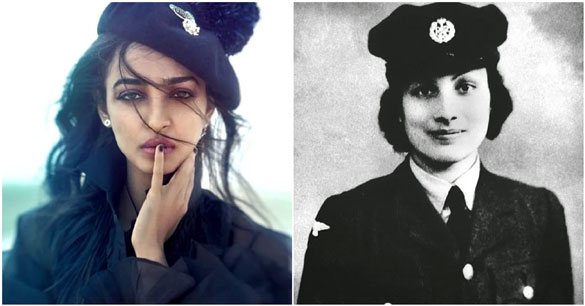
Noor-un-Nisa
Inayat Khan (1914-1944)
------
Who was
Noor Inayat Khan?
Noor Inayat
Khan was an Indian-origin Sufi Princess and a World War II Spy who became the
first Indian-origin woman to be honoured with the memorial plaque, which is
given to famous and notable figures of history in London. The plaque has been
awarded to her for her service in the “Special Operations Executive” during
world war-II. She was also the first female radio operator to be sent into
Nazi-occupied France, and is also remembered as India’s first Muslim heroine in
World War II.
Noor was
born on January 1st, 1914 in Moscow to an Indian mystic, Hazrat Inayat
Khan—Tipu Sultant’s descendant, and a Sufi practitioner, Vedantic philosopher,
and Hindustani Classical musician, and Ora Ray Baker, an American woman.
Daughter
of An Indian Mystic
Noor’s
father, Hazrat Inayat Khan, was the first Indian Sufi saint, scholar and
musician to bring Indian Sufism to the West. He had a deep attachment to all
the spiritual and cultural traditions of India. Like his father, Noor was also
fond of promoting music and mysticism in the West. She loved to play the Veena
and also wrote Sufi stories for children and a book on the "Jataka
Tales" of Gautama Buddha, which she titled “The 20 Jataka Tales”.
A daughter
of an Indian Sufi mystic and an American mother, Noor was a budding writer, a
poetess, a musician and ultimately a heroine. She served as a secret British
agent with the intent to help India achieve its freedom. In Europe, she fought
against the Nazi fascism with a determination to come back to India to fight
for the Indian Independence.
A
‘Universalist Sufi Woman’
Noor hailed
from a Chishti Sufi lineage and a spiritual Indian family. Her father, as a proponent
of the ‘Universalist Sufi Order’—Inayatiyya Chishtiyya, was a great
believer in the centrality of India in World Mysticism.
Noor’s deep
spirituality and her vision of unity and integrity continue to inspire the new
generation. Her astonishing story reveals courage, strength, and compassion,
and serves as a source of inspiration for anyone standing for the nation and
working for freedom and justice today.
Influenced
by the teachings of Shanti Vadi Vichardhara, peaceful and pluralistic Sufi
thought and ideas of her father, right from her childhood, Noor was deeply
pained by Nazi atrocities against humanity. When France was invaded by the
German Nazis, an ideological ferment arose in Noor's mind against the Nazis.
And thus, Noor-un-Nisa Inayat Khan along with her brother Wilayat Inayat Khan
decided to join the British Army in crushing the tyranny of the Nazis.
Noor longed
for India's independence as she told her officers at the Royal Air Force (RAF).
She felt strongly to fight for India’s freedom after the war she fought against
the Nazis. Having supported Britain and France, she averred that after the war,
she would return to backing Indian Independence. Her fight was against the
occupation of France and against fascism with the belief that if Indians helped
them to win the war, it would make Britain grant Indians their independence.
Notably, Noor had expressed her determination to his brother Wilayat in these
words: “Today if we support Britain against fascism, then in return the British
will be compelled to give freedom to India”.
In
Britain with Her Family
Noor came
to Britain with her family after France fell to Nazi Germany in November 1940.
She was enlisted in the Women’s Auxiliary Air Force as Noor Inayat Khan on 19
November 1940 and towards the end of 1941 Noor applied for a commission in
Intelligence.
Hazrat
Inayat Khan was brought up in Baroda, Gujarat but his family moved to Paris
during World War-I and then to London. Noor was born in Russia during her
father’s stay in the country to perform Hindustani musical concerts.
An
Aircraft Officer and ‘Brilliant Radio Operator’
On November
19, 1940, Noor-un-Nisa joined the British Air Force as an aircraft officer
against the German Nazis, where she was sent to train as a "wireless
operator". In June 1941, she applied for the "Armed Forces
Officer", where she was promoted to the rank of Assistant Section Officer.
But she said clearly during his interview that, as of now, I am fighting this
war against Nazi oppression and fascism, but as soon as this war ends, I would
like to join the war for the freedom of my beloved father’s nation, India.
Perhaps it was for this reason that Noor made one last visit to India after his
father's death, traveling to his hometown of Baroda in Gujarat.
Noor was
fluent in French and a brilliant radio operator. She went in undercover behind
enemy lines and worked there for three months setting up connections and
sending information back to London.
In France,
Noor posed as a nurse and acquired the pseudo name ‘Jeanne-Marie Reinier’.
Within 10 days of her arrival, all British spies in Noor’s network had been
arrested and she was asked to return, but she refused. Radio transmission
became the only link between the agents around Paris and London.
A
Talented Musician & Poetess
Noor was
also a talented musician. She also wrote poems and short stories. After
finishing her school, Noor translated into English the “Jataka Tales”—fables
about the previous incarnation of Gautama Buddha and another literature native
to India. Her book Twenty Jataka Tales was published in 1939.
Captured
by the Nazis
In October
1943, when she was about to return home, she was captured by the Gestapo-Nazis,
and was sent to a German Prison in solitary confinement. A year later, she was
sent to the Dachau concentration camp and was executed on 13 September 1944 at
the age of 30.
Lessons
That Women Can Draw From Her Life!
Noor Inayat
Khan exhibits some great virtues that may be inculcated among the young
generation in India. When young women of India will know about her life, they
will feel proud and empowered and will idealize her noble traits. Noor can be
aptly portrayed as a role model for young women, especially for Muslim women in
India. Her story connects the Indian youth—especially Muslim girls and children—to
the virtuous, noble, and nationalist woman characters hidden in the annals of
Indian history. Thus, they will identify with a modern woman role model
well-embedded and anchored in Indian ethos, and thus stemming the tide of
negative influencers.
Why Tell
Her Story Today?
There is a
real need to tell the story of Noor-un-Nisa as one of the unforgettable Indian
legends, role models, and heroes for young women. Few people in our country
know about the great contribution of Indians in the two World Wars. Our
ancestors, too, fought in the war, against fascism in World War II. Thus, there
should be a shift from the usual narrative that the wars were fought and won by
Britain only. Instead, we should tell the story of how five million soldiers
from the Colonies helped Britain and the Allies to win World War II, out of
which 2.5 million were from Mother India.
Today,
therefore, we need to tell you the story of the ‘Sufi daughter' of India whose
father, an Indian Sufi mystic, is called the "First Sufi Mystic of India
in the West". He enjoys a large number of followers from Europe to
America. Though Noor is known in different parts of the world by different
names; some people call her "Nora Baker", some "Madeleine",
and others remember her as ‘Jeanne-Marie Renier’. But in reality, she is
Pirzadi Shaheeda Noor-un-Nisa Inayat Khan. Thus, she remains in our memory as
veteran Muslim woman of Indian origin, who only in 30 years, became to be known
as the ‘Sufi Princess’ across the world.
Noor-Nisa's
sacrifice can be estimated from the fact that this young woman martyr
sacrificed her blood for the sake of humanity. Hitler's army, the German
Gestapo, gave her an agonizing death in the Conception Camp. But her spirit of
independence didn’t die down. Now Noor’s sacrifice lives on forever. The last
word Noor uttered before dying was a revolutionary slogan in French: Liberté
(freedom!).
Noor was
born in Moscow, grew up in France, and served as an officer in the British
Army, but the love and devotion to India were deeply ingrained in her heart
from childhood and with the same light, her soul travelled from this mortal
world to immortality. Noor often repeated her father's words: "We are
descendants of Tipu Sultan; we are known not by houses but by ideals".
Salutations
to this spirit of truth, and hats off to this pure spirit of freedom which is
still beating in millions of Indian hearts in every nook and corner of the
world!
-----
Regular Columnist with Newageislam.com, Ghulam
Rasool Dehlvi is an Indo-Islamic scholar and English-Arabic-Urdu writer. He
graduated from a leading Islamic seminary in India, and acquired a Diploma in
Qur'anic sciences and a Certificate in Uloom ul Hadith from the Al-Azhar
Institute of Islamic Studies. He has also participated in the 3-year “Madrasa
Discourses” program initiated by the University of Notre Dame, USA. Presently,
he is pursuing his Ph.D. in Jamia Millia Islamia, New Delhi.
URL: https://newageislam.com/islamic-personalities/pirzadi-shaheeda-noor-inayat-/d/129288
New Age Islam, Islam Online, Islamic
Website, African
Muslim News, Arab World
News, South Asia
News, Indian Muslim
News, World Muslim
News, Women in
Islam, Islamic
Feminism, Arab Women, Women In Arab, Islamophobia
in America, Muslim Women
in West, Islam Women
and Feminism