
Remembering Shamsur Rahman Faruqi
By
Sumit Paul, New Age Islam
30
September 2022
September
30 is very close to my heart, soul and mind as two of my literary idols were
born on this day: The great Rumi and Shamsur Rahman Faruqi. The former was born
815 years ago and the latter came into the world on September 30, 1935. I'm
sure, a few toffee-nosed readers might not like my 'audacity' to juxtapose
Faruqi with Rumi but I'm not comparing the two stalwarts. Har Zarra Apni
Jagah Pe Aaftaab Hai (every particle is the sun in its own right).
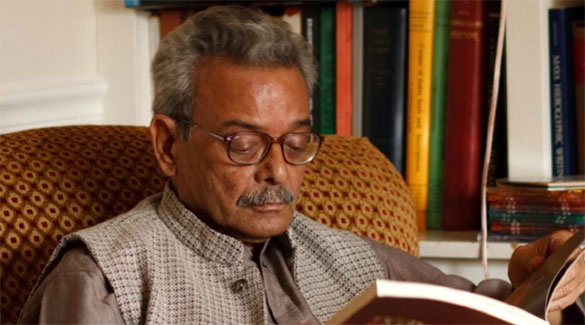
Shamsur Rahman Faruqi
----
What makes
Faruqi so special was his ability to blend creativity and criticism so well. In
that sense and context, he was like Dr Matthew Arnold and William Hazlitt, both
being great poets, writers, essayists and dispassionate critics.
It's often
said of a critic or assayer (Naqqaad) that he's someone who teaches you
how to run but has no legs. In other words, critics teach best what they (themselves)
need to learn most.
Only a
critic who himself is a creative person and has written considerably with
distinction, can have the ability to discern the flaws and finesse in the
creations of others. The famous observation that a critic is an artist manque
simply doesn't apply to the versatile Faruqi as he essayed all the roles with equal
mastery.
Shamsur
Rahman Faruqi was a prolific writer, theorist and poet. His works such as, Afsane
Ki Himayat Mein, Lughat-E-Roz Marrah, How to read Iqbal, Sher-e-Shor
Anghez, Tafheem-e-Ghalib, to name but a few prove his creative genius and at
the same time lend credibility to his critical studies in which he never took
any specific writer or poet's side. To him, all were equal and he disliked
giving extra attention to anyone. He once said, Aap Kya Hain Aur Kaun Hain
Se Zyada, Aapka Kaam Kya Kahta Hai, Iss Mein Meri Zyada Dilchaspi Hai ( I'm
much more interested in your works than your persona).
Because of
this candour, he could justifiably criticise his redoubtable Professor of
English Literature at Allahabad University, Firaq Gorakhpuri's Urdu poetry and
always averred that Firaq was predominantly a poet who was more into physical
and meaty beauty. There's no denying the fact that at times, Firaq was much
more obsessed with the callipygian derriere and twin peaks of a woman than her
cerebral aspects and capabilities.
Faruqi fell
out with his Doctoral guide Dr Harivansh Rai Bacchan and didn't complete his
PhD. It's worthwhile to state that he pursued a doctorate in English symbolism
and French literature with the poet Harivansh Rai Bachchan as his supervisor,
but dropped out after a disagreement with Bachchan. That shows his integrity
and courage of conviction.
I'd have
been happy had English broadsheets carried something substantial on Faruqi on
the occasion of his 87th birthday. But who reads Urdu works nowadays? Rather,
who reads in these times of mediocrity?
-----
A regular columnist for New Age Islam, Sumit Paul
is a researcher in comparative religions, with special reference to Islam. He
has contributed articles to world's premier publications in several languages
including Persian.
URL: https://newageislam.com/islamic-personalities/shamsur-rahman-faruqi/d/128071
New Age Islam, Islam Online, Islamic Website, African Muslim News, Arab World News, South Asia News, Indian Muslim News, World Muslim News, Women in
Islam, Islamic
Feminism, Arab Women, Women In Arab, Islamophobia
in America, Muslim Women
in West, Islam Women
and Feminism