
Blood Money and Tribal Disputes behind Child Marriages in Pakistan
By S.
Khan
11.03.2021
Activists
in Pakistan have called on Islamabad to raise the minimum age of marriage to
18. The age requirement for marriage is currently 16 in all parts of the
country except in the southern province of Sindh, where it is 18.
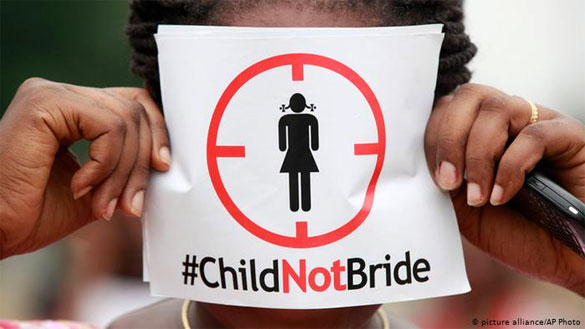
Pakistan ratified the Convention on the Rights of the Child in 1990
-----
Pakistan
ratified the Convention on the Rights of the Child (CRC) in 1990, pledging
commitment to protect the rights of children, as well as the elimination of
child marriage.
But
underage marriage is still a problem in several parts of Pakistan.
Citing data
from the Pakistan Demographic and Health Survey (PDHS) 2017-18, Qamar Naseem, a
rights activist from the city of Peshawar, says 3.3% of girls are married off
under the age of 15 while 18.3% of girls married off are under the age of 18.
Across the
country, about 4.7% of boys are married off under the age of 18, he added.
Naseem said
child marriage is notably higher in Pakistan's newly merged tribal areas, where
around 35% of all child marriages in the country take place.
Women's
rights activist Mukhtaran Mai says most girls in rural parts of the Punjab
province are married off at a young age due to local customs and traditions.
"Exchange
marriage — or Watta Satta — is quite common. Young girls are also
married off to settle blood money, tribal disputes and property feuds. They are
given away like animals," Mai said.
Politician's
Marriage To 14-Year-Old Triggers Uproar
The recent
marriage between a lawmaker and an underage girl in Pakistan sparked outroar
across the country and prompted rights activists to urge the government to take
stronger action against child marriage.
Maulana
Salahuddin Ayubi, a 64-year-old lawmaker of Jamiat-Ulema-Islam Fazl (JUI-F),
married a 14-year-old girl, according to various local media reports in late
February. The reports shocked the country and went viral on various social
media platforms.
In
response, Federal Minister for Science and Technology Fawad Chaudhry called the
reported marriage "absurd" and "very disturbing news." He
demanded that the JUI-F come out with an explanation, and called for the lawmaker's
resignation.
Various
civil society activists from around the country slammed the marriage not only
as a deprivation of a child's fundamental rights, but also as a serious health
risk.
Poverty
As A Driving Factor
Qaisar
Khan, a political activist from Khyber Pakhtunkhwa province, believes poverty
is the biggest driver of child marriage in Pakistan.
The
activist slammed so-called unions as the outright selling of young impoverished
girls.
"In
newly merged tribal districts and Malakund district, people take 500,000 rupees
(€2,660, $3,180) to 2,000,000 rupees from men wanting to marry their underage
girls. Most of these men are wealthy and already married," Khan explained.
Religious
leaders, tribal lords and state administration are all involved in the process,
he added.
"If
they have to do it for religious purposes, then why can they not have an older
woman as their bride?"
Islamabad-based
child rights activist Habiba Salman says marrying off minors is common in the
town of Chitral. Here, young girls can be sold off for 2.5 million Pakistani
rupees, she told DW.
Another
activist from the city of Quetta, who wished to remain anonymous, told DW that
in the province of Balochistan, wealthy men are known to purchase underage
Afghan girls or local girls from the Pashtun ethnic group "in the name of
marriage."
According
to the activist, men in Qila Abdullah, Pishin, Zhob and Quetta typically pay
between one million to four million Pakistani rupees for young brides.
Salman
blames the Pakistani government for not taking effective action against child
marriage. She says the police, child protection bureaus and other relevant
departments fail to respond to reports of underage marriages and take concrete
action.
Role of
religious leaders and the patriarchy
Lahore-based
women's rights activist Shazia Khan says Pakistan's clergy play the biggest
role in underage marriages, citing past opposition to legislation seeking to
prohibit underage marriages from religious party members.
When such a
law was enacted in the state of Sindh some years ago, it was fiercely resisted
by religious clerics. A federal bill seeking to punish those responsible for
underage marriages was also censured by clerics in 2014.
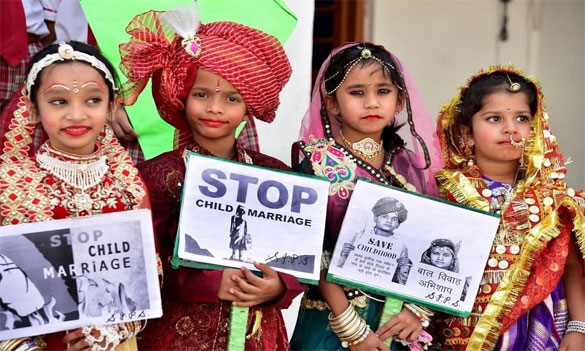
"They
have always opposed bills seeking to ban underage marriages. The entire
scientific community confirms that it is detrimental to women's health but they
misinterpret Islam, justifying the marriages of underage girls on religious
grounds," said Shazia Khan.
Nasreen
Jalil, a Pakistani politician and former chairperson of the Senate committee on
human rights, says that the country's feudal customs and patriarchy are to
blame for child marriages.
"I
believe the marriage age should be 18 across the country and those who violate
this should be dealt with," she said.
Underage
Brides At Risk Of Health Destruction
Tipu
Sultan, a Pakistan-based doctor, warned about health complications that could
arise during early marriages and pregnancies. He says anemia, hormonal
disorders and vaginal fistula are just some of the problems young brides are at
risk of facing.
"It
also causes malnutrition because when underage girls get pregnant, their babies
need nutrition which they receive from mothers' bodies. But since mothers
themselves go through a phase of growth, how can they provide nutrition to
their babies and keep themselves healthy at the same time?" he said.
Original
Headline: Pakistan: How poverty and exploitation drive child marriages
Source: The DW Made for Minds
URL: https://newageislam.com/islamic-society/blood-money-tribal-disputes-behind/d/124550