
Middle East Press On: Gulf, Tehran, Netanyahu, US-Iran Agreement, Iran Mou Reveals, US-Israeli Pressure, Israel’s Iran, Iran’s Power, New Age Islam's Selection, 20 June 2026
By New Age Islam Edit Desk
20 June 2026
How Iran, the US and the Gulf can build something that lasts
Will Tehran rejoice and Netanyahu worry following US-Iran agreement?
A Turning Point: What the Iran MoU Reveals About the Limits of US Power
US-Israeli Pressure Mounts on PA to Dismantle Force 101 – Report
Israel’s Iran gamble proves costly for US, Israel
The agreement: Beyond the nuclear file to reshaping the region
Did the boomerang war prove Iran’s power to endure?
-------
How Iran, the US and the Gulf can build something that lasts
Hassan Al-Mustafa
June 19, 2026
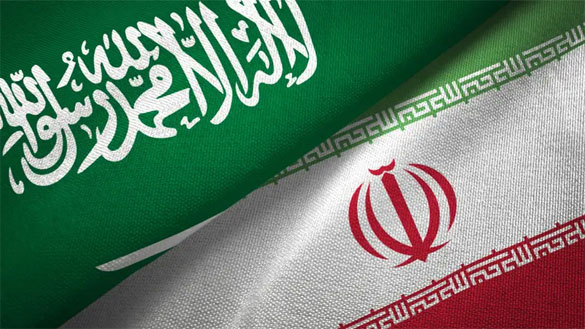
Saudi Arabia began where any serious reading of the memorandum of understanding between Washington and Tehran had to begin — with the one issue everything else hinges on: the security of navigation through the Strait of Hormuz.
The Kingdom’s Council of Ministers welcomed the deal to halt military operations and open detailed talks toward a lasting settlement, but it attached a condition in the same breath. Freedom of navigation through the Strait of Hormuz, it said, must be restored to what it was before Feb. 28. in a way that strengthens the security of the region and the world, respects the security interests of the region’s states and leaves their internal affairs alone.
So, Riyadh, which threw its diplomatic weight behind the mediation led by Pakistan and Qatar, takes the view that no agreement is worth the name unless it serves the interests of the Arab Gulf. Its statement on Tuesday made that explicit, naming three conditions it treats as nonnegotiable foundations: safe passage restored through the Strait of Hormuz, respect for internal affairs, and due regard for security interests. Strip any of them out and the agreement cannot hold.
Behind that position is a clear worry: that the understanding will be left half-built, that the region will slide back to where it started or that Washington and Tehran will retreat into a private, narrow bargain that waves away the concerns of the Gulf capitals. Those capitals are, after all, Tehran’s neighbors and they absorbed Iranian attacks throughout the recent war. Yet they declined to join the fighting, holding to self-defense and to “strategic patience” — wagering that diplomacy, slow and costly as it is, remains the surest way to settle matters with Iran. What they ask of Iran in return is simple: that it build its relations on good neighborliness and gives up both the export of its revolution and the funding of its proxies.
Riyadh knows that a truce means little while the causes of conflict remain. It wants talks with Tehran that are practical and specific, aimed squarely at those causes — the kind that produce a stable neighborhood in which states can cooperate or compete across politics, trade, sport and development without lurching toward confrontation or estrangement.
This is why the framework cannot be treated as a private American-Iranian matter. Shift the status of the Strait of Hormuz or the rules of deterrence between Washington and Tehran and the tremor runs straight through the Arab Gulf and into the global economy. The question that matters, then, is not the signature itself but the structure beneath it: how to build an agreement sturdy enough to outlast its first few weeks; one that hands each side a legitimate win without leaving the Gulf to pay later for gaps no one was willing to discuss at the time.
Holding the ceasefire and starting nuclear talks on a fixed 60-day clock will demand a real scaffolding — political, security and economic — that makes compliance more attractive to every party than a slide back into escalation and that gives every state in the region a genuine stake in the outcome.
The first and most urgent file is the Strait of Hormuz and it cannot be papered over with generalities. The agreement must guarantee full freedom of navigation outright: no political tolls, no unilateral security arrangements, no threat — overt or implied — to commercial ships and oil tankers.
Each side can claim its prize. Iran can tell its public it secured recognition of its geographic role under international law, rather than the fait accompli it has tried to impose. The US can say it reopened a vital artery without a full-blown war. The Gulf states need more than words, they need a rigorous maritime monitoring regime that keeps the strait from becoming a lever of blackmail at the first nuclear or regional quarrel.
The second file ties economic relief to verified conduct. Iran needs a financial lifeline for its drained treasury, while Washington wants measurable behavior on the nuclear program and on the actions of the Revolutionary Guard and its militias. The remedy is sequencing: lift oil restrictions, ease payments, open investment — but in stages, with every economic concession matched by a documented step on security or the nuclear file.
The third file is the program itself. The stockpile of highly enriched uranium must be brought under control and regular inspections established under the authority of the International Atomic Energy Agency — clearly enough to protect Iran’s right to a transparent, peaceful civilian program while closing off the path to a weapon. Any dash for that threshold would set the whole Middle East racing toward the bomb.
The fourth file is regional influence. No deal between Washington and Tehran will survive if Arab countries keep being used as bargaining chips. Lebanon, Iraq and Yemen have become arenas for trading military signals, at a steep cost to their stability and their people’s safety. They must recover their full sovereignty, with their own central governments — not “substate forces” — holding the decisions of war and peace.
None of this will come easily. But it is the only way to build durable Gulf-American-Iranian understandings — ones that lift the tension dragging on the economies of the region and the world, and that give diplomacy, development and partnership their standing back.
https://www.arabnews.com/node/2647826
-------
Will Tehran rejoice and Netanyahu worry following US-Iran agreement?
Abdulrahman Al-Rashed
June 19, 2026

History may repeat itself. We do not forget the iconic scene of Iranian Minister Javad Zarif standing on the balcony of the Palais Coburg Hotel in Vienna 11 years ago, waving to journalists with a smile after signing the Joint Comprehensive Plan of Action.
It was a spectacular Iranian victory, co-signed by US President Barack Obama. All of Europe supported it, and China and Russia were witnesses.
Vienna’s joy was short-lived as the JCPOA was quickly torn up by Obama’s successor, Donald Trump. Relations became strained, ports were closed, oil tankers were pursued, and Iran was besieged.
The new agreement struck by US Vice President JD Vance and Iranian negotiator Mohammad Bagher Ghalibaf, subsequently signed by President Trump, is preliminary, with a deadline of no less than two months to reach a final detailed agreement. Trump wants a propaganda victory, deliberately signing it at the Palace of Versailles, echoing the treaty that ended World War I. However, Versailles was also a symbol of a treaty of sin; it led to the more destructive World War II.
Ghalibaf can feel extremely pleased with the victory over Trump’s negotiating team, led by Vance and his advisors Jared Kushner and Steve Witkoff.
In the chaos and ambiguity surrounding the framework agreement, I believe the most important question is not about opening the Strait of Hormuz, or collecting Iran’s frozen billions, or supporting Iran with an additional $300 billion, but about its continuity and the possibility of its collapse.
The agreement rehabilitates Tehran’s regime as a regional power.
Vance’s theory is that the Iranian regime will discover through the new economic rescue that peace is its best option. Unfortunately, it echoes what Obama said after signing the JCPOA. In April 2015, he stated that the agreement “will strengthen the more moderate forces within Iran.”
Obama’s theory was quickly proven wrong as the Iranian regime intensified its crackdown on its citizens, benefiting from its political victory and new funds. The Quds Force led by Islamic Revolutionary Guard Corps head Qasem Soleimani encroached beyond its borders, with militias flocking to Iraq, Syria, Lebanon, Yemen, and other places.
Most of the funds Tehran will acquire in the coming weeks are likely to go primarily towards strengthening the military position, not to support living conditions or the Iranian economy. The Iranian leadership fears the possibility of a return to war against it, and its political doctrine considers Iran a military power, harnessing all its resources for this strategy.
Tehran’s new leadership will need enormous sums to rehabilitate its defensive and offensive capabilities, utilizing the frozen funds and significant oil sales at high prices it will obtain under the agreement.
Meanwhile, Israel watches the scene with anger, anxiety, and vigilance. It is unlikely to accept Iran’s return as a major regional power threatening it, especially after having sought to undermine it. Therefore, it will seek to pressure Trump to correct the course of negotiations.
The framework agreement will not only face objections from Israel, and partly the Gulf, but also skepticism from within the Trump administration.
Despite its many drawbacks, the positive aspect of the preliminary agreement is that it has made it easier for both parties to back away from fighting, which would have been difficult given domestic and international public opinion. It also offers both sides an opportunity to return and negotiate the details. There are many pitfalls that the agreement did not address and will be points of concern later, and negotiators may succeed in restricting Iran’s activities and military capabilities.
Despite his reprimands and insults to Israel’s prime minister, Benjamin Netanyahu, Trump cannot ignore him or Israeli public opinion. He needs American Jewish support. Trump also cannot ignore the Republican Party hawks; they are his inner circle and protect his back in Congressional conflicts. All of them are satisfied with the nuclear agreement, but some will oppose giving Iran free rein in the region.
The final conclusion is that lifting sanctions and allowing it to sell oil will provide Iran with about $200 billion annually, along with a financial fund for its reconstruction, which will ultimately grant it about half a trillion dollars. This will make Iran a greater monster than it was before.
It is likely that Netanyahu will return to lead the military scene in the region if subsequent negotiations fail to change Iran’s path.
https://www.arabnews.com/node/2647821
------
A Turning Point: What the Iran MoU Reveals About the Limits of US Power
June 19, 2026
By Iqbal Jassat
Events at the G7 Summit in Evian were overshadowed by news of the US-Iran Memorandum of Understanding (MoU). This was hardly surprising since the story broke about America’s dramatic turnaround and widespread speculation about the details of the MoU, as well as the reasons for it.
It would be fair to say, thus, that the most significant outcome of the G7 Summit in Évian was not the signing of the MoU. It was the public collapse of the illusion that military superiority automatically translates into political victory.
For months, Washington and Tel Aviv insisted that Iran would eventually be forced to surrender. The language was harsh, pointed and uncompromising. Iran’s missile program would be destroyed. Its nuclear capabilities would be dismantled. Its regional alliances would be broken. Its leadership would face collapse under the combined weight of military pressure, sanctions and international isolation.
None of those objectives were achieved.
The contradiction became impossible to conceal when President Donald Trump stood before the world at the G7 and defended Iran’s right to retain conventional ballistic missiles.
The same missiles that had been presented as an existential threat suddenly became acceptable. The same missile program that justified war was transformed into a reality that Washington was prepared to live with.
Contrary to the wishful thinking of some political pundits, this was not a minor adjustment in policy. It was a public admission that the original objectives could not be achieved.
Absent from much Western reporting is the extent of this reversal. The final agreement contains no dismantling of Iran’s missile deterrent. It contains no regime change. It contains no surrender of Iran’s political system. It contains no disarmament of Iran’s regional allies. Even the nuclear issue was largely deferred into future negotiations rather than resolved through force.
The shock registered on the gaping mouths of G7 leaders as well as Israel’s war criminals was obvious, for the outcome exposed the enormous gap between public rhetoric and strategic reality.
For years, American foreign policy has been built around the assumption that economic pressure, military dominance and international isolation can force adversaries to comply with Washington’s demands. Iraq was supposed to demonstrate that reality. Libya was supposed to reinforce it. The sanctions architecture imposed on Iran was designed around the same logic.
The MoU signed by Trump at the G7, demonstrates the limits of that model.
Iran’s leadership calculated that surrender would be more dangerous than resistance. Despite suffering enormous military and economic damage, Tehran retained enough leverage to make continued escalation prohibitively expensive for its adversaries.
The critical factor was not military strength alone.
The Strait of Hormuz exposed a vulnerability that military planners could not bomb away. As energy markets reacted and global supply chains faced disruption, the economic consequences of a prolonged conflict became increasingly unacceptable. Oil prices surged. Shipping costs escalated. Insurance markets were shaken. European governments demanded an end to the crisis. Gulf states that had quietly supported pressure on Iran suddenly became advocates for de-escalation.
The beneficiaries of the original confrontation were clear. Arms manufacturers secured contracts. Security establishments expanded their authority. Lobbying organizations intensified demands for escalation. Media institutions repeated assumptions about inevitable Iranian defeat. A vast ecosystem of political and economic interests promoted the belief that only one outcome was possible.
Though the MoU demolished that narrative, the reaction from Israel was even more revealing. The Israeli political establishment expected the conflict to fundamentally alter the regional balance of power in its favor.
Instead, Netanyahu and his criminal gang of genocidaires found themselves confronting an agreement negotiated largely without their input and one that preserved many of Iran’s capabilities Israel had spent years attempting to eliminate.
The frustration expressed by them and echoed across the regime’s media was not simply about the agreement itself.
It reflected the recognition that military escalation had failed to produce the strategic transformation that had been promised.
This is why the agreement carries implications far beyond Iran, particularly for governments across the Global South who are expected to study the outcome closely.
Indeed, so will Russia and China. The lesson they will draw is not that America lacks power. The lesson is that American power now operates within constraints that did not exist during the unipolar era.
The lessons from Iran, if incorporated in the study of international relations, will be that the era in which Washington could dictate terms without consequence is steadily eroding.
The MoU therefore marks something larger than the end of a conflict. It marks another stage in the transition from a unipolar order to a multipolar one. The significance of the MoU lies not in what was announced. It lies in what was conceded.
The campaign to impose American terms concluded with Washington accepting realities it once declared unacceptable.
https://www.palestinechronicle.com/a-turning-point-what-the-iran-mou-reveals-about-the-limits-of-us-power/
------
US-Israeli Pressure Mounts on PA to Dismantle Force 101 – Report
June 19, 2026
US-Israeli Pressure
The United States and Israel have presented a series of conditions to the Palestinian Authority (PA), including demands related to the restructuring of Palestinian security forces and the dismantling of elite units within the National Security apparatus, according to Palestinian political and security sources cited by Quds News Network.
The reported demands form part of broader discussions between Washington and the Palestinian leadership concerning future relations with US, educational policies, the distribution of Palestinian tax revenues withheld by Israel, and the PA’s future political role.
According to the sources, the latest conditions go beyond previous demands and focus directly on the internal structure of the Palestinian security establishment.
Focus on Force 101
Sources told Quds News that the United States, acting on Israeli recommendations, has called for reducing what it described as the “militarized appearance” of Palestinian security forces.
The demands reportedly include ending the activities of special units and battalions affiliated with the Palestinian National Security Forces, particularly Force 101.
According to the sources, Israeli officials view these formations as representing the closest equivalent to a Palestinian military force and argue that some units possess advanced training and capabilities exceeding the limitations envisioned under the Oslo framework.
The National Security Forces currently consist of nine battalions deployed across the occupied West Bank. Force 101 was added to the structure after 2010 and has become one of the most prominent units within the organization.
The unit previously received recognition in training exercises focused on counterterrorism and hostage-rescue operations.
Israeli Complaints
According to the report, Israeli officials have intensified pressure on the PA by highlighting attacks allegedly carried out by members of Palestinian security forces since October 7, 2023.
The sources pointed specifically to operations carried out by Mohammed Abed and Malek Salem near the Gush Etzion settlement bloc in July 2025, as well as an attack carried out by Mohannad Al-Asoud in September 2024 that reportedly killed three Israeli occupation personnel.
The PA has publicly characterized such incidents as individual actions and has condemned them.
Nevertheless, the sources said Israeli officials have used the incidents to argue for further restructuring of Palestinian security institutions.
US-Trained Security Doctrine
According to the sources, Palestinian officials responded by emphasizing that the National Security Forces were trained according to the security doctrine developed under former US security coordinator Keith Dayton.
Dayton played a central role in rebuilding and restructuring Palestinian security forces between 2005 and 2010 with substantial American support and oversight.
The sources said Palestinian officials suggested that battalions could potentially be merged or renamed rather than dismantled outright.
According to the report, approximately 8,000 personnel serve within the National Security Forces and have undergone standardized training programs, primarily in Jericho and Jordan.
Contacts Resume
The report also revealed that communication channels between the US administration and the Palestinian leadership resumed approximately four months ago.
According to the sources, the contacts began shortly after the establishment of the so-called “Peace Council” and focused largely on efforts to connect the PA to the council’s future role in Gaza.
Washington is reportedly seeking to expand that role to include the occupied West Bank.
One source said the Palestinian Authority does not oppose cooperation with the council but is seeking a parallel role rather than operating under its authority.
“The Authority cannot reject the role of the Peace Council, but it does not want to be subordinate to it,” the source said.
Force 101 Moved to Jericho
According to the sources, recent steps have already been taken to reduce the visibility of Force 101.
The report states that the unit’s operations center was recently relocated from Ramallah to Jericho as part of efforts to reduce its public profile and limit special operations activities.
Sources said it remains unclear whether the PA will ultimately agree to dismantle the unit.
However, they indicated that continued pressure could lead to Force 101 being merged into another active formation, such as the Ninth Division, while operating under a different name.
Such a move could be presented as part of broader reforms introduced under Major General Al-Abd Ibrahim Khalil, who assumed command of the National Security Forces after succeeding Nidal Abu Dukhan.
Presidential Authority
The Palestinian National Security Forces operate directly under the authority of PA President Mahmoud Abbas, who serves as commander-in-chief of the Palestinian security establishment.
Under Palestinian law, the force is classified as a regular military organization responsible for maintaining security, supporting other security agencies, preserving public order, and securing entrances to cities located in Area A of the occupied West Bank.
According to one source cited by Quds News, these responsibilities are among the few functions within the Palestinian security apparatus that potentially conflict with Israel’s broader objective of maintaining control over the occupied West Bank.
The source nevertheless stressed that there are currently no indications of any potential military confrontation between the National Security Forces and Israeli occupation forces.
https://www.palestinechronicle.com/us-israeli-pressure-mounts-on-pa-to-dismantle-force-101-report/
------
Israel’s Iran gamble proves costly for US, Israel
by İhsan Aktaş
Jun 20, 2026
Every great power possesses strength, but every strength has its limits. During the Cold War, when discussing the power of the U.S. and the Soviet Union, the late former Prime Minister Necmettin Erbakan would often say, "The only possessor of unlimited power is Almighty Allah."
The fate of many great empires has ultimately been determined when they reached the limits of their power, often in the mountains of Afghanistan. Alexander the Great, Britain, today's Russia, and the U.S. have all encountered such tests. Yet when the U.S. withdrew from Afghanistan, it had not significantly diminished its overall power.
For the U.S., neither the war in Afghanistan nor the war against Iran represented rational conflicts. Much like Israel's actions in Gaza and its occupations in Lebanon and Syria, they were wars lacking clear political objectives.
Indeed, Washington's unconditional support for Israel had encouraged Israel to such an extent that even the U.S. ambassador to Israel spoke of Israel's right to occupy all countries in the region. Egypt, Lebanon, Jordan and the Gulf states were mentioned, and even Saudi Arabia and Türkiye may also have been contemplated.
Israeli leaders, increasingly detached from reality, had begun using phrases such as "After Iran, it will be Türkiye's turn."
Consequences of irrational war
Today, another empire has tested the limits of its power. The U.S. entered a war on Israel's behalf. It underestimated its adversary. It underestimated the ancient Iranian nation. Those who had previously demonstrated against the Iranian regime immediately rallied behind their state in the face of what they perceived as an external attempt at occupation. Not only did the regime survive, but the conflict effectively extended the life of the Islamic Republic.
Several conclusions emerge from this war: The conflict has proven once again that any war, particularly in an oil-producing region, affects the global economy and can rapidly evolve into an economic war impacting the entire world.
From this point forward, Israel is likely to face greater challenges in securing unconditional American support for future military campaigns for territorial claims based on the "Promised Land."
Both the war in Gaza and the Iran conflict are likely to widen the gap between the American public and Israel. Billion-dollar lobbying efforts and the activities of organizations such as the American Israel Public Affairs Committee (AIPAC) increasingly risk turning Israel's political opponents into popular figures, as seen in the cases of New York Mayor Zohran Mamdani and Kentucky Senator Thomas Massie.
Wars are won and lost through alliances. China and Russia, whether openly or discreetly, acted in accordance with the spirit of alliance and, in one way or another, contributed to Iran's resilience.
The war has damaged the long-term alliance between the U.S. and European countries.
Following this conflict, every major power, particularly the U.S., has gained a clearer understanding of the limits of its influence and where it must stop.
As an ancient state, Iran demonstrated considerable diplomatic skill. As President Recep Tayyip Erdoğan has often remarked, "If you are strong on the battlefield, you will also be strong at the negotiating table."
Türkiye's role
As a result of Türkiye's efforts, it successfully conveyed to the international community that this was an unjust and unlawful war. In particular, Erdoğan's statement ("Israel started this war, and the whole world is paying the price") resonated widely across the globe.
Türkiye helped to avoid the possibility of confrontation between Iran and Gulf countries, particularly Saudi Arabia. Through active diplomacy and regional leadership, it challenged Israel's tiny mind.
By pursuing a foreign policy characterized by strategic vision throughout the conflict, Türkiye emerged from the war as one of the countries whose influence and strength have increased in the post-war environment.
https://www.dailysabah.com/opinion/columns/israels-iran-gamble-proves-costly-for-us-israel
-------
The agreement: Beyond the nuclear file to reshaping the region
June 19, 2026
by Dr Sania Faisal El-Husseini
The provisional framework agreement announced between the United States and Iran on 17 June is about far more than reviving stalled nuclear diplomacy or reviving the 2015 deal. It offers a political, security and economic blueprint for managing the post-war phase while redefining the balance of power across the region. Its significance lies as much in its timing as in its substance. Unveiled after a broad cycle of escalation centred on Lebanon, the framework suggests that Washington’s priorities now extend beyond Iran’s nuclear programme to the wider task of containing interconnected crises spanning Iran, Lebanon, Gaza, Israel and, potentially, the future of the Palestinian political system. Provisions covering freedom of navigation through the Strait of Hormuz and proposals for Iran’s gradual economic reintegration through investment mechanisms reinforce that broader ambition. Rather than a conventional nuclear arrangement, the framework points to a wider effort to reshape the region’s strategic landscape.
The framework calls for a complete cessation of military operations, including those in Lebanon, alongside a US military withdrawal from Iran’s immediate vicinity and the lifting of the naval blockade imposed on the country. In return, Iran would guarantee the free passage of commercial shipping through the Strait of Hormuz for an initial 60-day period. Thereafter, transit arrangements would be coordinated with Oman in accordance with international law. Washington also commits to respecting Iran’s sovereignty, refraining from interference in its internal affairs, and lifting all sanctions and other restrictive measures imposed on the country. The nuclear file, meanwhile, has been intentionally deferred, with its unresolved details left to negotiations over an initial 60-day period, renewable by mutual agreement. The framework also envisages a reconstruction programme for Iran in partnership with regional actors.
Viewed through this wider lens, the framework is difficult to interpret as a purely bilateral understanding between Washington and Tehran. Rather, it intersects with a series of regional developments that have unfolded in parallel. These range from US pressure to curb Israeli military escalation in Lebanon in order to preserve the prospects of the agreement, to emerging proposals for post-war governance in Gaza and renewed international efforts to shape the enclave’s political future. They also include Arab initiatives to advance Gaza’s reconstruction and the Palestinian Authority’s decision to hold elections for the Palestinian National Council, a move that aligns with growing international calls for reform of the Palestinian political system. Israel, meanwhile, continues to pursue a predominantly military approach in both Gaza and Lebanon. Yet opinion polls increasingly point to the possibility of a new political phase inside Israel—one that could have a direct bearing on the agreement’s future and the prospects for its implementation.
The announcement of the US-Iran framework came in the wake of a renewed Israeli military escalation in Lebanon. Tehran had made clear that any understanding with Washington would remain contingent on bringing the fighting between Israel and Lebanon to an end. At the beginning of June, it even threatened to withdraw from the negotiations altogether, prompting US President Donald Trump to intervene in an effort to avert a broader Israeli strike on Beirut. The breakthrough followed weeks of deadlock, despite the ceasefire brokered by Pakistan. Its conclusion therefore marks a significant diplomatic achievement after repeated attempts to contain regional tensions had faltered amid renewed confrontations in and around the Strait of Hormuz, as well as along the Lebanese front.
Alongside measures to consolidate the ceasefire, the framework seeks to safeguard freedom of navigation through the Strait of Hormuz, restore Iranian oil exports, lift sanctions, and establish investment mechanisms aimed at gradually reintegrating Iran into the regional and international economic system. Taken together, both the timing of the agreement and the scope of its provisions suggest that its primary purpose is not to deliver a final settlement of the nuclear issue, as the 2015 accord sought to do. Rather, it reflects an attempt to respond to the strategic realities created by the recent war and to the mounting costs that its continuation had imposed on all sides.
While Tehran insisted that any understanding with Washington depended on ending the war in Lebanon, Israel rejected any attempt to link its military campaign to the negotiating process. At the same time, the US administration stepped up pressure on the Israeli government to restrain its operations in Lebanon, concerned that continued escalation could jeopardise the talks. This marks a notable shift in the dynamics of US-Iran diplomacy. Israeli military action in Lebanon has become a direct factor in determining the fate of an American-Iranian agreement indeed, it has become part of the agreement itself, with Lebanon explicitly referenced in its provisions. Previous rounds of negotiations were conducted largely independently of Israeli policy. That is no longer the case. The implications extend well beyond Lebanon, signalling a broader change in the way regional security dynamics are becoming embedded in US-Iran negotiations.
Although Gaza does not feature in the US-Iran framework itself, it remains central to its prospects. Unlike Lebanon, whose inclusion became an explicit condition for concluding the agreement, Gaza represents a strategic prerequisite for its long-term success. As the region’s principal flashpoint, it continues to shape the wider environment in which any broader settlement will ultimately be tested. Even as negotiations with Iran proceeded, Washington continued to advance its vision for the “day after” in Gaza by backing the Palestinian technocratic committee tasked with administering the territory during a transitional period. This aligns with repeated US statements calling for an interim Palestinian administration supported by regional and international partners. Parallel efforts have also gathered momentum across the Arab world. Egypt and Qatar, with Turkish participation, remain engaged in mediation and transitional governance arrangements, while Saudi Arabia, the United Arab Emirates and other Arab states are focusing on reconstruction as part of a broader strategy to support a transitional Palestinian administration in Gaza. Taken together, these parallel tracks suggest that the post-war phase is no longer being managed through separate diplomatic files.
The decision to proceed with elections for the Palestinian National Council forms part of a broader internal political process that responds to mounting international calls for reform of the Palestinian political system while reinforcing the Palestinian Authority’s standing alongside the evolving arrangements for post-war Gaza. In that sense, it also aligns with the wider international momentum behind Palestinian state-building, reflected most notably in the New York Declaration, which secured overwhelming support in the United Nations General Assembly.
The success of this broader trajectory, however, ultimately hinges on Israel, the variable that now appears the most difficult to reconcile. Israel’s current government does not regard the framework as a pathway to renewed regional stability. Instead, it sees it as a temporary arrangement that leaves its core security concerns unresolved, particularly those relating to Iran’s nuclear programme, its missile capabilities and its network of regional alliances. Here, the divergence between Washington and Tel Aviv becomes increasingly apparent. The United States appears willing to contain escalation through an interim agreement, even if that means postponing the most contentious issues to subsequent rounds of negotiation. Israel, by contrast, remains deeply sceptical of any approach that delays a definitive resolution of what it considers the principal sources of strategic risk. These differences coincide with Israel’s early election campaign, at a time when opinion polls continue to point to declining public confidence in Benjamin Netanyahu’s government, even as the broader Israeli public remains committed to a security-first approach towards Iran. The continuation of the current governing coalition could prolong regional tensions and complicate efforts to consolidate the framework. By contrast, a less right-wing government might allow greater scope for coordination with Washington, not because it would necessarily adopt a more accommodating stance towards Tehran, but because it could prove more willing to manage those differences through coordinated understandings with the United States.
The framework has undoubtedly opened a new diplomatic window. Yet its real significance will depend on whether the parties involved can translate that opportunity into a coherent set of practical arrangements. Those efforts cannot be confined to Iran alone. They must also encompass Lebanon, West Bank and Gaza, and the future of US-Israeli coordination if they are to produce a more durable regional order that serves the long-term interests of the states of the region order as a whole.
https://www.middleeastmonitor.com/20260619-the-agreement-beyond-the-nuclear-file-to-reshaping-the-region/
-------
Did the boomerang war prove Iran’s power to endure?
June 19, 2026
by Kurniawan Arif Maspul
When coercion lacks clarity, the weapon turns back on the hand that threw it. One hundred and ten days of American and Israeli bombardment. A relentless naval blockade. The proclaimed objective: to cripple Iran’s nuclear ambition, shatter its missile arsenal, and break the back of the Islamic Republic. And now? A memorandum of understanding. A ceasefire on ‘all fronts’. And the slow, grudging unfreezing of more than $100 billion in Iranian assets—the very financial sinews that sanctions were meant to sever.
This is not a victory. This is the sound of strategy unravelling.
Tehran is demanding an initial release of $24 billion. Washington, after weeks of insisting on ‘maximum pressure’, is now negotiating the terms of humanitarian escrow accounts in Qatar and Switzerland.
This is the sanctions paradox in its purest form: pressure that bends but never breaks is pressure that ultimately empowers the adversary.
Consider the strategic contradiction. The United States and Israel launched Operation Epic Fury with ambitions that ranged from regime change to the elimination of Iran’s ballistic missile threat. Instead, the Atlantic Council now reports that only 18 per cent of Israelis support the resulting deal.
As one Foreign Affairs analysis puts it bluntly: ‘Trump failed’. The regime could hold out indefinitely. Military might, it turns out, is not the trump card its wielders imagined.
The lesson echoes across history. Iraq’s Oil-for-Food programme of the 1990s—intended as a humanitarian exception—became a corruption-riddled farce that left thousands dead before food trickled in. Afghanistan’s $9.5 billion in frozen reserves remain pawns in a geopolitical game, with the Taliban demanding ‘their’ money back while Washington insists otherwise. In each case, the same pattern emerges: blanket freezes without clear, enforceable humanitarian lanes cause catastrophe. And when the dam finally breaks, it is the regime—not the people—that drinks first.
Now watch the regional chessboard. Gulf states, battered by Iranian missiles and a double blockade of the Strait of Hormuz, have seen their economic growth revised down and confidence in Washington’s reliability eroded. Israel finds itself sidelined, with Trump reportedly refusing to share the MOU text with Netanyahu and warning Jerusalem it could be ‘on your own very soon’. China, meanwhile, sits back and watches, having spent not a single dollar on the war while the United States drained billions from its weapons stockpiles and diverted resources from the Asia-Pacific.
Beijing’s main concern has been stabilising the global oil market, which it did by reducing its own imports, leaving more supply available globally. The result?
The sanctions architecture that took years to build is now being dismantled piece by piece—not by Iranian defiance, but by American exhaustion. Iranian tankers are already moving through the blockade. Sanctions waivers are being issued. A $300 billion reconstruction fund is on the table. The very ‘maximum pressure’ strategy that Donald Trump spent years championing is being abandoned.
What does this teach the world? Endurance beats pressure. Those contradictions kill credibility. And that power without strategy is just noise. North Korea watches. Venezuela watches. Every regime contemplating nuclear ambition or regional disruption watches. The message is unmistakable: outlast the bombs, outlast the blockade, and the billions will flow.
For US allies—nations that prize the rules-based order and open global trade—this is a moment of profound unease. The Iran crisis delivers a warning that reverberates far beyond the Middle East. When major powers wage war without an endgame, they do not merely lose battles; they erode the very norms that keep the peace. Sanctions that crack under pressure are not tools of coercion; they are advertisements for impunity.
The memorandum of understanding, now being signed in Switzerland, may bring a temporary ceasefire. It may reopen the Strait of Hormuz. It may even free some Iranian funds for humanitarian purposes. But it will not restore the credibility of American power. It will not reassure Israel. It will not convince the Gulf states that Washington is a reliable partner. And it will not deter the next adversary from gambling that patience will outlast punishment.
The missiles that were meant to degrade Tehran’s capabilities have only demonstrated their limits. And the allies who were meant to be protected are left wondering whose side anyone is really on. The world is watching. And the lesson is unforgiving.
https://www.middleeastmonitor.com/20260619-did-the-boomerang-war-prove-irans-power-to-endure/
-------
New Age Islam, Islam Online, Islamic Website, African Muslim News, Arab World News, South Asia News, Indian Muslim News, World Muslim News, Women in Islam, Islamic Feminism, Arab Women, Women In Arab, Islamophobia in America, Muslim Women in West, Islam Women and Feminism