
Middle East Press On: Trump’s Tactical Crossroads, Iran, Itamar Ben-Gvir, China, Indian Jews, Palestine, Turkey, Syria, Israeli Assault on Iran, New Age Islam's Selection, 25 May 2026

By New Age Islam Edit Desk
25 May 2026
Escape or escalate: Trump’s tactical crossroads in the Iran conflict
Acceptable till it wasn’t: Itamar Ben-Gvir and the Global Sumud Flotilla
China won the Cold War and it will win the Cold Peace
Indian Jews brought to Palestine as colonials, not homecomers
Türkiye bets on Syria as new partner in regional connectivity
‘We Will Face Whoever Stands with Israel’: Qassem Delivers Sweeping Political, Military Warning
Territorial Imperialism Returns: What Lies Behind the Israeli Assault on Iran?
------
Escape or escalate: Trump’s tactical crossroads in the Iran conflict
May 24, 2026
By Jasim Al-Azzawi
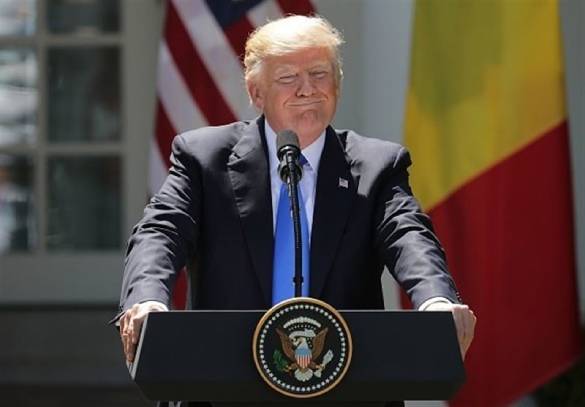
The war that Donald Trump declared won last month looks rather different from the inside of the Pentagon. The resulting stalemate has drained American military stockpiles, emboldened Iranian commanders, and left the US with far worse options than before the conflict began.
The administration’s triumphalist framing has struck a jarring note among those who have spent careers studying the Iranian military and the limits of American power projection. Declaring victory when the enemy is still standing, still armed, and still controlling the waterway you went to war over is not a strategy. It is a wish dressed up as a press release.
What has changed is the arithmetic of munitions. The United States entered this conflict with a military built around expensive, technologically sophisticated weapons systems, precision instruments that take years to design, years more to manufacture, and that have now been expended at a rate the American defense industrial base is poorly positioned to replenish. Iran, by contrast, relies on a dispersed network of robotic small boats, undersea mines, tactical ballistic missiles, and unmanned systems. These weapons are cheap, simple, and easy to produce at scale.
The United States essentially deployed a Ferrari into a demolition derby. The Iranians didn’t need high-end technology; they just needed a relentless volume of cheaper assets to overwhelm the defense.
The American strikes produced mixed results. Iran does not maintain a conventional naval fleet or a modern air force in the Western sense. Its control of the strait rests not on destroyers or fighter wings but on a distributed, resilient system of asymmetric capabilities. The Iranian systems that dispersed into the terrain absorbed the strikes and began reconstituting almost immediately. Defense analysts point out that the Iranians have adapted from what they observed, replenished their stocks, and may now be better positioned than when the conflict began.
The strategic picture is further complicated by the political pressures that shaped the original decision to go to war. Analysts describe a decision driven less by tactical opportunity than by commitments made to Israeli leadership and to influential pro-Israel donors whose support was central to Trump’s political coalition. The result was a military campaign calibrated to political timetables rather than operational logic.
Senator Tim Kaine of Virginia, a member of the Armed Services Committee, called the conduct of the conflict “a case study in how not to use military force.” Representative Thomas Massie of Kentucky, before his defeat in his primary, was more pointed: “We went in without a declaration of war, without a clear objective, without an exit strategy, and now we’re supposed to celebrate because we used up half our missile inventory and the Iranians are still there.”
The regional picture adds further complexity. Saudi Arabia and the smaller Gulf monarchies are acutely aware of their own exposure. A major Iranian strike on above-ground oil and desalination plants could critically impede the GCC’s government’s ability to maintain economic prosperity. The GCC states have no appetite for an escalation that leaves their vital water infrastructure in ruins. While they favor the containment of Iran, preventing a regional war is a matter of sheer survival.
The broader strategic damage extends well beyond the Gulf.
Washington has come to realize that Iran acutely recognized US vulnerabilities, designing asymmetric systems specifically to deplete America’s most expensive capabilities with its cheapest assets. This is not a temporary setback; it is a structural crisis.
For now, President Trump appears caught between the political cost of acknowledging stalemate and the military risk of a second round of strikes that the Pentagon itself doubts would achieve different results. The operational pause is not a logistical necessity. The forces are forward-deployed and ready. The pause is a search for a rationale, a way to resume the fight that does not require the White House to explain why the first attempt failed.
By most accounts, the search has not yet succeeded.
https://www.middleeastmonitor.com/20260524-escape-or-escalate-trumps-tactical-crossroads-in-the-iran-conflict/
-----
Acceptable till it wasn’t: Itamar Ben-Gvir and the Global Sumud Flotilla
May 24, 2026
By Dr Binoy Kampmark

It has been a sorry though predictable exercise. When he lived up (or down) to expectations of atrocious conduct befitting the proud bigot that he is, Israel’s Minister for National Security had to be seen as aberrant, the man who strayed, if only slightly. The conduct in question involved Itamar Ben-Gvir’s posting of footage on social media mocking the fate of activists of the Global Sumud Flotilla who had made a failed humanitarian effort to break the blockade of Gaza. The activists, seized in international waters by Israeli forces off the coast of Cyprus, had been blindfolded, their hands bound, and forced to kneel on the floor at the Port of Ashdod.
The caption of the posted video featured the warming caption “Welcome to Israel”. Ben-Gvir can be seen waving an Israeli flag, taunting the detainees with bellowing remarks. One bound man can be seen having to hear the words “The people of Israel live” shouted in his face.
Much of this would have been filed in a drawer under the title of “acceptable conduct” and gone unremarked. Ben-Gvir oversees the running of his country’s police and prisons, which he has served to corrupt and politicise with impunity. He has been given vast latitude to be brutal and brutish, most notably to Palestinians. With clear relish, he regularly posts videos of how Israel’s Prison Service treats its Palestinian inmates, which number somewhere in the order of 9,500. (About half are held under the Unlawful Combatants Law, a ghastly statute that negates due process and opportunities for the detained to rebut allegations made against them.)
He has also been riding the wave of foamy intolerance stimulated by the attacks of October 7, 2023 by Hamas on Israel, leading a successful campaign to apply the death penalty for Palestinians convicted of attacks on the State of Israel and the Jewish people (that same penalty does not apply to Israelis for acts of terrorism).
And in terms of embracing the concept of a Greater Israel, Ben-Gvir is very much its podgy poster boy, indulging the murderous violence inflicted by fellow Israeli settlers in the West Bank upon their hapless Palestinian residents.
But Israel’s often smug propaganda establishment was not prepared for what followed. A number of countries whose citizens had been detained expressed official outrage. Israel’s ambassadors to Italy, France, Spain, the Netherlands and Canada were summoned to seek formal clarifications about the position of the Netanyahu government.
The Italian Prime Minister Georgia Meloni, along with her Foreign Minister Antonio Tajani, declared the footage “unacceptable.” It was “intolerable for these protestors, including many Italian citizens, to be subjected to treatment that is so degrading to human dignity.” In addition to seeking the release of the Italian citizens, an apology was also sought “for the treatment of these protestors, and for the total disregard of the Italian Government’s explicit requests.”
The UK’s Foreign Secretary Yvette Cooper expressed her concerns in a social media post. “I am truly appalled at the video posted by Israeli Cabinet Minister Ben-Gvir taunting those involved in the Global Sumud Flotilla.” The conduct had violated “the most basic standards of respect and dignity in the way people should be treated.” The families of a number of British nationals had also been contacted in the hope of providing consular support.
Anita Annand, Canada’s Foreign Minister, told reporters that her government took the matter “very, very seriously. It’s a matter of humane treatment of civilians, and I can assure you that we are acting with absolute urgency.” From Spain came the remarks of Foreign Minister José Manuel Albares that the treatment of the activists had been “monstrous”, while his Irish counterpart Helen McEntee expressed her shock at the footage while calling for the immediate release of the activists.
The South Korean President Lee Jae Myung went even further, casting an eye back to the entire seizure of the protestors at sea and posing a series of questions: “What is the legal basis? Is it Israeli territorial waters? Is that Israeli land? If there is conflict, can they seize and detain third-country vessels?”
From Paris came the scolding words of Foreign Minister Jean-Nöel Barrot: “We cannot tolerate French nationals being threatened, intimidated, or subjected to violence in this way, especially by a public official. I note that these actions have been condemned by a large number of Israeli governmental and political figures. On March 23, France went even further. “As from today,” announced Barrot, “Itamar Ben-Gvir is banned from entering French territory.” The decision was made in response to the minister’s “reprehensible actions towards French and European citizens who were passengers on the Global Sumud Flotilla.”
Faced with his fusillade of rage and query, Israeli Prime Minister Benjamin Netanyahu chose form over substance. While Israel retained, according to his statement, “every right to prevent provocative flotillas of Hamas terrorist supporters from entering our territorial waters and reaching Gaza”, Ben-Gvir’s approach was “not in line with Israel’s values and norms.” Even then, the sense was that Ben-Gvir had only just exceeded expectations of otherwise justifiable conduct. He was, after all, responding to terrorist sympathisers and “provocateurs”. Furthermore,
Prior to the elections in March 2021, Netanyahu told Channel 12 that the future minister in his cabinet was “not fit” for ministerial duties. When the interviewer pressed the PM on whether he considered Ben-Gvir a racist, Netanyahu blandly responded that, “His positions are not mine.” The Israeli PM is, however, a man who puts gritty political survival above keen principle, an approach that has ensured him a remarkable longevity in politics. His bigotry, no less felt than the far-right ministers he courts, is worn with softer, more acceptable shades.
Ben-Gvir, basking in the hot spotlight, is understandably confident in his survival as a member of the cabinet. Supreme Court scrutiny of his fitness for office will hardly prove a discouragement. “The days when terrorists want to hurt us, and we had to be apologetic, nice and understanding, are over,” he told the Knesset hours after posting the video. He need hardly have concerned himself: the obituary of such niceness and understanding had long ago been penned.
https://www.middleeastmonitor.com/20260524-acceptable-till-it-wasnt-itamar-ben-gvir-and-the-global-sumud-flotilla/
-----
China won the Cold War and it will win the Cold Peace
BY HAKKI ÖCAL
MAY 25, 2026
Thanks to U.S. Presidents Barack Obama, Donald Trump, Joe Biden and, now, Trump again, China, Russia and India have safely weathered the financial crisis that started in 2008. The crisis, after which the world was never the same again, was a departing gift from their predecessor, President George Bush, the son.
All three of these countries have a strong banking system. They had large foreign reserves when the Bush Recession started. Especially, China was not at the epicenter of the crisis like the U.S. and Europe. They are trade-dependent countries. Before the crisis, their export incomes were around 40% of gross domestic product (GDP). In other words, unlike the U.S., they were not deficit countries. They would buy less and sell more, and if they sold their products, they were happy; if not, they’d lower the price.
Remember, “Made in China” means “dumping” in the retailer lexicon. Yet, if the overall global economy is in trouble, as it is now because of the Hormuz closure, China cannot export. Again, unlike America, China is dependent on peace, not endless wars.
China replaced the Union of Soviet Socialist Republics (USSR) as America’s Cold War nemesis. President Ronald Reagan faithfully prepared the funeral service for the soul of his favorite “Evil Empire." However, the honor fell, again, to George Bush, the son, who chose China, not the Russian Federation, not as an adversary, but as a candidate to be used against Russia and to prevent it from becoming another USSR.
That is why the U.S. fought against the Europeans to get China into the World Trade Organization. (Americans also study Chinese generals. As Sun Tzu, a military general and philosopher, said, “Keep your friends close; keep your enemies closer.”)
China has quietly established authority over world commerce and the related international organization. When you pay peanuts to your millions of workers, you can do that easily. Noticing all this, Trump tried to impose a trade embargo on China, but Beijing retaliated rapidly, which made Trump regret what he had done. Even if you ban Huawei Android phones, the American people still need $1.99 rechargers for their iPhones.
Then, Trump was inviting China to a “G-2” meeting between the two countries. He ended up asking China to send its navy to the Strait of Hormuz if they want their oil tankers to pass through it.
The Chinese-American relations have never been easy to comprehend, and Trump’s administration (or lack thereof) made it impossible to fathom. But one thing is seemingly apparent even to a layperson like me: The long period of Cold War between the U.S. and China has ended, but it has been replaced with a Cold Peace. 2025 was extraordinary regarding the U.S.-Chinese relations; but the Chinese investment in the U.S. steadily continued despite the uncertainty resulting from Trump’s tempering with the U.S. tariffs, reaching $204 billion since 2005.
The U.S. is not the top recipient of the dollars China earns in the U.S. anymore. They are Brazil and Saudi Arabia. Experts enumerate several technical reasons for that, like American vulnerability to China in supply chains such as pharmaceuticals and American technology loss.
If we read the messages buried between the lines of official addresses, especially Xi’s reference to “Thucydides's Trap," which educated Trump and us all about the inevitable surprises in the bilateral relations when a rising power threatens to displace a ruling power, we can see that the U.S. and China relations are peaceful but not so warm.
How could they be? Trump’s trade regulations caused disruptions that hurt China, and Beijing blocked exports of key rare earths and critical minerals. Trump and the elders in the room later learned that the Chinese response would hurt the U.S. manufacturing and backpedaled quickly before things escalated into a full trade war.
Chinese officials and trade experts, as well as international analysts, have pointed out that the U.S. was the vulnerable partner in that relationship and Beijing could manipulate Trump’s infantilism with ease. So far, the Chinese government has proved that it decides how much the U.S. can enforce its own national security steps, its export and import controls. In other words, it is Beijing’s decision to say how cold or warm that peaceful period would be.
International experts say that the economic relationship with China has never been so important to the U.S. However, it was the Chinese who saw that the U.S. got them into the WTO not just for love but to control and manipulate. They woke to the fact that Americans would like to have the money the Chinese sellers earn in the U.S. stay in the U.S.
Yanis Varoufakis, a Greek economist, academic, author and my favorite former minister of Prime Minister Alexis Tsipras, reminded us that you buy whatever you want with “the mighty dollar you make in America” but cannot touch Boeing, or not Microsoft, nor any of the crucial ones in the military-industrial complex.
After all those political mistakes, first riding into that tyrannical and inhuman wars in Gaza, Lebanon and Iran on the coattails of Israeli Prime Minister Benjamin Netanyahu, later, noticing the American people, even the MAGA crowd hated him for that, leaving the Zionist in the lurch (I hereby go out on a limb betting that Trump is not going back to Iran war), Trump finally observed the political calendar. Now that he and the GOP have 160 days for the crucial midterm elections, he has to boost exports, raise the employment figures, and reduce the trade deficit.
In order to sell more, the U.S. has to have a weaker dollar. If Trump allows the dollar to go weak, he might lose the monopoly game in international payments. Since he cannot possibly have the cake and eat it too, he has no choice but to kiss Uncle Xi’s hand. He needs to do better than praising his secret rose garden.
Well, if he asked me, I would recommend him to start selling snake oil to China. It originally was a Chinese medication rich in omega-3 fatty acids, which was made from the Chinese water snake. It was believed to decrease the pain of arthritis. The few dollars he earned would be his reward for such remarkable shortsightedness on stilts.
https://www.dailysabah.com/opinion/columns/china-won-the-cold-war-and-it-will-win-the-cold-peace
------
Indian Jews brought to Palestine as colonials, not homecomers
BY AHMED ASMAR
MAY 25, 2026
Let us call this what it is: a complete lie, a myth, a political weapon dressed in fabricated ancient religious stories to serve a racist political and colonial ideology. Thousands of people from a remote corner of India are being told they belong to a “lost biblical tribe” and their ancestors were exiled from Palestine over 2700 years ago. And now, “Israel” is bringing them to the occupied Palestinian land as if they are finally “returning home." That’s what happened last month when Israel brought another group of 250 Indian Jews of the so-called “Bnei Menashe” community to Israel, celebrating them as homecoming, while planning to bring all of the community by 2030.
This is not a "homecoming." It is colonialism, dressed in religious costume. There is no evidence, no DNA proof, no historical records, no common language, nothing. Just a controversial belief that is based on a fictional myth. And on this basis, the Israeli government is moving thousands of people to a land that is not theirs, while the real indigenous people, the Palestinians, are being pushed out, killed and erased.
Bringing Jews from India is not the first case. Israel previously did it with a Jewish community in Ethiopia and with others from different parts of the world, who were also brought under the same claim to illegally settle on occupied Palestine, with which they have nothing in common, except for a myth that they are returning after 3,000 years in exile.
What an absurdity
Think about this carefully. People who have lived in India for centuries, who speak Indian languages, who eat Indian food, who have Indian culture, are being told they have more right to live in Palestine than the Palestinians who have been there for generations and for centuries. Why? Because of a delusional myth. Not history. Not science.
One member of the group told media outlets: “We have faith in the Torah.” He did not say “we have proof.” He said faith. That is it. And on that basis alone, Israel is bringing them to occupied land, building settlements and stealing more Palestinian homes.
Now imagine if any other group tried this. Imagine if Greeks demanded to take over Türkiye because of Byzantine history. Imagine if Italians claimed Tunisia or Algeria because of the Roman Empire’s conquests 2,000 years ago. Imagine if the descendants of the Mongols demanded to reclaim the vast territories their empire once conquered, from China to Persia to Eastern Europe, based solely on events from 800 years ago. The world would call that pure insanity and would reject it immediately. But when Israel does it, the world indulges in silence. As no reaction or comment has been taken by any legal entity on the shipment of an entire community to a land that is not theirs.
The truth is simple: those people have no connection to Palestine. None. Zero. They have never lived there. Their ancestors never lived there. There is no evidence, not a single piece, that links them to that land. They are being used as a tool for a settler-colonial project. They are being used to serve a political project called Zionism, which has nothing to do with religion and everything to do with land theft and colonialism.
Claims exposed
Zionism, which defines the Israeli expansionist government, has a long history of inventing connections. The case of Bnei Menashe is not the first, and it will not be the last. Look at what happened with Ethiopian Jews and how they were treated. Their living conditions in Israel describe that they are used as fuel for keeping a colonial machine functional. Zionism uses anyone for its colonial project.
Ethiopian Jews were not accepted as Jewish by Israeli religious authorities until the 1970s. Their practices were different. Their ancestry was questioned. But Israel brought tens of thousands of them in airlifts anyway. Why? Not because of a genuine belief that they were "lost brothers." Because Israel needed more settlers. It needed more Jewish bodies to maintain a demographic majority on stolen Palestinian land.
And what happened when they arrived? Racism and being treated as an inferior class. They were thrown away, and their children were sent to separate schools. They were placed in poor towns and neglected areas. They were brought to serve a colonial project, but they were never treated as equals. Today, Ethiopian Israelis still protest against police brutality and discrimination. They are forced to remind Israel, "their presupposed country," that they are human beings, not tools.
The "Indian Jews” or "Bnei Menashe” will likely face the same fate. They are not being welcomed because Israel or Zionists love them. They are being used. They are colonial soldiers without uniforms. Every time one of them arrives, another Palestinian family is pushed out or a piece of Palestinian land is taken away. Every new settler strengthens the occupation, whereas many of those Indian Jews reside in settlements across the occupied West Bank.
This is not an exaggeration. This is the reality of settler colonialism. Bring people from anywhere, tell them a story, even if it is still unbelievable, give them a house on stolen land, and call it a “return.” It is the exact formula of the Zionist project on the land of Palestine.
Defending rationality
This entire operation is an insult to rationality, to law, to history and to basic human decency. You cannot claim a land based on a story from 3,000 years ago while the people living there now are being murdered and displaced. You cannot call yourself a normal state while importing strangers as settlers to maintain an apartheid system. You cannot claim “homecoming” when you are destroying someone else’s home.
The Bnei Menashe might be living in difficult conditions, where they are used to living in India for centuries, as they say, but their suffering in India does not give them the right to participate in the suffering of Palestinians or strengthen the Zionist colonial project. They are committing a double historical mistake: one to the Palestinians and the other to themselves, as they agreed to detach themselves from their original place, culture and environment.
This is yet more proof that Israel is not only above the law but an imperialist project that imports entire communities to reshape demographics and manufacture new facts on the ground, then demands the world accept its myths as reality. The international community must stop accepting this myth and react in the proper way against it. Israel and Zionism must be stopped from exploiting faith and religion to transfer entire communities to others’ land based on invented fairy tales.
And finally, the truth is crystal clear, simple and cannot be manipulated: Indian Jews immigrating or brought to occupied Palestine, like the Ethiopian Jews or any other Jewish groups from any part of the world, are not coming home. They are colonials.
https://www.dailysabah.com/opinion/op-ed/indian-jews-brought-to-palestine-as-colonials-not-homecomers
------
Türkiye bets on Syria as new partner in regional connectivity
BY RECEP T. TEKE
MAY 24, 2026
The U.S.-Israel war with Iran and the closure of the Strait of Hormuz have inflicted severe damage on the global economy and exposed the vulnerability of traditional energy and trade routes. This disruption, combined with the threat of a Houthi blockade in the Red Sea, has intensified concerns over the security and reliability of existing maritime corridors. Amid this uncertainty, the search for alternative routes has accelerated, bringing new land and sea corridors into sharper focus.
In this context, Türkiye has emerged as a key actor seeking both to develop new routes and revive older connectivity projects. Through railways, roads, ports and pipelines, Türkiye aims to strengthen East-West and North-South connectivity while reducing dependence on increasingly unreliable traditional routes. The Middle Corridor and the Development Road projects, respectively linking China and the Persian Gulf to Europe, stand at the center of these initiatives. Yet a newly relevant but increasingly significant actor is also becoming central to Türkiye’s strategy of regional and international connectivity: Syria.
Syria’s return as corridor state
Having emerged from a long and brutal civil war, Syria is no longer defined by conflict and instability. On the contrary, it was ironically among the states in the Middle East least affected by the latest U.S.-Israel confrontation with Iran. This insulation underscores the extent to which Syria has begun to move beyond its recent past after the fall of the Assad regime.
Syria’s gradual movement toward greater stability, coupled with its geography at the heart of the Middle East, makes it an attractive candidate for linking different regions. At a time when strategic chokepoints are vulnerable to closure or disruption, Syria’s position between the Gulf, the Mediterranean, Türkiye and broader Eurasian trade networks gives it renewed significance as a potential corridor state.
During the transitional period following the regime’s fall, Ankara has established close relations with the new Syrian authorities across several key strategic sectors, including defense, energy, transportation and infrastructure. As a result, Türkiye has a direct stake in Syria’s long-term security and stability. More importantly, based on a win-win formula, Ankara seeks to position Syria as an integral component of its broader regional connectivity vision, linking energy, trade and transport corridors across several regions.
First and foremost, for Türkiye, Syria represents the gateway to the Middle East and its most direct land access to the wider region. With the fall of the Assad regime and Syria’s gradual stabilization, Türkiye’s overland connection to the rest of the Middle East has become operational once again after a 14-year hiatus caused by the Syrian civil war. Beyond this, Syria’s strategic location gives it the potential to connect the Persian Gulf, the Mediterranean, the Black Sea and the Caspian Sea through an initiative aptly named the “Four Seas Project.”
Proposed by Türkiye in 2009, the Four Seas Project sought to promote Syria’s role as a connector state linking the surrounding geographies. However, the project was shelved after the outbreak of the Syrian civil war in 2011. Now that the war has ended and the search for alternative trade corridors has gained momentum, Foreign Minister Hakan Fidan and his Syrian counterpart Asaad al-Shaibani announced in Ankara in April 2026 that the two countries would revive the initiative as part of their emerging “strategic partnership.”
Through railways, roads and pipelines, the project could enable both Türkiye and Syria to emerge as central transit hubs for energy security and trade networks. For Syria, in particular, the initiative could also support the reconstruction of critical infrastructure and contribute to long-term economic recovery and stability.
Türkiye’s Syria corridor vision
Regional and international actors have expressed support for Türkiye’s efforts in this direction, raising hopes that Syria can become a key regional transit and trade hub connecting neighboring regions. For example, Tom Barrack, the U.S. ambassador to Türkiye and special envoy for Syria, has promoted the project as an alternative route to both the Strait of Hormuz and the Red Sea. Jordan and the Gulf states are also major stakeholders, as the Turkish-Syrian corridor would connect the Gulf region with Europe. Likewise, the European Union’s recent restoration of a cooperation framework with Syria suggests that Europe also supports initiatives aimed at transforming Syria into a land corridor linking Europe with the Middle East.
Türkiye’s efforts to operationalize the “Syria corridor” initially focused on improving coordination between Ankara, Damascus and Amman, particularly through the smoother functioning of border crossings and customs procedures, as well as the development of road and railway infrastructure.
Following the recent regional escalation, these initiatives accelerated, culminating in a trilateral agreement among the three countries to revive the historic Hejaz Railway project and connect it to Saudi Arabia’s railway network. Once completed, the project could provide a direct land corridor between the Gulf region and Europe, effectively bypassing both the Strait of Hormuz and the Red Sea. The arrival of the first Turkish transit convoys in Iraq via Syrian territory is another important indicator of Syria’s emerging role as a corridor state, as well as Türkiye’s central role in enabling this transformation.
These recent initiatives demonstrate the extent to which Türkiye is determined to integrate Syria into its wider connectivity strategy. What Türkiye seeks to achieve is the creation of a new regional narrative based on positive-sum strategies, bringing together as many regional actors as possible around the shared goals of security, cooperation and economic development in the Middle East. Syria represents a key test case for this Turkish approach.
There is now a broad regional consensus on the importance of Syria’s stability, as well as on its potential viability as a transit corridor offering an alternative to traditional trade routes. If these efforts come to fruition, Syria stands to gain significantly from becoming a key hub for trade, transport and energy connectivity. More broadly, this vision could provide a blueprint for long-term peace and security in the Middle East based on trade, development and regional integration. By strengthening regionalization and connectivity, such an approach would not only enhance Syria’s recovery but also contribute to a more cooperative regional order.
https://www.dailysabah.com/opinion/op-ed/turkiye-bets-on-syria-as-new-partner-in-regional-connectivity
------
‘We Will Face Whoever Stands with Israel’: Qassem Delivers Sweeping Political, Military Warning
May 24, 2026
Liberation Anniversary
Hezbollah Secretary-General Sheikh Naim Qassem delivered a major speech Sunday marking the 26th anniversary of Resistance and Liberation Day, using the occasion to address Lebanon’s political crisis, ongoing Israeli military actions, internal debates over Hezbollah’s weapons and broader regional developments.
The speech came amid continued Israeli operations in southern Lebanon, domestic political disputes over Hezbollah’s future role, and growing US pressure on Beirut regarding security arrangements and resistance weapons.
Qassem presented the anniversary as not only a national event but a broader symbolic victory.
“Resistance and Liberation Day is a celebration for all Lebanese, all free people in the world and Palestine,” he said.
He argued that the Israeli withdrawal from southern Lebanon in 2000 was achieved through resistance efforts and coordination among the resistance movement, the army and the Lebanese people.
“We should always remember that resistance strikes forced the occupation to withdraw from the border region in 2000,” he said.
Criticism of Lebanese ‘Concessions’
A significant part of Qassem’s remarks focused on Lebanon’s political leadership and its handling of developments since the November 2024 ceasefire arrangement.
He recalled the indirect agreement reached by Lebanon in November 2024 that was intended to halt Israeli attacks and end occupation-related tensions, arguing that Israeli violations continued uninterrupted afterward.
According to Qassem, despite the passage of more than a year, Israel continued military operations while Lebanon remained unable to enforce implementation of the agreement.
He accused Lebanese authorities of gradually making one concession after another.
“The concessions continued until they reached the point of criminalizing the resistance,” he said.
Addressing the government directly, he added:
“We do not ask the state to confront the American-Israeli project, but it should not become a tool in facilitating it.”
Qassem also criticized what he described as a broader erosion of Lebanese sovereignty.
“There is no political sovereignty in Lebanon. The country remains under American tutelage.”
He argued that sovereignty extends beyond military affairs to economic, social and political dimensions.
‘An Israeli Project’
The issue of Hezbollah’s weapons occupied a central place in the speech.
Qassem sharply rejected current calls to limit weapons exclusively to the Lebanese state and portrayed such proposals as serving Israeli interests.
“Limiting weapons exclusively to the state at this stage is an Israeli project,” he said.
He argued that disarming Hezbollah would effectively strip Lebanon of its capacity to defend itself.
“Disarming means stripping Lebanon of its defensive power in preparation for extermination.”
Qassem maintained that Hezbollah’s military capability would remain intact until Lebanon proves capable of independently protecting its sovereignty.
“This weapon will remain in our hands until the state practically carries out its duty.”
Opposition to Direct Negotiations
Qassem also criticized reports and discussions regarding direct talks between Lebanon and Israel.
He described direct negotiations as a strategic gain for Israel and warned against moving in that direction.
“Direct negotiations are a pure gain for Israel,” he said.
He advised Lebanese officials to reject external pressure and argued that doing so would shift political dynamics in Lebanon’s favor.
‘Third Liberation’
Qassem struck a highly defiant tone regarding developments in southern Lebanon and the future of resistance operations.
He warned that Hezbollah would continue responding to Israeli military activity and declared that anyone joining Israel against Hezbollah would be treated as an adversary.
“Everyone who stands with Israel against us, we will confront as we confront Israel.”
He also claimed Israeli forces were suffering real battlefield losses in southern Lebanon and accused Israel of targeting civilians and homes in response.
Addressing Hezbollah’s drone operations, Qassem vowed they would continue targeting Israeli soldiers.
“The resistance drones will continue pursuing Israeli enemy soldiers.”
He then delivered one of the speech’s strongest declarations, suggesting Hezbollah viewed current developments as part of a larger historical process.
“We will rebuild the homes, our people will return to their homes, we will expel the enemy in defeat, and we will announce the third liberation soon.”
Al-Qard Al-Hassan, Palestine and Iran
Qassem also addressed recent controversy surrounding Al-Qard Al-Hassan, describing the institution as a social organization serving low-income communities and rejecting efforts targeting it.
“The project of eliminating Al-Qard Al-Hassan is an American project and we will confront it.”
Turning to Palestine, Qassem reaffirmed Hezbollah’s long-standing position.
“Palestine will remain the compass and we will continue supporting it.”
He also praised Iran’s role in recent regional confrontations and argued Tehran had emerged stronger despite pressure from Washington and Tel Aviv.
“Iran managed to humiliate America and Israel,” he said, adding that Iran would become an exceptional international force that free people around the world would increasingly turn toward.
https://www.palestinechronicle.com/we-will-face-whoever-stands-with-israel-qassem-delivers-sweeping-political-military-warning/
------
Territorial Imperialism Returns: What Lies Behind the Israeli Assault on Iran?
May 24, 2026
Any analysis of Israel and Zionism needs to distinguish between patterns of continuity rooted in Israel’s ideological foundations and patterns of change resulting from circumstances and the passage of time.
This is also true when we analyze Israel’s policies toward Iran, from the days of Israel’s inception until its current assault on Iran.
Until the fall of the Shah and his regime in 1979, Iran was an important member of the coalition of non-Arab countries that both Israel and the West tried to build against the influence of the Soviet Union and the emergence of progressive Arab regimes committed to pan-Arabism and the liberation of Palestine. This alliance led to the infamous connection between the Shabak, the Israeli secret service, and the Savak, the Iranian secret service, employing similar oppressive methods against Palestinians in the former case and against the regime’s dissidents in the latter.
This axis was dismantled after the Iranian Revolution. Iran identified with the Palestinian struggle for liberation and directly aided political Islamic groups that were offshoots of the Muslim Brotherhood movement in Palestine, dating back to the early 1930s (hence, the Western narrative claiming that these groups were established by Iran is false).
After the Iranian Revolution, and particularly given the new regime’s commitment to the liberation of Palestine and its rejection of the idea of a Jewish state, the strategy against Iran resembled Israeli policy toward Arab countries that appeared determined to show solidarity with the Palestinian cause.
In the 20th century, this strategy focused on clandestine interference in the affairs of those states. This meant sowing divisions within societies and supporting minorities seeking to secede from the mother country.
In Iran, this involved attempts to establish connections with the Kurdish minority, but unlike the ties established with the Iraqi Kurds, this never materialized. The overall aim was to significantly weaken countries that both threatened Israel’s regional hegemony and were still willing to offer support to Palestinian resistance.
In this century, the policy has become much more overt and aggressive. The reason is the emergence of messianic Zionism as a hegemonic political force in Israel. This coincided with the rise of Christian fundamentalism as a force within the Republican Party in the United States, as well as the emergence of fascist and neo-right parties in the West. One might also add the rise of Narendra Modi to power in India to this mix.
What this policy amounts to is a return to the kind of territorial imperialism that devastated large parts of the world in the late 19th century. This means that the territorial ambition of creating a de-Arabized Greater Israel extends beyond the boundaries of historic Palestine.
This reflects a desire to recreate a theocratic biblical kingdom, feared by its neighbors and dominant in the region. In this respect, it is important to note a remark by the American ambassador to Israel. When American journalist Tucker Carlson asked whether the biblical state envisioned by him and the current Israeli government could stretch from the Nile to the Euphrates, effectively encompassing much of the Middle East, he replied: “It will be fine if they take it all.”
What the old and new strategies have in common is the assumption that in order to complete the Nakba and lead to the total decimation of the Palestinians, one must subdue the region, deter it, assault it if necessary, and build an alliance based on fear and awe. In the past, at least some countries were offered the opportunity to benefit from Israeli know-how in technology, medicine, and agriculture. Such offers are no longer part of the arrangement.
The willingness to act openly in total violation of international law and with disregard for the sovereignty of Middle Eastern countries has taken us back to the 19th-century age of imperialism. But countries in the Middle East are no longer colonies, and one wonders when they will react to this disregard for their integrity and sovereignty.
This new territorial imperialism by Israel was manifested by expanding the same lethal forms of attack that for years the state had employed against Palestinians and the Lebanese into other parts of the Middle East.
This new policy began in 2009 with attacks on alleged Iranian bases in Sudan and intensified in 2012, when the Israeli Air Force bombed Damascus and other major Syrian cities while Syria was embroiled in a civil war that disabled its army from responding to these attacks. It culminated in the bombing of Doha in a failed attempt to kill members of the Hamas delegation that was, at the time, negotiating with Israel to end the war in the Gaza Strip. Other targets included Iraq and Yemen.
It was only a matter of time before Tehran itself would be targeted. The reason the assault came so late—although threats to attack Iran dated back to the beginning of Netanyahu’s effective rule in 2009—was that Iran did not provide an easy pretext for attack, despite endless Israeli provocations.
It was not easy to justify an attack. It was clear that Iran had nothing to do with the Al-Aqsa Flood operation, had restrained Hezbollah from joining the operation, and had shown considerable restraint after Israel assassinated its scientists and diplomats.
Netanyahu understood that to pursue this policy further, he needed to take several preliminary steps. One was to purge anyone in the army or Mossad who might have objected to an attack on Iran.
The second stage was persuading US President Donald Trump to take a leading role in an assault on Iran. Trump, in his second term, was an easy target due to his personality, the entourage surrounding him, and his domestic incompetence, which required an external distraction.
Also, the abduction of President Nicolas Maduro and the takeover of Venezuelan oil—which occurred without repercussions—may have led him to believe that this operation would similarly be swift.
This adventurism has so far inflicted immense human suffering. By May 2026, there are six million refugees because of these policies: two million in Gaza and the West Bank, one million in Lebanon, and three million in Tehran.
Its ability to inflict further misery depends on the positions of regional and global powers. Britain and the European Union’s refusal to join the United States in the assault on Iran might indicate a shift in policy regarding the continued violations of international law by Israel and the United States.
Similarly, the very low support for the war in the United States has the potential to translate into changes within the Democratic Party, culminating in a reevaluation of the broader American approach to both the Middle East and Israel.
The position of the Arab world will also be crucial, especially the policies of countries that normalized relations with Israel and, by doing so, normalized the ethnic cleansing and genocide of the Palestinians. Clearly, the fundamental destabilization of the region as a whole should awaken them to the fact that this policy has failed dismally, and that a lack of reorientation could eventually lead to opposition within these countries maturing into regime change.
More than anything else, Palestine and Gaza remain the core issues that, if ignored and not placed at the center of efforts to prevent another war in the Middle East, will ensure the continuation of American-Israeli violence in the region.
At the center of the Palestine issue is Zionism as a state ideology that informed the assault on Iran and Lebanon, the current ethnic cleansing of the West Bank, the continued incremental genocide of the people of Gaza, and the growing pressure through quiet transfer on Palestinians in Israel to leave.
The lesson for Western political elites is that their comfortable assumption—that only Palestinians, and perhaps some Arabs, are paying the price for Israeli policies—has proven misplaced. There should now be a realization that the world at large can be severely and negatively affected by the unabated aggression from which Palestinians have suffered since the 1920s, aggression that was ignored and, in many cases, justified by the West.
Israel will not defeat Iran as such; its policies of annexation will be resisted in neighboring countries, and Palestinians will continue to show resilience. But it is time to disrupt the narrative—still prevalent in too many places—that Israel is the only democracy in the Middle East, engaged in self-defense for its own sake and for that of “Western civilization.”
https://www.palestinechronicle.com/territorial-imperialism-returns-what-lies-behind-the-israeli-assault-on-iran/
------
New Age Islam, Islam Online, Islamic Website, African Muslim News, Arab World News, South Asia News, Indian Muslim News, World Muslim News, Women in Islam, Islamic Feminism, Arab Women, Women In Arab, Islamophobia in America, Muslim Women in West, Islam Women and Feminism