
Tarek Fateh: Beyond Islamophobia and Hindutva
By
Mushtaq Ul Haq Ahmad Sikander, New Age Islam
27 June
2023
Tarek Fatah
passed away on 24 April, 2023 in Canada. He was a Pakistani Canadian, but
preferred to call himself as Indian whose parents had migrated to Pakistan. He
was quite critical of almost everything related to Islam. Given his trajectory
of active politics and activism in Pakistan, he was imprisoned as he recounted
many times. This imprisonment made him bitter and ultimately, he left for
Canada. His Pakistan bashing seems to have started from this phase of his
migration to Canada. This bashing of Pakistan later on evolved to Islam bashing
as he considered Pakistan and Islam as synonymous. Pakistan was founded in the name
of Islam so he wanted it to act according to the Principles of Islam. The
masses who migrated to Pakistan also believed in these assumptions because the
cause of Islam was trumpeted in the creation of Pakistan.
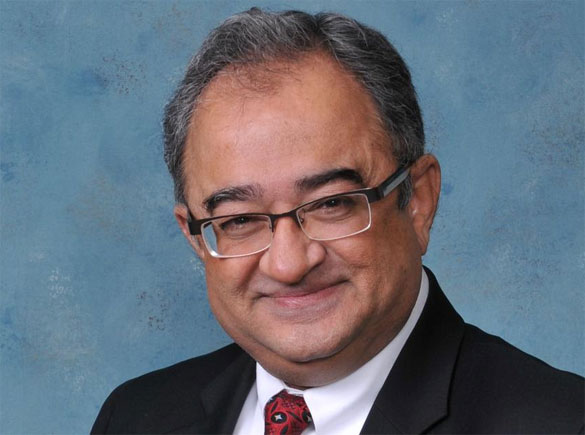
Tarek
Fatah
-----
The
religious triumphalists who believed Pakistan to be another Medina, were
disillusioned once they migrated and started to experience ‘new Medina.’ Other
defenders of Pakistan who did or could not migrate but always longed for
Pakistan, witnessing the mess they put up their defence stating that Pakistan
is a mosque but its Imam is wrong but that does not render the mosque obsolete.
One needs to try to change the Imam (meaning leadership). However, the
experience has shown that the Imams have destroyed the mosque that too beyond
repair.
Tarek Fateh
being humiliated in Pakistan and not being accepted by the Muslims faced
existential crisis whose catharsis he founded in joining the fringe Hindutva
groups that offered him the necessary air time and platform to spread
Islamophobia. The anti-Muslim forces certainly wanted someone Muslim and a
Pakistani that would serve double purpose of Islam and Pakistan bashing. They
wanted to reinforce Islamophobia among the masses and Tarek Fateh came quite
handy. His weekly program Fateh Ka Fatwa was a manifestation of how media and a
Muslim can be used to spread further and reinforce the stereotypes about
Muslims among the masses. Fateh himself took an active part in accomplishing
the task of Islamophobia and his understanding of issues could never be counted
as progressive. He did not belong either to the ilk of progressive or ex
Muslims. To situate him in these categories is not justified. Muslim community
rejected him while fringe Hindutva elements used him to accomplish their goals
of evolving Islamophobia in India.
He was not
mourned by any except by his family and close friends. Muslim community had
discarded him from their ranks as he was denied even the burial space as if he
was an apostate. The Hindutva groups just used him as they did not consider him
as their own. However, in this whole cacophony of noise his academic
contribution in the form of books was pushed into oblivion. Muslims have this
problem that if they reject anyone, they see no positives in him and if they
accept anyone, they indulge in Hero worship overlooking all his flaws. This is
the Ghulu (exaggeration) that Muslim community has not yet overcome,
although Quran time and again informs Muslims to opt for a path of moderation.
He has written two books The Jew is Not My Enemy and Chasing a Mirage: The
Tragic Illusion of an Islamic State, I have read the later work as a part of
writing my M.Phil dissertation. This book still needs to be seriously engaged
as it exposes the flaws that Fateh terms as Mirage when it comes to the
establishment of Islamic state.
Chasing A
Mirage raises some factual questions about the struggle and movements that
conceive as the zenith of Islam being synonymous with the creation of an
Islamic state. Tarek observes that there are two streams of Islamic practice
after the demise of Prophet Muhammad (pbuh), one believes in strengthening the
state of Islam and other struggles to establish an Islamic state. He states
that Islamists working for the establishment of an Islamic State are headed in
the wrong direction. While building his argument, Tarek draws from Quran,
Prophetic practice and history of Islam, informing the reader that even the
five pillars of Islam which form a Muslim covenant with the creator do not even
hint at the creation of an Islamic state. One of the first contemporary critics
of Islamic state, Al Abdel al Razik of Egypt, also drew and based his criticism
on such arguments. All the movements and groups striving for establishing an
Islamic state, do so by referring to the constitution of Medina, but Tarek
criticises it too by saying that it was never replicated after conquest of
Mecca. He does not understand the fact of Itmaam e Hujjat (Displaying
Irrefutable Proof by Prophets). After the Itmaam e Hujjat is complete, if the
people reject the message of Prophet, they are punished by God. The revealed
books are full of stories of punishments of communities who rejected their
Prophets. In case of Prophet Muhammad (pbuh), being the seal of Prophets, the
rejectors were punished through the swords of Muslims. This concept is quite
important to understand, the difference between Prophet Muhammad’s stance in
Mecca, Medina and after conquest of Mecca.
Then the
book discusses about apostasy, working of the Muslim state, how the state
borrowed a number of concepts from others including Roman and Byzantine
empires, like Caliph Umar (RA), who opted for Byzantine administrative model.
It has a lot of details about the pragmatic Muslim approach of running a state,
that mostly went against the values of Islam. Tarek, is all for pluralism,
tolerance, co-existence and shared practices among communities. He believes
that Islamic State was never a reality and calling Muslims towards establishing
it in our contemporary times, is indeed a futile exercise. Islamic State
according to Tarek is discriminatory, non-democratic and curtailing freedom. He
has given numerous proofs to back up his logic.
Chasing a
Mirage, when read seriously certainly raffles few feathers. Its arguments are
strong, if not academic, because unlike other scholarly critiques of Islamic
State, most of the refutation is based on the working of Islamic State, not on
its theoretical foundations. However, this work still has not been engaged well
or even refuted by the proponents of Islamic state and it will keep Tarek alive
for a long time. Anyone, who is interested in the critique of the Islamic state
cannot miss out on this work.
-------
M.H.A.
Sikander is Writer-Activist based in Srinagar, Kashmir
URL: https://newageislam.com/muslims-islamophobia/tarek-fateh-islamophobia-hindutva/d/130082
New Age Islam, Islam Online, Islamic Website, African Muslim News, Arab World News, South Asia News, Indian Muslim News, World Muslim News, Women in Islam, Islamic Feminism, Arab Women, Women In Arab, Islamophobia in America, Muslim Women in West, Islam Women and Feminism