
Pakistan Press on Child Sexual Abuse in Pakistan, Human Rights and Trump’s Departure: New Age Islam's Selection, 20 October 2020
By New Age Islam Edit
Bureau
20 October
2020
• Precluding Child Sexual Abuse in Pakistan
By Sadiq Ali
• Constitutional Reforms for Gilgit-Baltistan
By Raashid Wali Janjua
• Silencing Human Rights Body Is Murder of
Democracy
By Chanchal Manohar Singh
• Can PM Khan Survive The PDM?
By Mosharraf Zaidi
• Trump’s Departure?
By Dr Niaz Murtaza
• Protest Pitfalls
By Shahzad Sharjeel
-----
Precluding Child Sexual Abuse in Pakistan
By Sadiq Ali
October 20,
2020
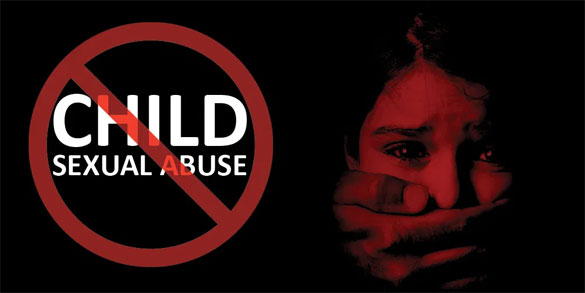
Child
Sexual Abuse (CSA) acts that both do and do not involve physical touching or
physical force, including completed sex acts, attempted sex acts, abusive
sexual touching, and noncontact assaults such as harassment, threats, forced
exposure to pornography, and taking unwanted sexual images, such as filming or
photography. In some instances, the recipient may not be aware of their own
victimization, or that violence has been perpetrated against them. This breadth
of scope reflects the recognition that imposing sexual intent of any sort on
someone against his or her will is an inherently violent act, regardless of the
use of physical force or resulting contact or injury. These definitions also
raise the important consideration of consent, and identify categories of people
who are unable to consent or resist because of age, disability, state of
consciousness or intoxication, or fear of harm to self or others.
The
involvement of a child in sexual activity that he or she does not fully
comprehend, is unable to give informed consent to, or for which the child is
not developmentally prepared and cannot give consent, or that violate the laws
or social taboos of society. Child sexual abuse is evidenced by this activity
between a child and an adult or another child who by age or development is in a
relationship of responsibility, trust or power, the activity being intended to
gratify or satisfy the needs of the other person. This may include but is not
limited to: the inducement or coercion of a child to engage in any unlawful
sexual activity; the exploitative use of child in prostitution or other
unlawful sexual practices; the exploitative use of children in pornographic
performances and materials.
Pakistan,
still unable to forget the 2018 rape and murder of the seven-year-old Zainab
Ansari of Kasur, and other cases of rape and murder of children in Kasur and
other cities of Pakistan, were jolted into the terrible realization that even
the hanging of the rapist of Zainab had not acted as a deterrent in the
occurrence of incidents of violent sexual abuse and murder of children.
New,
cutting-edge approaches are being developed to prevent child sexual abuse. Such
approaches complement the criminal justice and child protective systems, but
focus more on accountability, rehabilitation, and restitution than on
punishment
A
two-and-a-half-year-old Zainab abducted from Charsadda few days ago was raped
and slain before her body was dumped in the Daudzai area of Peshawar. Hospital
sources said that medical exam revealed the minor was raped 18 hours ago, after
which her body were slashed with a knife.
The girl’s
clothes were recovered from the spot where her body was found. Officials told
DNA samples of the victim had been sent to the Khyber Medical College,
Peshawar, while National Database and Registration Authority (NADRA) had sought
help of other agencies in finding the culprits.
The girl’s
father registered a complaint with the local police station after Zainab went
missing on October 6. He said in his police complaint that the girl went
outside to play around 1pm and did not return home. He had added that the
Police and district administration have given every inch of breathe via their
cooperation with us. Zainab’s father words were “Today it is my Zainab,
tomorrow another Zainab could suffer this”.
In March
2020, Pakistan’s parliament passed the Zainab Alert, Response and Recovery
Bill, a historic law that mandates life imprisonment for culprits of child
abuse. The country’s first national child abuse legislation also requires police
to register a case of abuse within two hours of a child being reported missing.
Law enforcement officers must also complete their investigations into
individual cases within three months.Pakistan recorded 2,846 child abuse cases
last year. However, due to social pressure, stigma, the religious nature of
Pakistani society, patriarchal attitudes, and inadequate resources, many cases
go unreported.
Premier
Imran Khan last week called for the chemical castration and public hanging of
rapists and child sexual abusers.But human and child rights campaigners who
oppose the death penalty are instead urging reforms in the police and judiciary
and an increase in awareness campaigns for parents, children, and communities
as the best approach to fighting and preventing sexual abuse.
Globalization
and modern technology may increase the risk of abuse and exploitation, but may
also offer opportunities to strengthen our responses, particularly in areas
with lower resources.
* One in 9
girls and 1 in 53 boys under the age of 18 experience sexual abuse or assault
at the hands of an adult.
* 82% of
all victims under 18 are female.
* Females
ages 16-19 are 4 times more likely than the general population to be victims of
rape, attempted rape, or sexual assault.
Childhood
sexual abuse often occurs alongside other forms of abuse or neglect, and in
family environments in which there may be low family support and/or high
stress, such as high poverty, low parental education, absent or single
parenting, parental substance abuse, domestic violence, or low caregiver warmth
Children who are impulsive, emotionally needy, and who have learning or
physical disabilities, mental health problems, or substance use may be at
increased risk. The risk of CSA also appears to increase in adolescence.Long-term
consequences of sexual abuse may include a chronic self-perception of
helplessness, hopelessness, depression, impaired trust, self-blame,
self-destructive behavior, and low self-esteem.
Child
sexual abuse exploits and degrades children and can cause serious damage to
cognitive, social, and emotional development of a child. As a society, we have
a collective responsibility to prevent child sexual abuse. To accomplish this,
we must initiate and support services and policies that enhance children’s development,
health and safety and we must advocate for policies and programs to help meet
the basic needs of children and families. We must also promote research,
training, and public education to strengthen protective factors that buffer
risk factors for sexual abuse while also directly addressing those risk
factors.
1) Raising
awareness of the unacceptability of child sexual abuse, and promoting the
notion that stopping child sexual abuse is everyone’s responsibility.
2)
Educating the public, especially policymakers, about the true nature of child
sexual abuse.
3)
Rigorously evaluating and strengthening existing child sexual abuse prevention
programs.
4) Shifting
the prevention of child sexual abuse from children to adults.
5) Making
mental health services available to all those affected by child sexual abuse.
6)
Exploring, evaluating, and strengthening new approaches to preventing child
sexual abuse.
Child
sexual abuse is primarily addressed by two systems – the child protective
system and the criminal justice system.
Both
systems address child sexual abuse only after the abuse has already occurred.
Moreover, both are concerned with dispensing justice rather than preventing
child sexual abuse. As such, neither focuses on formulating solutions to reduce
child sexual abuse or to heal the negative consequences of child sexual abuse.
In addition, since the majority of child sexual abuse cases are not formally
reported to either the criminal justice or child protective systems, neither
the interests of justice or protection are adequately served by the current
institutional response to child sexual abuse.
New,
cutting-edge approaches are being developed to prevent child sexual abuse. Such
approaches complement the criminal justice and child protective systems, but
focus more on accountability, rehabilitation, and restitution than on
punishment. However, despite the great potential such approaches hold to
preventing child sexual abuse, they are new and not yet fully tested. Such
approaches, including fostering survivor leadership, circles of accountability
and support, targeted public messages directed at perpetrators and would-be
perpetrators of child sexual abuse, and child sexual offender treatment, should
be further explored, rigorously evaluated, and strengthened.
-----
Sadiq Ali is a doctor by profession and a civil
servant. Currently serving as Assistant Commissioner (UT) and is Gold Medalist
in International Relations (IR). He is also a visiting faculty member at Civil
Officers Academy
https://dailytimes.com.pk/679621/precluding-child-sexual-abuse-in-pakistan/
-----
Constitutional Reforms for Gilgit-Baltistan
By Raashid Wali Janjua
October 20,
2020
The areas
that constitute Gilgit-Baltistan were part of Gilgit Agency as well as Gilgit
Wazarat of pre-independence era. The lease of Gilgit Agency of British era was
abolished by the British in July 1947 and the areas that constituted the Agency
were returned to the Maharaja. The people spontaneously rose in rebellion
against the Dogra ruler when he acceded to India. The revolt was led by Gilgit
scouts and the area was liberated through an armed struggle. When India took
the case to UN in 1948 the ceasefire was effected through UN Resolution 39.and
a plebiscite was directed by UN as per UN Resolution 47 adopted on 21 April
1948. The areas constituting Gilgit, Skardu, Nagar, Hunza, Diamer-Darel were
constituted into Gilgit Agency by Pakistan in 1947. The federal government
entered into an agreement with Muslim Conference of AJ&K and through
Karachi Agreement dated 28 April 1949 according to which the Gilgit Agency was
ceded to federal government for administrative control. Ever since then the
areas constituting, GB though part of State of J&K has been ruled directly
by the federal government.
In 2009 the
Gilgit-Baltistan Empowerment and Self Governance Order 2009 was announced and
the term “Northern Areas” was replaced by “Gilgit-Baltistan”. In August 2015
Gilgit-Baltistan Legislative Assembly passed a unanimous resolution which asked
federal government to declare the region as a constitutional province of
Pakistan. In October 2015, Prime Minister Nawaz Sharif set up a committee to
review the constitutional and administrative status of GB and recommend
constitutional and administrative reforms keeping in view the UN Resolutions on
Kashmir. The Committee after its deliberations recommended the provisional
status of a province alongwith representation to GB in the National Assembly
and Senate through constitutional amendments in articles 51 and 59 of the
Constitution of Pakistan. GB’s representation in all constitutional bodies and
bringing the GB Assembly at par with other provincial assemblies was also
proposed.
In July
2018, the federal government approved a new Gilgit-Baltistan Order 2018
replacing the GB Empowerment and Self Governance Order of 2009. The Order was
approved by the GB Legislative Assembly also. As per the Order, all powers
exercised by GB Council were shifted to the GB Assembly. The role of Kashmir
and Northern Areas Ministry was abolished and reforms like GB provincial
Service Commission, appointment of local judges in High Court and civil
service, and dismantling of all federal taxes were introduced. The order
however fell short of expectations of people because of the overwhelming powers
vested in the office of PM including powers to levy taxes. In July 2018, the GB
Appellate Court set aside the GB Order 2018 and restored the GB self-governance
Order 2009. This judgment was suspended by Supreme Court on 3rd December 2018.
Any change
in the constitutional status of GB or AJ&K should only be provisional and
ensure that Pakistan’s commitment to the Security Council resolutions is not
compromised
Altering
the constitutional status of GB which is still legally part of disputed State
of Jammu and Kashmir might bring the same criticism on Pakistan as is being
leveled on India after its illegal annexation of the Indian Occupied part of
State of J&K on 5th August 2019.Any change in the constitutional status of
GB or AJ&K should only be provisional and ensure that Pakistan’s commitment
to the Security Council resolutions is not compromised. This commitment should
be in consonance with UN Security Council Resolutions 91(1951) and 122(1957)
which declare that the “final disposition of the state would be made through a
plebiscite, but does not prohibit any interim steps to enhance autonomy or to
ensure full exercise of democratic rights.” While altering the constitutional
status of the GB care should be taken to take the views of GB as well as
AJ&K into consideration. There is a strong sentiment in both parts of the
disputed territory of the State of J&K.
People of
GB feel that they have been deprived of their constitutional rights due to
Karachi Agreement 1949 when their constitutional status was decided without
their involvement in the decision making process. People of AJ&K feel
strongly that they have also not been granted full autonomy and that the GB being
part of State of Jammu and Kashmir should not have been ceded to the federal
government and any new constitutional decision about the status of GB should
only be after their concurrence. Pakistan may opt for altering the
constitutional status of the GB and AJ&K through amendments in constitution
with the proviso that changes do not alter the permanent status of disputed
areas. Article 6 of Sino-Pakistan Accord 1963 is an example where a provision
has been kept for renegotiation of the boundary after settlement of the Kashmir
dispute.
The
provisional province status could be ensured through two options i.e giving
provisional status to GB alone by amending Articles 51 and 59 without amending
Articles 1 and 257. In second option Articles 1,51, and 59 could be amended
keeping 257 intact and more autonomy could be given to both GB and AJ&K. GB
Order 2018 and AJ&K Interim Constitution Act 1974 would need to be suitable
amended. The modalities of having one or two legislative assemblies and a
common Senate representation could also be considered as a part of
constitutional package. This option might be more acceptable to AJ&K and
defendable at international for a. The demand for political rights and
integration by GB population is genuine in view of past denial of rights
enjoyed by rest of the Pakistanis. The grant of political rights as enjoyed by
other provinces to GB is a requirement that needs to be fulfilled to assuage
the feelings of political deprivation.
Any
alteration of the constitutional status of the GB needs to be undertaken
through a consultative process with AJ&K. A similar set of political rights
could be ensured for both AJ&K and GB emphasizing their unity as disputed
areas instead of only granting a separate provisional provincial status to GB.
Autonomy should be granted to AJ&K and GB on the principles that the UN
Security Council Resolution based stance is not impaired, the representation of
AJ&K and GB in the Parliament of Pakistan, electoral college for the
election of President and federal bodies along with application of those parts
of Pakistan’s constitution to the both to which they concur.
The process
of constitutional reforms should not be hastened and should be undertaken
through a deliberate consultative process between AJ&K and GB and government
of Pakistan. Experts in international as well as constitutional law should be
consulted along with all stakeholders instead of imposing a hasty solution that
might be unacceptable to either parts of the disputed State of J&K i.e GB
and AJ&K.
----
Raashid Wali Janjua is a PhD scholar at NUST
https://dailytimes.com.pk/679622/constitutional-reforms-for-gilgit-baltistan/
-----
Silencing Human Rights Body Is Murder of
Democracy
By Chanchal Manohar
Singh
October 20,
2020
Caste based
social structure of India, as proposed by the Manu Smriti since medieval times
is believed to be the foundation stone and principal organ to induce human
rights violations and infringement. In more than 200 years of occupation, the
British Empire intensified the caste system in its political, as well as,
administrative configuration. They crushed the dissenting voices and there were
no scope of justification for the victims. However, even after 73 years of
freedom from the Britishers, the discriminatory administrative structure left
behind by the Britishers is still prevalent in India, not only in urban
societies but more so in rural societies as well, where people are craving for
justice of human rights violations.
India,
which carries the epithet of being the world’s largest democracy lives with a
different kind of caste apartheid. The democratically elected rulers exercise
their power by using the police force to crush the dissenting voices. Even
democratic and peaceful protests are not tolerated; the dissidents are put in
jails for long periods without assigning any reason. The latest example is of
former Chief Minister of Jammu and Kashmir Mehbooba Mufti, and Peoples
Democratic Party (PDP) Chief who was kept in different jails for the last 14
months after the nullification of Article 370 in J&K, was released last
week without assigning any fault of hers. The dissenting persons are confined
in jails under various contentious acts, many a time the clause of being
anti-national is imposed, and people languish in jails for a long period
without any fault.
If the
administration is run undemocratically by using brute force, it is
responsibility of the Non- Government Organisations (NGOs) to come forward and
protect the victims. Here comes the role of Human Rights Organisations (HROs).
In India, there are several such organisations which are active. An
international eminent organisation, Amnesty International, which works in many
countries across the world, was also active in India till recent, when it was
forced to wind up.
Amnesty
International has stopped its work in India after it was targeted for some
irregularities in receiving funds from abroad without the permission of the
government. A First Information Report (FIR) was registered and its offices in
Mumbai and Bangalore were raided, and documents are taken into possession. Amnesty International had applied for
permission to seek funds from abroad, but it was not granted permission by the
Congress Government led by Dr. Manmohan Singh and the present BJP Government of
Narendra Modi did not respond to their application for procuring funds from
foreign donors.
Amnesty
International opened its office first in Bihar. Currently, it was operating
from two cosmopolitan cities-Delhi and Bangalore and with its annual budget
which is said to be to the tune of over Rs 50 crores.
The
Enforcement Directorate (ED), following an FIR by the Central Bureau of
Investigation (CBI), filed on November 5, 2019, on charges of an alleged
violation of the Foreign Contribution Regulation Act (FCRA), had initiated a
separate probe last year. The ED has now converted the preliminary inquiry into
an ECIR (the equivalent of an FIR) alleging money laundering charges and froze
all of AI India’s bank accounts. The ED has invoked the Prevention of Money Laundering
Act this time.
In a press
statement, AI’s India office has said, “On 10 September 2020, Amnesty
International India came to know that all its bank accounts were completely
frozen by the Enforcement Directorate bringing most of the work of the human
rights organization to a grinding halt.”
In July
2019, the ED had served a show-cause notice for alleged contravention of
funding to the tune of Rs 51.72 crore. Although the Foreign Contribution (Regulation) Amendment
Act, 2020 ( FCRA) law, whose provisions were invoked by the CBI in its case, is
not listed in the schedule of predicate offences under the Prevention of Money
Laundering Act of 2002 (PMLA), Section 120-B (criminal conspiracy) of the
Indian Penal Code was invoked. And since section 120-B of the IPC is invoked as
an alleged offence in the CBI FIR, it enables the ED to initiate a
money-laundering investigation.
The moot
point is why the crackdown was made on Amnesty international at this juncture,
when it was working for the last several years in India and had also researched
and prepared reports on various human rights violations cases and issues of
curbing dissenting voices by putting the opponents’ in jails.
There is a
long history of tracking down the Amnesty International (AI) for its activities
exposing human rights violations and infringements. Following an event held in
Bangalore on 13 August 2016 on human rights violations; the Akhil Bharatiya
Vidyarthi Parishad filed a first information report (FIR) against Amnesty India
for being anti-national. Amnesty India denied that the organization or its
staff had been involved in any anti-national activities.
On 15
November 2019, the Central Bureau of Investigation raided the offices of
Amnesty International India in Bangalore and New Delhi during an investigation
into an alleged breach of foreign funding laws. In a statement issued by CBI,
they said “It was alleged that the provision of the Foreign Contribution
(Regulation) Act 2010 and the Indian Penal Code were contravened”.
Amnesty
International India collaborates with Railway Protection Force, Western
Railways in Mumbai to ensure female passengers’ right to safety. It also runs a
campaign to reduce the number of under-trials in jails in India. Some of
Amnesty India’s campaigns include not just the crackdown in Jammu and Kashmir
or the police handling of the February riots in Delhi, Amnesty also raised its
voice against abuses by the security forces, the anti-terror and sedition laws
often used to suppress dissent, the Armed Forces (Special Powers) Act, the Sikh
massacre of 1984 and, of course, for freedom of speech and also as well as
opposing the use of the death penalty in India. The Amnesty also had opposed
the executions of Ajmal Kasab, a Pakistani convicted in Mumbai Taj Hotel
attack, Afzal Guru of Kashmir in parliament attack and Yakub Memon.
The
organisation in recent years have been working on some crucial
projects—business and human rights, individuals at risk, gender-based violence,
human rights education, and access to justice in Jammu and Kashmir.
Their most
recent contribution was two exhaustive reports on the situation in Jammu and
Kashmir and the riots in North-east Delhi. On August 5, 2020, marking the first
anniversary of the dilution of Article 370 of the Constitution of India, the
organisation released an update on the situation of human rights in Jammu and
Kashmir. And within days, on August 28, 2020, six-months after the riots in
Delhi, AI India released an investigative brief on the complicity of Delhi police
in the violence, which claimed the lives of at least 53 people, mostly from the
minority Muslim community. The release of the two publications, the
organisation says, “Has provided fresh impetus to the establishment to harass
and intimidate Amnesty International India through its investigative agencies.”
On August
5, 2020, the Amnesty International recommended to National Human rights
commission and National Commission for Women to set up offices in Jammu and
Kashmir stating that the people there had no system of redressal of the
violation of their rights after the closure of the state commission a year ago.
Marking the anniversary of the nullification of Article 370 on 5th August 2019,
the Amnesty International also asked the government to release all the
political leaders and journalists, and other activists under detention for the
last one year. It also asked for the restoration of 4G internet services in the
state to provide people freedom of expression.
It blamed
‘reprisal’ from the government for winding up its operations, adding, “This is
latest in the incessant witch-hunt of human rights organizations by the
Government of India over unfounded and motivated allegations.” The decision,
which will see close to 150 employees lose their jobs came after the recent
move by the Enforcement Directorate to freeze the organisation’s bank accounts.
Julie
Verhaar, the acting secretary-general of Amnesty International, in a press
statement, has said, “This is an egregious and shameful act by the Indian
Government, which forces us to cease the crucial human rights work of Amnesty
International India for now. However, this does not mark the end of our firm
commitment to, and engagement in, the struggle for human rights in India. We
will be working resolutely to determine how Amnesty International can continue
to play our part within the human rights movement in India for years to come.”
Verhaar added, “The Amnesty movement is very proud of the vital work carried
out by our outstanding colleagues in India regardless of the risks they faced,
including their unequivocal calls for accountability for the actions of the
authorities during the Delhi riots and in Jammu and Kashmir and their work on
gender-based violence.” Sadly, Verhaar says, this “enormously important work standing
up for victims” has been met with the “heavy-handed tactics that Indian civil
society has become increasingly familiar with –the art of the government’s
drive to silence critical voices and stoke a climate of fear”.
“Amnesty’s departure would mean a voice that
reminds us how frequently we fall short of our values will be silenced. It was
often an irritating voice, but always a necessary one”, says Karan Thapar, an
eminent Indian journalist.
----
Chanchal Manohar Singh is a senior journalist
and Indo-Pak peace activist.
https://dailytimes.com.pk/679921/silencing-human-rights-body-is-murder-of-democracy/
------
Can PM Khan Survive The PDM?
By Mosharraf Zaidi
October 20,
2020
People
don’t want complicated answers. They want simple ones. This is for two reasons.
First, complicated answers take time, discipline and patience to process and
understand. No one has time, few have discipline, and even fewer have patience.
Second,
complicated answers (and the experts that give them) have a poor track record.
Think of all the ‘conspiracy theories’ that came true that were poo-pooed by
experts. Think of the expert consensus that mocked the simpleton religious or
political leader that inspires. You don’t have to go back very far.
During the
first few months of Covid-19, PM Imran Khas was roundly criticized by almost
everyone other than his strongest supporters for adopting and arguing that in
the ‘lives versus livelihoods’ debate, he couldn’t just choose ‘lives’ or
privilege the public health outcome, without taking into consideration the
impact that a strict lockdown would have on the ‘livelihoods’ of the poor. Six
months later, it turns out that PM Khan’s analysis of the challenge is broadly
now the global conventional wisdom – blanket, across-the-board lockdowns are
now almost unheard of. And ‘smart’ lockdowns, of the kind that PM Khan espoused
as a go-between to mediate the lives versus livelihoods dichotomy, is now the
global standard.
Experts
aren’t always right, but the reason experts are often wrong has little to do
with science or maths. The reason so many ‘experts’ were wrong on lives versus
livelihoods (including this writer, by the way) is not because they got the
science wrong. In fact, the experts had the science exactly right. They got the
lives versus livelihoods wrong because they were not open to including other
vectors in the analysis. Yes Covid-19 is deadly, and no, nothing is worth
risking one’s life for. But this analysis, whilst valid for those that are not
at risk of death by starvation, is invalid for those that are.
Taking a
cumulative macro view of the economy as a whole, and the absolute centrality of
transactions to the economy, PM Khan took the right approach on Covid-19. If
Pakistan has been incredibly lucky (and every scientific measure indicates that
luck has been absolutely crucial), then at least some of this luck may be due
to the correct, compassion-rooted, and winning approach of the PM.
Now this
was a complicated answer to the question: did PM Khan get his core response to
Covid-19 right? The easy simple answer would have been one of two. One: “yes,
he got it right because he is a proud Pakistani and he would give his life for
Pakistan and he love Pakistan”. Well: Wow, Grape! Two: “no, he got it wrong,
because he is selected, and his supporters only like him because he is
handsome”.
We are well
into October 2020. The Covid-19 challenge is far from over, but as a storyline,
it has already ceased to be salient. From here on in, even a more spectacular
performance than thus far on Covid-19 will earn PM Khan, the PTI and the ruling
structure that backs this government very little by way of political capital.
Of course, any missteps will put severe strain on it. But barring a reversal of
the Pakistani Covid-19 miracle, the Covid-19 story is unlikely to move the
political needle very much.
The next
big question for this government and its backers is going to be whether it can
handle the pressure that the opposition plans to put on it. In less than six
months, PM Khan’s government, a unique experiment in Pakistani governance, will
be halfway through its tenure. The ‘please don’t put my dad in jail’ opposition
will have us believe that this tenure is as good as over. But what really
determines the fate of the PTI government?
I will list
the simple answers that we seek for this question, just to get them out of the
way. No, it isn’t the quantum of electoral legitimacy this government enjoys or
does not enjoy. The opposition can keep teasing PM Khan for being ‘selected’,
but it doesn’t make an iota of material difference (yet). No, it isn’t how much
pressure the military leadership can be put under. The opposition can keep
poking and prodding to test the tensile strength of institutional resolve to
back the current dispensation. It will not collapse under the weight of a few
speeches or jalsas or opeds. No, it isn’t even the poor quality of governance
manifest in Punjab. The woeful and pathetic figure cut by the chief minister of
the Punjab has stood the test of much more powerful critics than the
opposition, and yet he survives. Punjab will survive him.
No. What
really determines the fate of the PTI government from here on in are two
things. The first is the state of the economy, and the second is the PTI’s
ability to make political accommodation and deals. Both PTI economy and PTI
politics are complex, and maybe people don’t want to hear it. But the only
thing that can sink the ruling structure, and the PTI government that is
propped up by it, is a combination of a continued economic crisis and a
political landscape in which the PTI continues to have no friends other than
those that are arranged for it by the ruling structure.
Pakistan is
not on the verge of any kind of economic calamity, but it is fast approaching
relatively new territory as far as living through a sustained economic crisis
in which three things are happening at the same time: prices are increasing,
joblessness is growing, and confidence is shrinking. The last major crisis of
this nature was in 2008/2009, when the global financial crisis converged with
the transition from the Musharraf era to the PPP, which converged with a
dramatic rise in international pressure, lower international aid and
assistance, and to top it all off, a major conflict (the Rah e Rast Operation
to free Swat of the TTP).
If any of
the three – inflation, or joblessness or a lack of confidence – somehow
metastasize into a deeper moment, such as a major shortage of wheat, that lasts
for longer than a couple of weeks, the downward political pressure on the
ruling structure may become irresistible. But it may not necessarily take such
a moment to threaten the ruling order. Sustained economic stasis can also
threaten the ruling order if it converges with a sustained political crisis.
It is
exactly this kind of political crisis that the PDM seeks to create, establish
and sustain over the next four months. The PDM’s key leaders have been pushed
to a point where some, if not all, have come to believe that they have less and
less to lose. James Baldwin once wrote about Elijah Mohammad, that “the most
dangerous creation of any society is the man who has nothing to lose”. The
relentless campaign to defang Nawaz Sharif, the desperate wilderness of office
that Maulana Fazlur Rehman occupies since 2018, and the growing absence of
options available to the PPP leadership may or may not turn these men, their
progeny and their parties into “the man who has nothing to lose”, but if you
listen carefully to PDM speeches by leaders like Mohsin Dawar and Sardar Akhtar
Mengal, the hazards of continuing down the path that this country has been on
since 2016 should be obvious.
Can PM Khan
(and the ruling structure that supports him) absorb both the economic
desperation of the average Pakistani, and the political desperation of the
electoral elite of Pakistan – at the same time?
This
question, unlike others posed above, does have a simple answer. The answer is
no. No, he cannot. They cannot. We cannot. To survive the PDM, PM Khan will
need to make dramatic gains on the economic front, and he will need to
dramatically increase the number of allies he has in the political spectrum.
But make no
mistake, it is PM Khan that is in the driving seat. The path he chooses from
here on in will determine the duration and quality of his tenure. Economic
recovery and political reconciliation, or just more trolling and hounding of
the opposition? The choice is PM Khan’s.
----
Mosharraf Zaidi is an analyst and commentator.
https://www.thenews.com.pk/print/731862-can-pm-khan-survive-the-pdm
-------
Trump’s Departure?
By Dr Niaz Murtaza
20 Oct 2020
HAVING seen
his theatrical bigotry for four years with disgust, millions in not only the US
but also globally hope fervently that the Nov 3 polls will end Donald Trump’s
presidency. Joe Biden leads in national polls by double-digit margins. But
since Hillary Clinton led similarly in some national polls at this time in
2016, caution still abounds.
Biden’s
average lead in national polls is around nine per cent which is 3.5 per cent
higher than Clinton’s lead in 2016. However, US presidential elections are not
won through the national vote count. Instead, candidates must win in enough of
the 50 US states to get 270 electoral votes nationally, with each state’s
victor gaining electoral votes in line with its population. About 40 states
vote predictably for one party in each election. Victory depends on the
outcomes in 10-12 battleground states which have flipped party often in recent
elections, such as Florida, Michigan, Ohio, etc.
Biden leads
on average by about 5pc in such states too. But this edge is close to the
margins of error of most polls. Ominously, Biden’s average lead in these states
is a bit smaller than Hillary Clinton’s lead in these states in 2016, which of
course vanished on election day. To retain the presidency, Trump must win all
the states where he currently leads in polls by safe margins of 6-plus per
cent. He must also win around half a dozen states where is he is trailing by
between 0.pc to 4.5pc then one to two states where he is trailing by 5pc or
more. In contrast, Biden just has to win states where he is ahead now by at
least 5pc. If this looks daunting for Trump, it is wise to recall that he did
pull something similar in 2016.
Thus, on
polls alone, it is unwise to write off Trump. However, what gives one hope is
the vastly different context today compared to 2016. Back then, he was a
challenger without a track-record to defend. Today, he is a president being
blamed widely for botching the response to Covid-19, which has killed over
220,000 Americans and caused the worst recession since the 1929 Depression. The
press recently leaked his long-hidden tax returns which paint a bad picture of
him. He also botched the first debate, refused to participate in the second one
virtually and ended up contracting Covid-19 by ignoring due precautions. He has
lost the support of crucial groups like seniors. Thus, it’s a much tougher task
today.
Biden not
only has to win but win by large margins.
However,
these minuses are nullified partly by the quirks of the US political and
electoral systems and the willingness of Trump and the Republican Party to
exploit them unethically. Unlike elsewhere, US elections are not managed by a
single federal agency but by thousands of state and local public agencies, each
with slightly different and often unclear procedures, especially related to
early and mail voting. This issue is more crucial in this election due to the
high numbers of voters, especially Biden ones, who will vote by mail given the
Covid-19 crisis. Republicans are already trying every legal gimmick to suppress
such votes and those of low-income minorities which vote mainly for Democrats.
Thus, Biden
not only has to win but win by large margins to forestall Trump’s unethical
attempts to legally challenge his win. Trump’s bid to do so will be facilitated
by the Republican hold on the residency, the US Supreme Court, possibly even
Congress, and several governorships, legislatures and state courts in
battleground states. Thus, the US may have a highly contentious election
outcome with the victor unknown for weeks, as in 2000. Some fear this could
fatally undermine US democracy and lead to major street violence.
Even if his
presidency ends, there is the broader question of whether Trumpism, ie bigoted
nationalistic politics, will end in the US. With his big Twitter following and
even bigger bruised ego, he may continue to roil and influence US politics for
long. In fact, given his maverick instincts, he may even attempt a comeback in
2024, for he will only be as old then chasing a second term as Biden is today
chasing a first term. And then there is his clan aiming to join politics.
Will the
outcomes affect Pakistan? Given the emphasis of Democrats on human rights,
Biden may rhetorically be warmer towards Kashmiris but probably not
practically. He may also ask tougher questions from us about our own poor human
rights record. Again, the probing is unlikely to go beyond rhetoric. Overall,
ties will remain lukewarm. He may press the Afghan Taliban on human rights too.
On Palestine, Biden will be less supportive of Netanyahu’s expansionist aims
and may even curb them. Certainly on global issues like climate change,
pandemics and multilateralism, Biden will be much better than Trump. So one
hopes Trump loses and is also convicted for some obvious crimes he has
committed so that we see the back of both Trump and Trumpism.
----
Dr Niaz Murtaza is a political economist and
heads INSPIRING Pakistan, a progressive policy unit.
https://www.dawn.com/news/1586036/trumps-departure
----
Protest Pitfalls
By Shahzad Sharjeel
20 Oct 2020
ANOTHER
season of roadblocks, sit-ins, motorways closures, D-Chowk dharna and 24/7
coverage by news channels seems to be upon us. Only the background score may be
different this time.
When the
PTI was riding the 2014 dharna tide it was warned of ‘what goes around, comes
around’. However, the party’s alleged backers were apparently able to assure it
that its larger and more experienced political opponents would not be ‘allowed’
to give it a dose of its own medicine. It must have been told that what sets it
apart is popular support, and its leader’s ‘financial hygiene’, a term given
currency by an ardent supporter who later lamented his ‘impaired judgement’ in
joining the container crowd.
Though the
saner voices were outnumbered, during the various rallies and sit-ins one would
hear warnings that if an elected government — accusations of an unfair
electoral process notwithstanding — is sent home packing through street
protests and agitation, it would become a tradition and no one would be immune
to it. Consider, the same forces that are accused of meddling in elections are
ultimately seen as deciding who all would bring how many people onto the
streets and how long they be allowed to remain there.
Who decided
when the Tehreek-i-Labbaik Pakistan would wrap up its dharna upon receipt of
cash by its ‘brothers’? Who coaxed JUI-F leader Fazlur Rehman to take his
people back to the seminaries calling off the Azadi March in Islamabad last
year? Who, for that matter, would be the arbiter this time around, after, say, months
of protests? Would the Maryam-Bilawal-Fazl combine call a joint session of
parliament and pass a resolution that calls for fresh elections? So long as
‘power’ is ‘transferred’ after every election and the victor does not adopt a
much humbler approach of ‘assuming office’, the dream of civilian supremacy
would remain just that, a dream.
All the
characters in this epic tragedy want us to have selective memories.
All the
characters in this epic tragedy, those with legit as well as unconstitutional
roles, want us to have selective memories. The political parties would rather
have us forget on whose alleged prodding they voted for the establishment of
military courts, the incumbent Senate chairman, the army chief extension, etc.
Parties who
cannot control their legislators during public voting in parliament now go
about issuing instructions that no one meets the military brass without the
leadership’s permission. Former governor of Sindh, Muhammad Zubair, has been
appointed spokesperson of Nawaz Sharif and Maryam Nawaz. Has he been rewarded
for being the last PML-N member to have met the COAS without the supreme
leader’s permission or the first one to have done so with his blessing? The
answer most likely is, neither. There have been many before him and many more
will succeed him in (a) trying to be the go-between, and (b) play the gofer who
carries the besieged king’s message to the siege commander.
None of
this is to suggest that civilian supremacy is not to be strived for. It is
imperative for Pakistan’s existence. It is just that we should be absolutely
clear that nothing in life is free. Economist Thomas Sowell famously said:
“There are no solutions, only trade-offs.” We must know that the current set of
events is a segment in a long sequence with players ranging from crumbling
Middle Eastern kingdoms, regional wannabes, pretenders to the throne of the
Muslim leadership, civilisational rivals, and a new superpower replacing a
kicking and flailing outgoing ‘leader of the free world’.
Sending the
PTI government packing through agitation will exact a high price from all
proponents of democracy, especially the liberal and progressive ones, at least
in the short run. Since Pakistan has always insisted on being a key player in
settling the Afghanistan issue, it was inevitable that when Afghan Taliban
share power in Afghanistan, the religious parties here would expect the same.
Certain quarters wished to take credit for bringing the Afghan Taliban to the
negotiating table. The wish has been granted for the umpteenth time. But
overall, thousands of Pakistani lives were lost. The JUI-F’s demands upon
ousting the present government can range from imposition of the Sharia to
excluding madressahs from any kind of financial or academic regulation.
Nawaz
Sharif claims that he opposes not the PTI government but the establishment’s
meddling in politics. His own representative has been meeting the top brass; if
stopping the establishment’s involvement in politics is the aim, why meet them?
The Pied Piper of the dharna in-the-making has confessed to meeting the top
brass in only October last year and has complained to his heart’s content that
the promises made to him to wrap up his ‘teaser’ dharna were not met. Are these
the traits of civilian supremacy?
----
Shahzad Sharjeel is a poet and analyst.
https://www.dawn.com/news/1586035/protest-pitfalls
----
URL: https://newageislam.com/pakistan-press/pakistan-press-child-sexual-abuse/d/123202
New Age Islam, Islam Online, Islamic Website, African Muslim News, Arab World News, South Asia News, Indian Muslim News, World Muslim News, Women in Islam, Islamic Feminism, Arab Women, Women In Arab, Islamophobia in America, Muslim Women in West, Islam Women and Feminism