
Domestic Abuse, In All of Its Forms, Is Forbidden In Islam
By
Hamzah Zahid
9th
December 2020
Last year,
1,600,000 women and 786,000 men in England and Wales experienced domestic
abuse. Following these harrowing statistics, any website or charity for those
who have experienced domestic abuse always has an emergency ‘close website now’
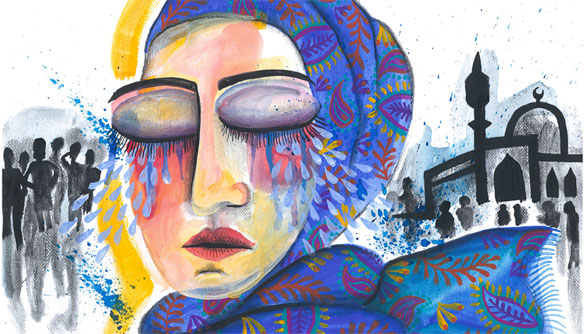
button that is always onscreen. Far from isolated physical attacks, domestic
abuse is an entire environment in which one’s psychological, economic, sexual,
and even technological freedom and wellbeing are besieged.
Accordingly,
the Government definition of domestic abuse is “as any incident of controlling,
coercive or threatening behaviour, violence or abuse between those aged 16 or
over who are or have been intimate partners or family members, regardless of
their gender or sexuality”.
So, every
single person in the afore-mentioned statistics has a long story of survival in
a brutal and elongated oppressive environment. Consider further that these
statistics are substantial underestimates; a culture of shame and
victim-blaming has meant that domestic abuse is underreported. According to the
Crime Survey of England and Wales, only 18% of women who had experienced
partner abuse reported it to the police in 2018.
What this
tells us is that domestic abuse is a serious, and severely understated problem.
What we hear of domestic abuse in the media, statistics and from hearsay is
just the tip of the iceberg. Therefore, what we must do to address this blight
must be relentless and comprehensive to the various facets and permutations of
domestic abuse.
As always,
we must begin by educating ourselves.
The
Cycle of Abuse
Lenore
Walker, an American psychologist, published a theory on the cycle of abuse. She
based this theory on the testimonies of battered women. She noticed that
patterns of attacks and method of attack reoccur throughout a cycle.
The first
phase of the cycle is the Tension Building phase. As the name suggests, the
aggressor is frequently tense, becoming irritated at small things. According to
Walker, the victim tends to regard these as isolated incidents, and tries to
calm down the aggressor, believing that this will stop the conflict.
This,
however, aggravates the aggressor even further, leading to the second phase,
Acute Violence. Physical, psychological, and/or sexual aggression takes place.
The victim tends to isolate themselves out of disbelief, and usually wait
several days before asking for help. However, this is the shortest phase of the
cycle.
In the
third phase, the Reconciliation phase, the aggressor becomes apologetic,
swearing that they will not be violent again. Gifts and promises form part of
manipulative behaviour to ensure the relationship does not end. The victim
wants to believe the aggressor, and so finds it hard to report the incident.
However, this only serves to reinforce violent behaviour. The Reconciliation
behaviour eventually ends, with small incidents flaring up, leading to the
Tension Building phase once more.
The victims
thus are trapped in a cycle of abuse, remorse, and forgiveness. What needs to
be strongly emphasised here is that the victim is never to blame. Dr. Bill
McGee, an American psychologist, states it is a misconception that victims
could leave if they really wanted to. He adds that this is an extremely
dangerous thought-pattern because people then blame the victims, which
perpetuates the victim’s belief that the situation is their own fault, thus
causing them to stay even longer in an abusive situation.
Breaking
the Cycle of Abuse
Dr. McGee’s
advice on breaking the cycle is to first realise that they are in a domestic
abuse situation. This becomes exceedingly difficult because the phase of
physical violence is the shortest phase, and the aggressor always buttresses
their behaviour with promises of change. Often, a victim only realises the
situation when talking to somebody else. Again, notions of family honour and
not wanting to besmirch one’s partner makes this a weighty task.
The second
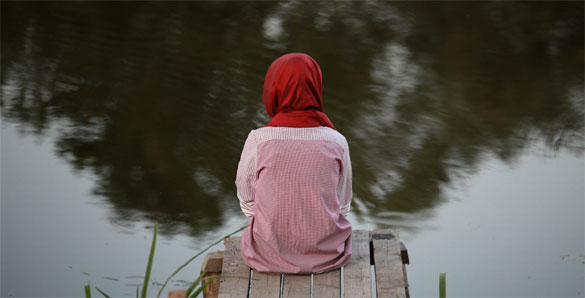
step to break the cycle is to physically leave. It is hard to overstate just
how difficult this is. The victim has to contend with not only the threat of
the abuser, but they also have to explain to their children (if they have any)
of the situation, which can be traumatising. Moreover, there must be a safe
place to which the victim can escape to.
Both of
these steps point to an important role for the wider community to play.
Firstly, we must raise awareness of domestic abuse, so that those in abuse
situations are better able to realise their situation. Secondly, charities,
safe houses and refuge centres providing space for victims must be available
and adequately funded. More important than this, the shame culture surrounding
domestic abuse needs to end, so that victims are more willing to tell their own
support networks. This is especially true for women, who are seen as lesser for
leaving their household.
Men and
Domestic Abuse
Men are
also victims of domestic violence. Notions of masculinity make reporting these
incidents very difficult. Dr. Sarah Wallace, a researcher at the University of
South Wales who specialises in male experiences of domestic abuse, states that
the issue of underreporting is even more pronounced amongst men because of
ideas of being weak and unmanly. Once more we note that the statistics are a
significant understatement.
This points
us to an important conversation around masculinity. On the one hand, we see
that notions of masculinity are actively leading to men being entrapped in
domestic abuse situations. On the other hand, Dr. Toby D. Goldsmith writes that
beliefs that women aren’t equal to men, and that women are to be controlled by
men, are a cause behind domestic abuse.
This is one
reason among many others that points to the urgent need to restore masculinity
within boys and men, one which manifests the tremendous potential for upholding
goodness and justice because of their strength, rather than despite it. This is
a long and challenging journey.
It begins
with men learning to heal and care for themselves, realising the deep wisdom
that dwells within. It continues with men engaging in physical training and
martial arts to apply their strength into a mould of discipline and restraint.
And above all, it must always be characterised by a reverential consciousness
of God, realising that all strength and power is from Him, and therefore is
only ever to be used for good. And in the end, we are all accountable to Him.
Islam
and Domestic Abuse
There are
people who attempt to justify domestic abuse through Islam. By denying that
this is happening within our communities, we only empower the tyrants who dwell
among us. Instead, we must be forthright in addressing the problem.
So let me
be very clear. Domestic abuse, in all of its forms, is forbidden in Islam.
Anybody who even approaches such heinous behaviour risks bringing the wrath of
God upon themselves.
Even a
cursory glance at the life of the Prophet (peace be upon him) makes it very
clear that domestic abuse is anathema to the wholesome selflessness and
effervescent compassion that he (peace be upon him) embodied.
There are
many hadith which explicitly condemn violence towards women:
“Do not hit
the maidservants of Allah!” [Sunan Abu Dawud]
“Do not hit
them and do not revile them.” [Sunan Abu Dawud]
Moreover,
Aisha, may Allah be pleased with her, said that the Prophet “never once hit a
servant, a woman, not struck anything with his hand.” [Sunan ibn Majah]
In another
incident, the Prophet (peace be upon him) invoked God’s wrath upon being
informed of an individual who beat his wife.
And of
course, the Quran is clear that marriage is based on love and mercy:
“And
amongst God’s signs is that He created for you spouses from amongst you and
placed between you love and mercy”. [Surah Rūm, Verse 21]
The Yaqeen
Institute has published a paper further debunking the myth that Islam somehow
permits domestic abuse.
We must
hold ourselves to account. It should absolutely intolerable to Muslims that
there are people committing such a grave injustice. We must do better.
Violence
No More
Anyone with
the slightest shred of compassion should convulse at the extent of domestic
abuse. It is such an egregious violation of basic human conduct. The path to
making a change is difficult. We require a thorough awareness of domestic abuse
and ensure that this awareness is stitched into our social structures. We must
also ensure that charities and shelters are adequately funded; such
organisations need to be given a stronger priority in terms of where we donate.
But to
truly rout this problem, better and more holistic education is needed for boys
and men. In addition to this, religious institutes must be unequivocal in their
condemnation of domestic abuse.
If you or
somebody that you know is in a domestic abuse situation, please know that you
are not alone. There are a plethora of dedicated, 24-hour services that you can
reach out to:
May God
instil within us a consciousness of Him that empowers us to never commit such a
heinous act, and to always be willing to unite against injustice and
oppression. Amen.
Original
Headline: We Need to Talk About
Domestic Abuse
Source: The Muslim Vibe
URL: https://newageislam.com/spiritual-meditations/domestic-abuse,-all-its-forms,/d/123711
New Age Islam, Islam Online, Islamic Website, African Muslim News, Arab World News, South Asia News, Indian Muslim News, World Muslim News, Women in Islam, Islamic Feminism, Arab Women, Women In Arab, Islamophobia in America, Muslim Women in West, Islam Women and Feminism